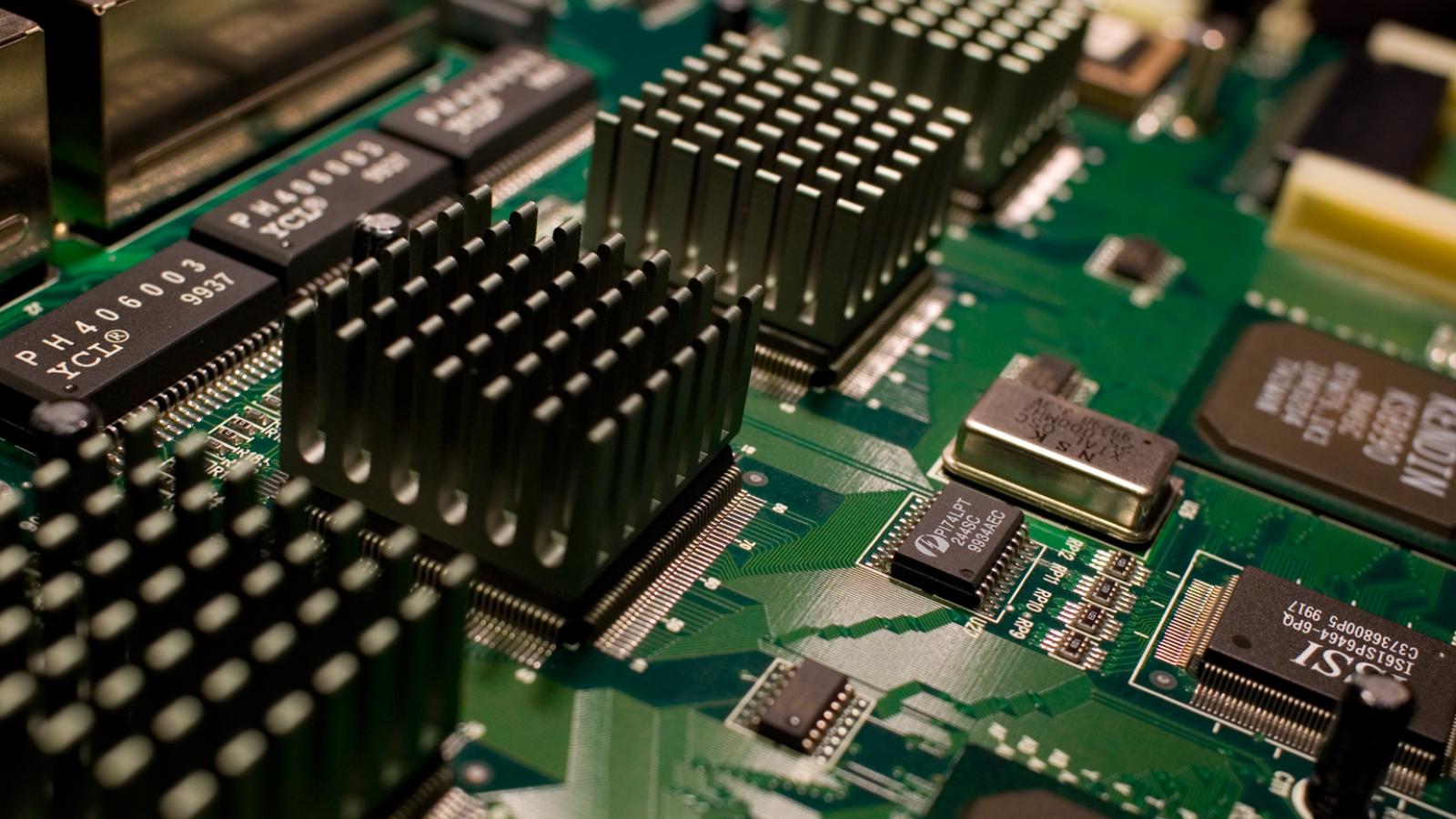
AI server demand is moving from GPUs and memory to PCBs, and the next wave of price hikes is hitting IC substrates. Nanya Technology (8046), a major substrate manufacturer, is seeing rising demand for both ABF and BT substrates. With the ramp-up of next-generation U.S. network switches, its capacity utilization is nearing full. Analysts expect ABF and BT substrate prices to rise 18% to 20% in Q3.
More importantly, this price surge isn't benefiting Nanya alone. As AI chips grow larger and more layered, high-end substrate supply is tightening. Other substrate makers like Unimicron (3037) and Kinsus (3189) are also gaining attention. Why is this 'substrate shortage' accelerating suddenly? And which stocks beyond Nanya deserve attention?
Nanya’s ABF and BT substrates are reportedly seeing 18–20% price increases, driving a sharp rise in gross margins. In fact, the pricing effect is already visible in Nanya’s financials. Q2 gross profit reached NT$3.359 billion, with gross margin jumping from 15.85% in Q1 to 24.75%. Quarterly net profit was NT$2.261 billion, EPS NT$3.50—up 72.41% from Q1. First-half EPS totaled NT$5.53. A key driver of Nanya’s rapid profit improvement is its use of spot pricing for ABF substrates, allowing immediate revenue and margin benefits when supply tightens.
Pricing momentum may strengthen in Q3. Analysts cite strong substrate demand and the volume ramp of next-gen U.S. network switches, which require larger, higher-layer substrates and more materials. With manufacturers nearing full utilization, ABF and BT substrate prices could rise another 18–20% in Q3. Nanya’s revenue already reflects this demand surge: July consolidated revenue hit NT$5.44 billion, up 16.13% MoM and 50.24% YoY—the highest in 43 months. Year-to-date revenue through July reached NT$30.192 billion, up 39.38% YoY.
Why is AI causing ABF substrate shortages? Many investors know PCBs but not 'IC substrates.' Simply put, IC substrates sit between chips and PCBs, carrying chips and transmitting signals and power. The stronger the chip performance, the more I/Os, and the larger the package size, the higher the demands on substrate layer count, area, and circuit precision. This is what makes the current substrate market different from the past.
Previously, AI demand focused on GPUs. But as AI data centers expand, demand is spreading to CPUs, ASICs, high-end switches, and 800G/1.6T high-speed optical communications. This expands the application scope of high-end ABF substrates. Meanwhile, AI chips are growing larger and more layered, increasing the substrate capacity needed per chip. This causes both 'more chip shipments' and 'higher per-substrate value' to happen simultaneously—explaining why substrate makers can’t quickly meet demand even with capacity expansion.
What’s the difference between ABF and BT substrates? IC substrates are mainly split into ABF and BT types. ABF substrates have higher technical barriers and are used in high-performance computing products like CPUs, GPUs, AI accelerators, high-end ASICs, and networking chips—making them direct beneficiaries of the AI wave. BT substrates are commonly used in memory, mobile chips, and consumer electronics. Notably, some Asian substrate makers are shifting shared-process capacity from BT to ABF, tightening BT supply.
Foreign brokers forecast that BT and ABF substrate prices could rise over 70% and 50% respectively by 2026, with BT prices potentially rising 20–30% in H2 2024 alone. In other words, this isn’t just 'high-end ABF rising due to AI'—as manufacturers shift resources to higher-margin ABF products, BT supply is indirectly squeezed, creating a dual-price-increase scenario.
Which substrate-related stocks to watch? Nanya, Unimicron, and Kinsus are the top three in Taiwan’s IC substrate supply chain. But their growth drivers differ.
Nanya (8046): Dual ABF/BT price hikes, spot pricing delivers fastest impact. Nanya serves both ABF and BT markets. Its key advantage is using spot pricing for ABF substrates, allowing rapid revenue and margin reflection when prices spike. Beyond existing AI server demand, Nanya’s 1.6T high-speed switch-related substrates will ramp in Q3, shifting its product mix further toward high-end markets. The company announced NT$46.8 billion in capex to build a smart factory for large-size, high-layer advanced substrates—showing strong confidence in long-term demand.
Unimicron (3037): AI share rising fast, ABF substrates as core engine. Unimicron is a global leader in IC substrates and Taiwan’s most representative ABF player. It expects ABF substrate utilization to stay around 90% in Q1 2026, with AI’s share of substrate revenue rising from ~40% in 2025 to ~60%. Full-year AI-related product revenue could exceed 60%. Crucially, Unimicron says ABF price hikes aren’t one-time adjustments—Q1 increases even exceeded the prior quarter. If AI GPU, ASIC, and data center demand remain strong, Unimicron could benefit from both higher utilization and product mix upgrades.
Kinsus (3189): AI CPUs and high-end substrates as new growth drivers. Kinsus is another major Taiwanese IC substrate maker. Its Q2 operations warmed significantly: revenue hit NT$12.496 billion, up 12.5% QoQ and 30.7% YoY—a record high. Gross margin reached 26.1%, up ~5 points from Q1. Quarterly EPS was NT$2.57, up 138.6% QoQ and 287.7% YoY. Beyond BT and ABF, markets are watching Kinsus’s progress in next-gen AI CPUs and high-performance computing platforms. As AI server demand spreads from GPUs to CPUs and ASICs, Kinsus is being re-evaluated as a key substrate play.
How long can substrate price hikes last? It’s not just about AI demand. To assess if this substrate cycle continues, watch three signals: Can AI server and ASIC demand keep growing? Will high-end ABF utilization stay high? And when will new capacity come online? The core issue is that high-end substrates can’t be quickly mass-produced just by adding equipment. Equipment installation, process development, and customer certification take time. Even with announced expansions, short-term supply can’t catch up.
As a result, foreign brokers have turned bullish on the substrate sector. Morgan Stanley noted that the ABF price cycle arrived earlier and stronger than expected, raising earnings estimates and target prices for Unimicron, Nanya, and others. With Nanya’s Q2 gross margin surging and July revenue hitting a 43-month high, substrate price hikes are no longer just a market theme—they’re now showing up in financials.
The real question isn’t just 'Can Nanya keep rising?' but how long this substrate supply crunch will last as AI demand spreads to CPUs, ASICs, switches, and high-speed optics—and which of Nanya, Unimicron, or Kinsus can best convert price hikes into profit growth.
FACT BOX
- Source: PR Times
- Category: News