The White House Office of Trade and Manufacturing Policy released an authoritative report titled 'The Great Transshipment Scam' on August 13, Eastern Time, detailing how Chinese exporters circumvent high U.S. tariffs by using a 'shadow supply chain' across more than 40 countries and regions. Tactics include relabeling, repackaging, invoice falsification, minor processing, and misdeclaring country of origin (COO).
This practice causes the U.S. government to lose tens of billions, even over a hundred billion dollars annually in tax revenue, and poses a serious threat to U.S. domestic manufacturing jobs and supply chains. The report notes that such 'origin laundering' surged during President Trump’s first term after he imposed special tariffs on thousands of billions of dollars worth of Chinese goods in 2018.
While direct Chinese imports to the U.S. declined significantly in value and market share after the tariffs took effect, imports from other countries surged simultaneously. The White House investigation found that most of these countries with sharp import growth are key transit hubs used by Chinese firms for transshipment and origin laundering.
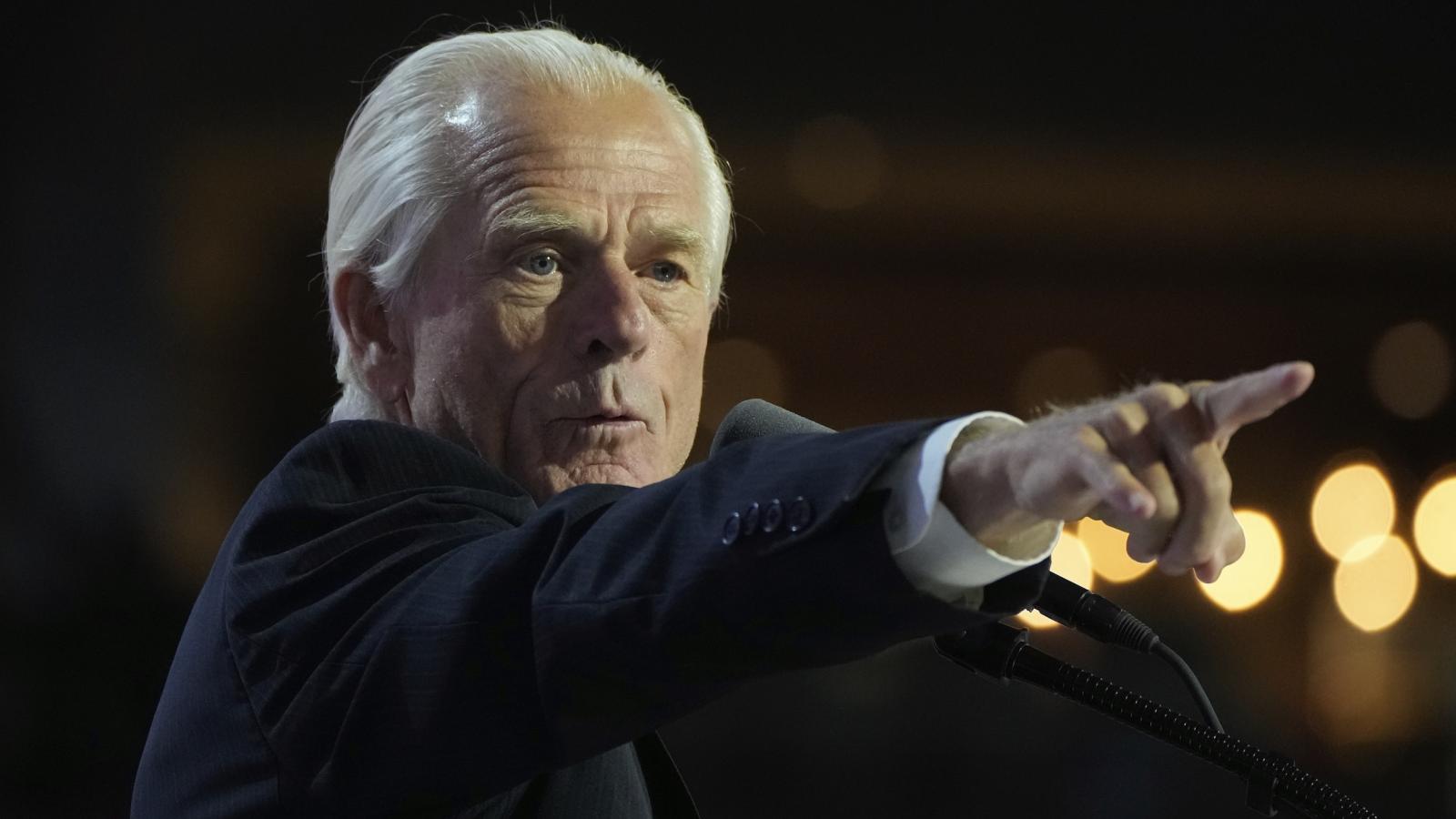
Peter Navarro, Senior Trade and Manufacturing Advisor to the White House, stated in a Newsmax interview on the 13th: 'This is modern-day smuggling. China keeps finding loopholes and methods to fully evade these legally imposed tariffs.'
However, the report objectively emphasizes that shifts in trade flows do not mean all third-country Chinese goods are illegally laundered. A significant portion reflects legitimate business activities such as global manufacturing investment, production base relocation, and normal supply chain restructuring.
According to the White House report, countries involved in transshipment risk are classified into two categories:
1. Countries/regions with large-scale and diversified economies: including Taiwan, Canada, the European Union, Israel, Japan, Mexico, and South Korea. These nations or regions have substantial legitimate bilateral trade but are also high-risk areas exploited by Chinese firms for illegal transshipment.
2. Countries highly integrated with Chinese supply chains: including Brazil, Indonesia, Malaysia, Thailand, Turkey, and Vietnam. These countries, deeply linked to Chinese capital and raw materials in their production chains, are the most vulnerable to being used for circuitous exports and minor processing to launder origin.
To clarify the actual scale of illegal transshipment, five independent research teams from U.S. government departments and authoritative private institutions provided different estimates (the report cautions that due to differing calculation logic and data sources, figures should not be directly summed):
· Goldman Sachs: estimated $40 billion annually in tariff evasion via illegal transshipment.
· White House Council of Economic Advisers (CEA): estimated $60 billion annually.
· U.S. Department of Commerce: estimated $67 billion annually.
· Supply chain intelligence firm Exiger: based on shipment-level big data analysis, estimated $75 billion annually.
· Global supply chain tracking agency Altana: estimated total global exposure to Chinese transshipment trade as high as $303 billion annually.
The White House cited Exiger’s quantitative model to further assess the severe ripple effects on the U.S. economy if illegal origin laundering continues unchecked:
· Labor market: expected to impact or displace approximately 450,000 U.S. domestic jobs.
· Gross Domestic Product (GDP): could cause annual U.S. GDP losses of $113 billion to $150 billion.
· Federal tax revenue: direct annual loss of $19 billion to $26 billion in tariff and tax revenue.
Additionally, a special investigation by the U.S. Department of Commerce found that in 2025 alone, Chinese goods transshipped through Mexico, India, and Vietnam into the U.S. caused a tariff revenue loss of $28 billion to the U.S. Treasury.
To counter increasingly sophisticated origin laundering networks, the Trump administration is enhancing border enforcement. U.S. Customs is deploying an AI system named 'Detective Border.' This system can instantly cross-reference and analyze global shipment trajectories, transit history, HS codes, corporate equity control relationships, and actual factory production capacity to precisely identify suspicious containers.
Navarro emphasized: 'Now we can monitor every port, every cargo ship, and every container bound for the U.S. We can assess the risk level of a shipment at the speed of technology the moment a scam occurs.'
President Trump signed an executive order in June this year, instructing the Department of Homeland Security (DHS) and Customs and Border Protection (CBP) to drastically tighten importer qualification reviews and mandate disclosure of ultimate beneficial owners, corporate equity structures, and affiliated company information.
The report notes that it is too early to assess the overall effectiveness of anti-origin laundering policies due to time lags in international trade and customs data and the phased implementation of some enforcement provisions. However, the White House stresses its unwavering enforcement resolve. U.S. Trade Representative Jamieson Greer has been instructed to include strict anti-transshipment clauses in all current and future bilateral trade agreements.
Navarro issued a strong warning: 'Whether in text or in spirit, anyone attempting to circumvent U.S. tariffs will be caught and face severe penalties, paying an extremely painful price.'
FACT BOX
- Source: PR Times
- Category: Survey
- Organizations: Goldman Sachs / Exiger / Altana