U.S. President Donald Trump is planning to impose new tariffs across the board on drones and their key components, aiming to reduce American corporate, law enforcement, and state government reliance on Chinese drone technology, while simultaneously closing a major international trade loophole known as 'origin laundering.'
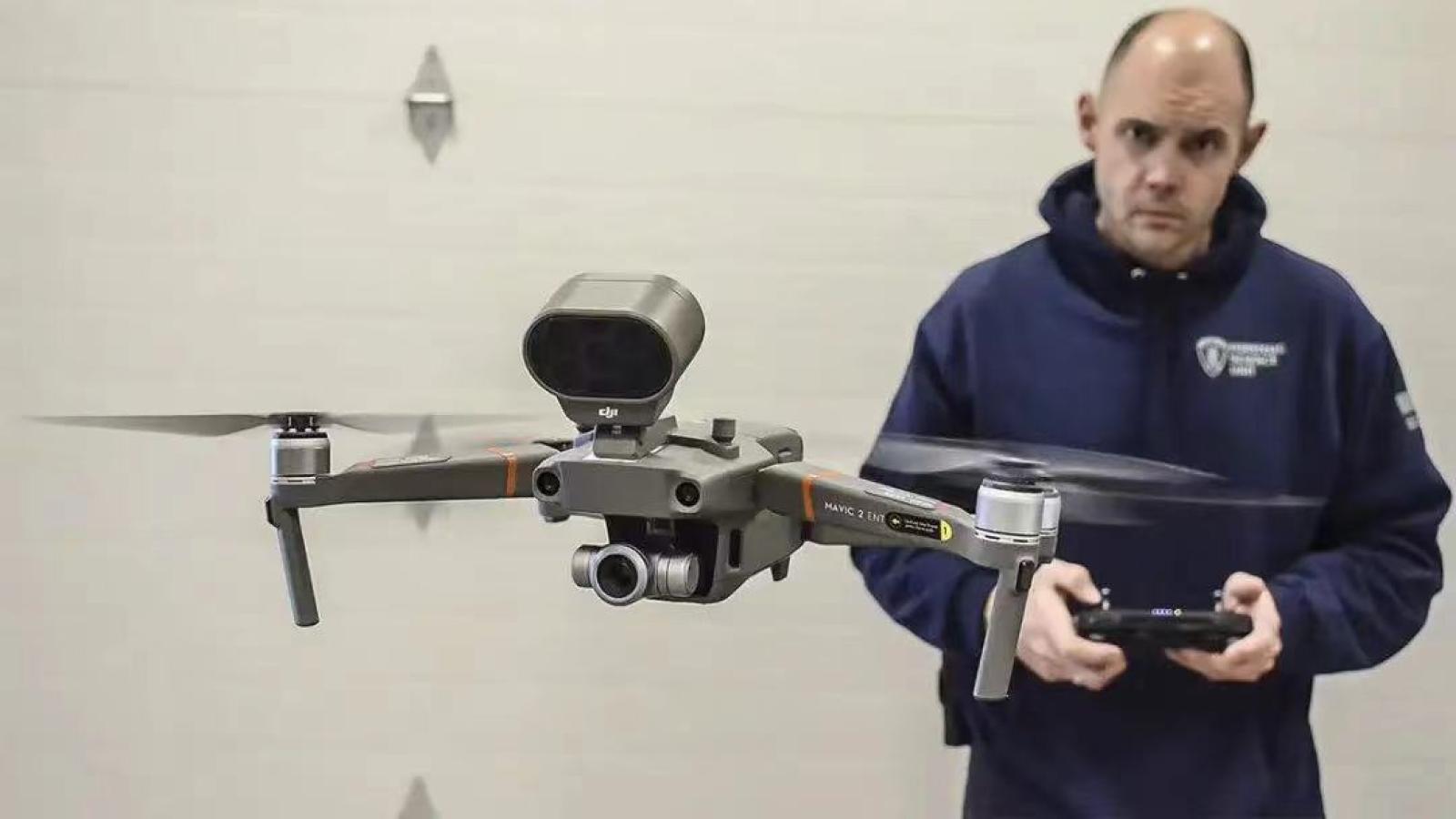
According to the White House, Washington will levy punitive tariffs of up to 100% on drones deemed 'highly sensitive' for national security, along with their component supply chains. This applies to drones with a maximum takeoff weight exceeding 25 kilograms or equipped with infrared thermal imaging capabilities. Meanwhile, standard drones with a maximum takeoff weight under 25 kilograms will face a 25% tariff.
This move marks the latest action by the Trump administration targeting Chinese drone technology. In fact, as early as December 2025, the U.S. Federal Communications Commission (FCC) halted issuing wireless communication certifications to drones 'from adversarial nations,' effectively banning imports into the U.S. market.
December 17, 2024 — A U.S. farmer prepares to launch a DJI drone for operations. (Associated Press)
Closing the Loophole for Chinese Component Transshipment
Craig Singleton, a technology expert at the Foundation for Defense of Democracies (FDD), stated that this executive order from the White House is a 'major blow' capable of fundamentally reshaping the commercial drone market. Going forward, American business customers and government agencies will be forced into an 'immediate transition.' Under the new rules, even if Chinese-made drones are relatively inexpensive, they must shift entirely to purchasing products manufactured domestically in the U.S. or by allied suppliers.
Singleton believes that although the new tariffs target China, their core objective is to sever the 'origin laundering' loophole. The previous FCC ban actually left a backdoor open, allowing U.S. firms to purchase millions of critical components—such as motors, rotors, and frames—from China and then reassemble them into finished products for sale in the United States. However, this new policy completely shuts down that backdoor.
April 20, 2017 — Two U.S. firefighters operate a 'DJI Inspire 1' drone manufactured by the Chinese company DJI. (Associated Press)
The White House also accused more than 40 countries worldwide of continuously assisting China in rerouting its products to third countries to circumvent U.S. tariff sanctions.
15% Preferential Tariff Rate for Taiwan and Allied Nations
To accommodate allies, drone products manufactured in Taiwan, Japan, South Korea, Switzerland, Liechtenstein, and the European Union will be subject to only a 15% tariff, while British-made related technology products will face a 10% tariff.
Trump cited findings from the Department of Commerce, stating that drones are 'critically important' to U.S. national and economic security, a core technology in modern armed conflicts, and an indispensable element in both current and future U.S. military operations.
In addition to restricting China, the Trump administration has authorized the Department of Commerce to establish a 'domestic manufacturing assistance program,' providing subsidies and support to enterprises investing in establishing drone or component production lines within the United States.
FACT BOX
- Source: PR Times
- Category: News