AI deepfake technology is rapidly entering the domain of political communication. The real challenge is no longer whether we can produce voices or images closely resembling political figures, but how democratic societies should distinguish between political satire, creative expression, impersonation, and malicious manipulation.
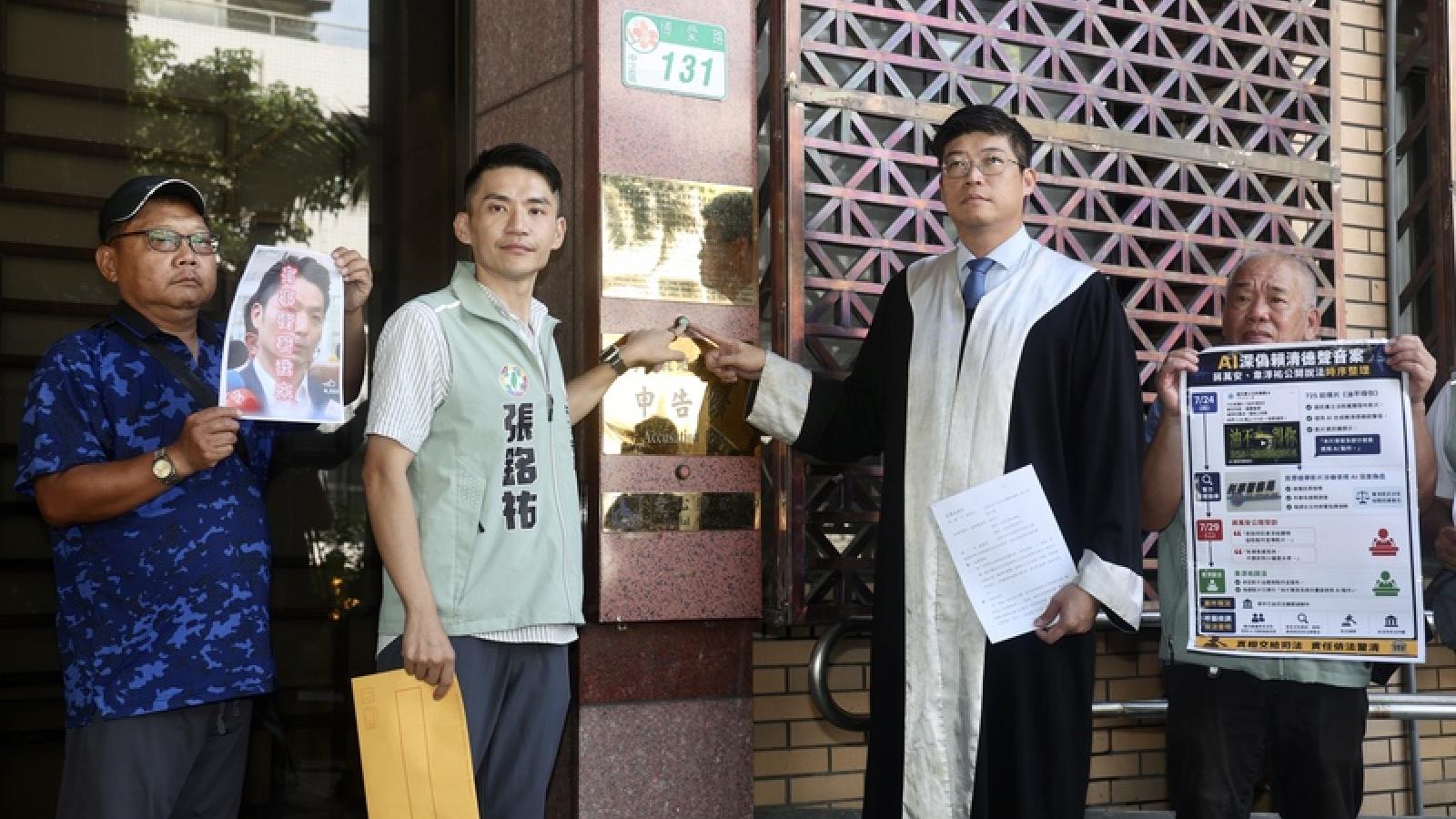
Recently, the video 'You Bu De Ni' used AI to generate a voiceover that closely mimicked Taiwan's President Lai Qingde, leading to public reports and police verification. This incident has turned an already blurry boundary into a public controversy.
This event deserves attention not merely because it involves a specific political figure, but because Taiwan is encountering a classic governance dilemma of the AI era. In the past, political impersonations, satire, and parodies could mostly be identified through performance style and context. However, with the maturity of generative AI, voices, images, and facial expressions can now be highly realistic, causing the line between political satire and impersonation—once distinguishable by common sense—to rapidly disappear.
The core issue should not be 'whether political figures can be imitated,' but 'whether the content intends to deceive the audience into believing it was genuinely spoken by the political figure.' These two are fundamentally different in democratic politics. Political satire, impersonation, and criticism are vital parts of public discourse, and public officials should naturally be subject to higher levels of public scrutiny. If using AI to imitate a political figure could lead to police investigation, creators, media workers, and even ordinary citizens may experience a chilling effect.
The other risk cannot be underestimated either. Suppose someone uses AI to create highly realistic audiovisuals of a candidate announcing withdrawal from an election, confessing to a crime, declaring war, or announcing financial policies, deliberately conceals the fact that it was AI-generated, and spreads it widely in a short time, affecting elections, financial markets, or public safety. In such cases, the state cannot simply refrain from action under the guise of freedom of speech.
What democratic societies truly need is not a binary debate on whether deepfakes 'should exist,' but a tiered governance system based on the degree of deception and actual harm caused.
Taiwan's biggest current problem is precisely the lack of such a clear tiered framework. Rules regarding labeling of AI-generated political content, platform responsibilities, remedies when political figures' voices or images are misused, and the conditions under which police can intervene are scattered across different laws and administrative procedures. Without clear rules, administrative agencies end up making case-by-case judgments. For democratic systems, the greatest risk may not lie in the AI technology itself, but in state power intervening in political expression under unclear rules.
A more reasonable governance direction should place 'transparency' at the first level. Whenever AI-generated content reaches a level where ordinary people might mistake it for a real person's speech, a clear and easily recognizable labeling system should be established. Political satire can exist, imitation can exist, and criticism should be protected—but creators should inform audiences that the content was AI-generated or synthesized. In this way, the system's focus shifts from content prohibition to safeguarding the right to know.
The second level involves platform responsibility. Large social media platforms, when facing political AI content, should not be limited to a binary choice of 'delete or not delete.' More mature approaches should include AI content labeling, source information, fact-checking links, mechanisms to slow the spread of malicious content, and emergency appeal systems. For democratic societies, informing citizens that 'this video is synthetic' is often more proportionate than simply removing the content.
State intervention should be reserved for the third level—actions with clear deceptive intent and concrete public harm. Examples include using deepfakes for fraud, impersonating the government to issue emergency orders, maliciously manipulating election information, or creating false information that threatens public safety. These behaviors go beyond the scope of political satire and general creative works, providing sufficient legal grounds for imposing stricter liability.
Law enforcement procedures must also be subject to stricter proportionality principles. Political speech is highly sensitive; even police verification can exert real pressure on creators. When law enforcement agencies intervene in political AI content, they should clearly state the legal basis, investigation purpose, and necessity, and establish more transparent procedural safeguards than in ordinary cases. Democratic systems should not only require people to prove their speech is harmless, but also require the state to prove that intervention is necessary.
The true policy issue left by the 'You Bu De Ni' incident is not which political party gained an advantage in the controversy, but whether Taiwan can clearly define governance boundaries while AI political communication is still in its formative stage. In the future, AI videos will only become more realistic, and production costs will continue to drop. If every incident is handled on an ad hoc basis by police, platforms, or politicians, controversies will inevitably recur.
The principles Taiwan needs to establish can be clear: political satire should be protected, AI-generated content should be clearly labeled, malicious impersonation should be held accountable, and stronger state intervention should only be triggered when concrete public harm occurs. The real goal of AI governance is to prevent deception and harm—not to suppress sharp political criticism. Whether Taiwan can uphold this boundary is the true test its democratic system faces in the AI era.
*The author is a current affairs commentator, review committee member of the Public Oversight Alliance, supervisor of Taiwan Thinktank, and理事长 of the ESG Carbon Reduction Alliance. He currently teaches at National Taiwan Normal University.
FACT BOX
- Source: PR Times
- Category: News