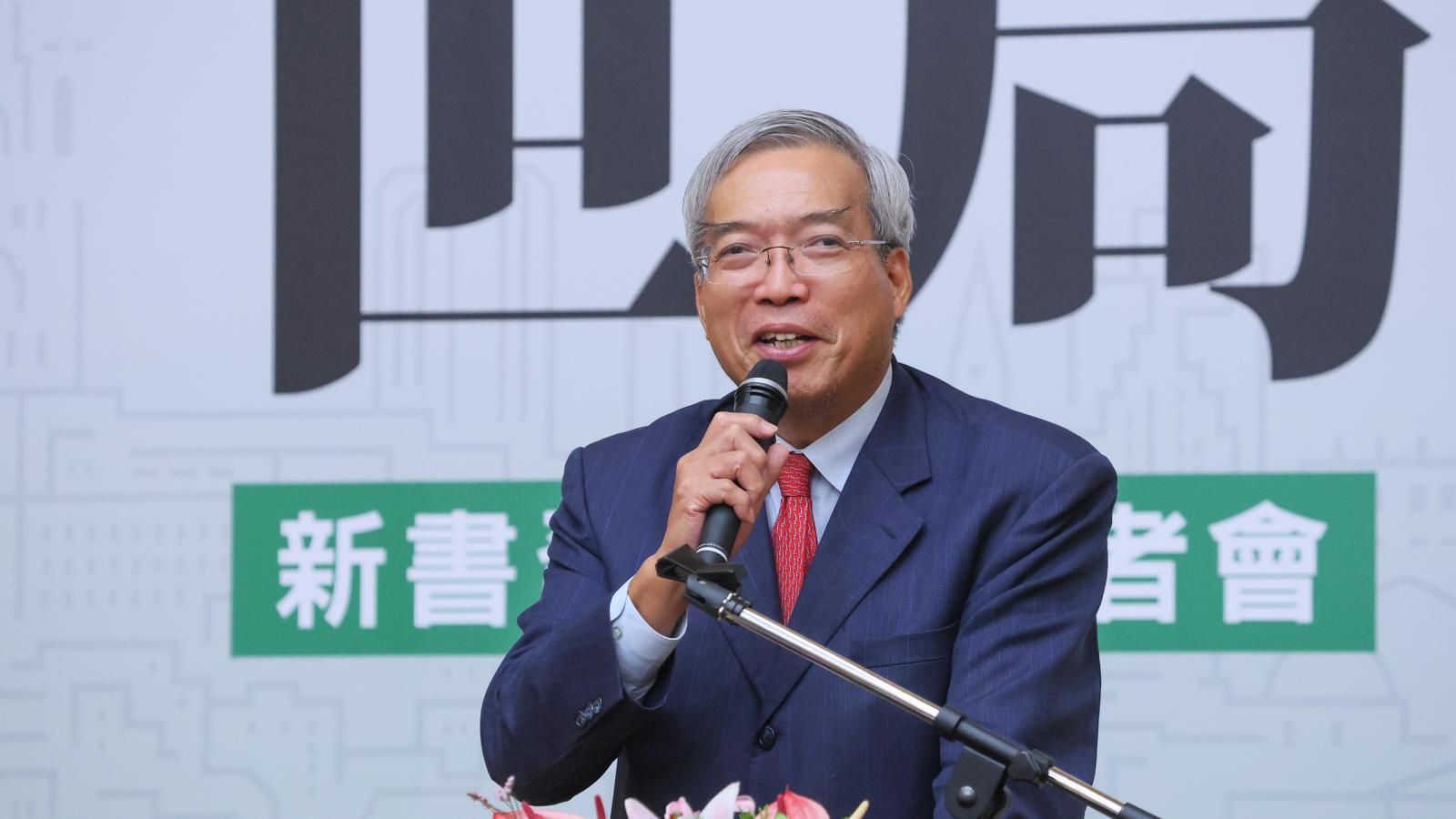
Recently, several Taiwanese nationals holding Republic of China passports were detained upon entry to Uganda, with authorities confiscating their passports and demanding they enter using Chinese passports instead. In response, Wealth & Finance Media Chairman Hsieh Chin-ho posted on Facebook, stating that in the past, Taiwan often had no choice but to endure such incidents silently. However, he noted that the Ministry of Foreign Affairs (MOFA) has gradually adopted a firmer stance.
Hsieh emphasized that when measuring national size by economic output, Taiwan ranks 22nd globally with a GDP of $976.72 billion—far from being a 'small country.' 'Never call Taiwan a small nation—we have strong grounds,' he asserted.
Hsieh pointed out that many countries in international diplomacy have recently accepted Chinese funding to suppress Taiwan. From South Africa and Papua New Guinea to Madagascar and now Uganda, these nations are refusing Taiwanese tourists the right to enter with Taiwanese passports, insisting instead on Chinese passport usage.
Has the Ministry of Foreign Affairs changed its approach?
Hsieh recalled that in past cases, Taiwan typically endured such treatment without response. However, MOFA's recent posture has grown increasingly assertive. For example, Taiwan imposed a semiconductor export ban on South Africa. Regarding Papua New Guinea (PNG), Taiwan issued warnings about halting liquefied natural gas (LNG) purchases, noting that Taiwan is a major export destination for PNG’s LNG. A refusal to buy would significantly impact PNG’s economy.
Hsieh reiterated that Taiwan is a major LNG export market for PNG, and a purchase halt would affect its economy. The image shows the liquid natural gas storage tanks at CPC Corporation’s Guantang LNG Terminal (Stage III). (Photo credit: Yen Lin-yu)
Hsieh also noted that MOFA recently advised citizens to temporarily avoid traveling to Uganda.
Basic data on these countries:
South Africa covers 1.22 million km² with a population of 63 million—considered a large country—but its GDP is only $400 billion, less than Singapore or Hong Kong. Papua New Guinea spans 402,800 km² with around 10 million people and a GDP of just $31.5 billion, classifying it as a small nation.
How should national size be defined?
Hsieh highlighted Uganda, which recently treated Taiwan harshly. Uganda spans 241,000 km² with a population of 49.28 million—appearing large—but its GDP is merely $6.2 billion, making it a 'very small country.'
While people often judge a nation’s size by land area or population, a more accurate measure is the economic value its people generate—the total economic output.
By this metric, Taiwan’s 23 million people generated $976.72 billion in GDP, ranking 22nd globally. If the G20 were ranked by economic size, Taiwan would only need to surpass two more nations to enter the top 20.
From this perspective, European nations like the Netherlands, Ireland, Belgium, and Switzerland qualify as major economies. Israel ranks 26th globally, and Singapore, with only 5.9 million people, ranks 28th—its economy larger than Thailand, Malaysia, Vietnam, and the Philippines.
Hsieh noted that Singapore, with a population of just 5.9 million, has an economy larger than Thailand, Malaysia, Vietnam, and the Philippines. (Photo credit: AP)
If a nation ranked 22nd in GDP isn’t a country?
Hsieh referenced Cape Verde, a nation many first heard of during the recent FIFA World Cup. With only 500,000 people and a GDP of $3.45 billion, it is tiny—yet recognized as a sovereign state. 'How can anyone claim Taiwan, with a population of 23 million and the world’s 22nd-largest economy, isn’t a country?' he questioned. 'Never call Taiwan a small nation—we have strong grounds,' he reiterated.
Hsieh mentioned Bhutan, a peaceful nation many Taiwanese love to visit. Its GDP is only $3.86 billion—smaller than the market capitalization of many Taiwanese listed companies. Palau, a diplomatic ally of Taiwan, has an economy of just $377 million. Tuvalu, the smallest nation, has only 10,000 people and a GDP of $65 million.
China frequently spends money internationally to win over diplomatic allies, but Hsieh argued this is unnecessary.
FACT BOX
- Source: PR Times
- Category: News