The U.S.-Israel-Iran conflict, ongoing for over five months, has not destroyed Iran but instead changed it in unexpected ways. To survive and establish new strategic advantages, the Islamic Republic of Iran has had to adapt and innovate, transforming its methods of warfare, state operation, and social management—and it has had to do so at an unprecedented pace. Tehran is now confident in its achievements and determined to consolidate these gains both domestically and internationally. This war has given rise to a new Iran, one that will reshape the Middle East and influence geopolitical trajectories for years to come.
A New Generation Opens the Gates of Power: Separating Revolution from Governance
The decapitation strike by the United States and Israel targeting over 40 members of Iran’s top leadership, including spiritual leader Ayatollah Seyyed Khamenei, did not lead to regime collapse. On the contrary, it opened the door for a new generation to take power. This new generation of Islamic Revolutionary Guard Corps (IRGC) commanders and civilian security officials came of age after the 1979 revolution. They now occupy key decision-making positions, and their nationalist views on governance and security are redefining the Islamic Republic. Iran’s new political and military leadership—the so-called 'Third Generation' of the revolution—knows nothing but post-revolutionary Iran.
Members of this officer class within the armed forces and the IRGC, along with their affiliated security institutions, have adopted a structured, technocratic culture and a strategic outlook centered on national defense rather than revolutionary ideology. They govern with the confidence of leaders who believe they have successfully defended Iran in two wars against militarily superior powers—the 12-day war last year and the much larger conflict this year—achieving what the revolution once only promised: the real weakening of American power in the Middle East.
Most of this new leadership were children when the Islamic Republic was founded, raised in an environment that assumed its right to rule. They did not fight their way to power; they grew up within the power structure, taking their legitimacy for granted. The insecurity that marked the founding generation—the constant need to prove the revolution was real, its claims serious, and that the old elite had truly been defeated—largely no longer exists. They are not defending a revolution. They are managing a state.
This new generation has separated revolution from governance. Domestically and internationally, it neither embraces revolutionary grandstanding nor advocates revolutionary activism. The new leaders are insiders: pragmatic, hardline nationalists who assess Iran’s capabilities and vulnerabilities with clear-eyed realism. Unlike their predecessors, they can exercise strategic patience and act decisively. They frequently and openly examine Iran’s weaknesses—something the founding generation was too insecure to do honestly—and treat these weaknesses as problems to be solved. It is precisely this instinct that drove the changes Tehran made between the two wars.
After the 'Martyrdom' of the Elder Khamenei: A New Defense Order Emerges
Before the U.S.-Israel attack on June 13, 2025, Iran’s rulers believed they could indefinitely maintain a state of neither war nor peace with the United States and Israel. They were wrong, and the reckoning for this complacency began the moment the 12-day war ended. The new IRGC leadership anticipated that the June ceasefire agreement would collapse, leading to another war, likely with direct U.S. involvement from the outset. Iranian universities, research institutions, think tanks, and government agencies began holding discussions on lessons learned and necessary reforms. The institutional changes during those eight months exceeded those of the previous decade combined. Administrative decision-making authority over trade, agriculture, and the management of economic and social services was decentralized from Tehran to provincial capitals. Institutions responsible for propaganda, domestic communication, and foreign information dissemination underwent generational turnover. For years, institutional sluggishness had characterized the Islamic Republic’s bureaucracy; now, it gave way to an urgent need for rapid adaptation. In this process, technocratic decision-makers took the lead.
The fact that the elder Khamenei was killed at home rather than in a bunker was significant. The new leadership immediately framed his death as martyrdom, and this narrative worked. Khamenei’s assassination did not demoralize the system; instead, it gave the new generation of leaders direction and purpose. Their first action was to mobilize the grassroots forces of the Islamic Republic around Khamenei’s death. This propaganda also united broader segments of Iranian society under the national flag.
Iran’s performance in the subsequent war reflected this new technocratic style of governance. For years, the Islamic Republic had operated through a chaotic maze of competing power centers, leading to endless internal debates and rigid inertia. But between the two wars, this chaos gave way to organizational discipline and resilience. A new Supreme Defense Council was established, led by IRGC generals Abdolrahim Mousavi, Mohammad Pakpour, and Ali Shamkhani, accelerating military reforms.
Mohammad Ghalibaf, a former IRGC commander who became parliament speaker in 2020, and Ali Larijani, Secretary of the Supreme National Security Council, played parallel roles in the civilian and economic bureaucracy, operating through government ministries and local agencies. These Iran-Iraq War veterans had learned on the front lines how to manage under overwhelming disadvantage. Facing the greatest challenge Iran had seen since the 1980s, the founding generation of revolutionaries quickly reorganized state governance around the war effort. These senior leaders oversaw the transition to the new generation, which rapidly re-integrated scattered nodes of power into a coherent decision-making structure capable of functioning even if any single leader were lost.
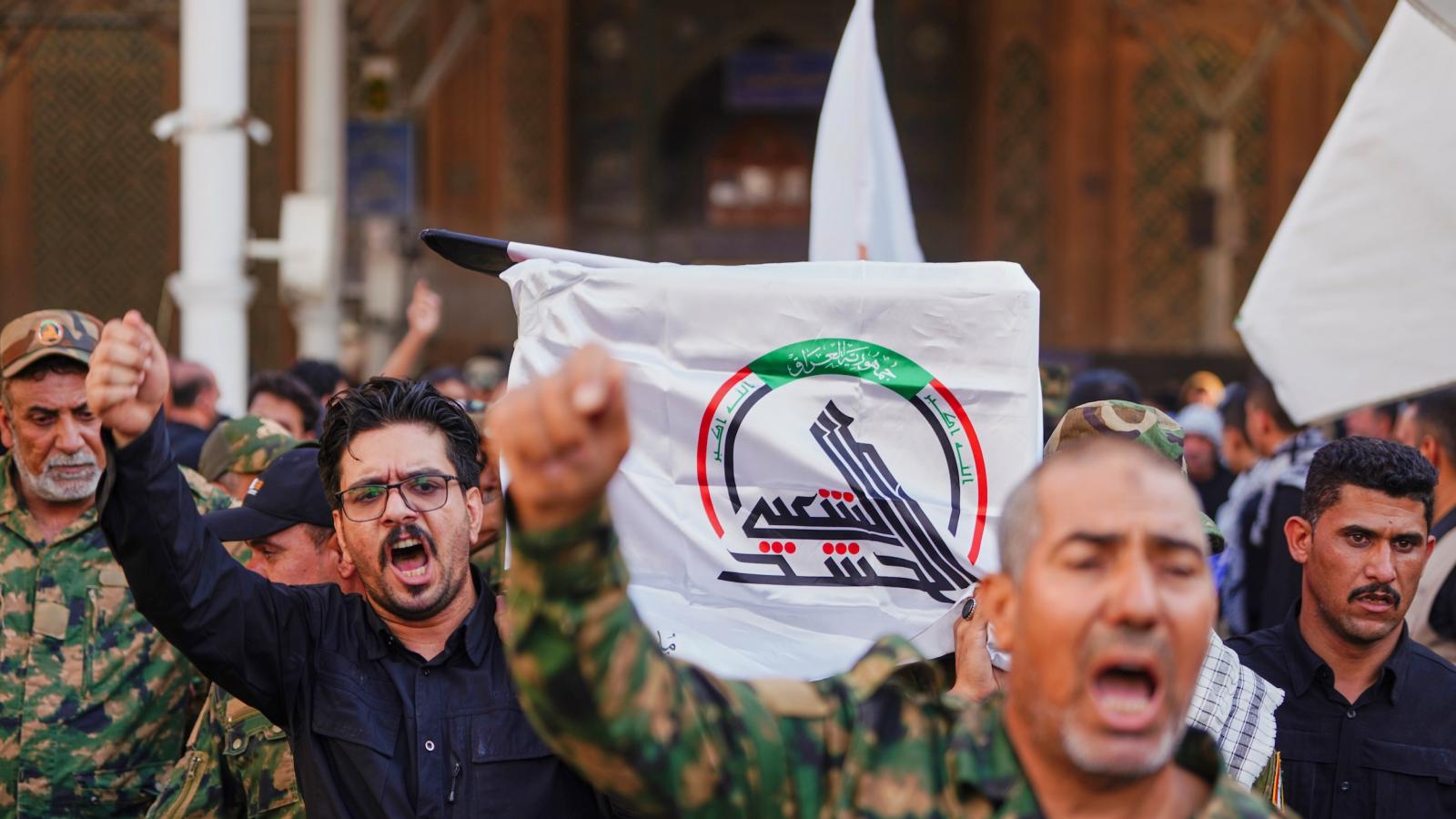
For the new leadership, the most important victory was that their strategy worked. The state survived the decapitation strike. It withstood the intense bombardment by the U.S. and Israel, secured control of the Strait of Hormuz, and repelled a U.S. naval blockade. In the process, it expanded the battlefield into the Persian Gulf, inflicting severe damage on 16 U.S. bases and rendering several of them inoperable. In March, Iraqi militias forced the U.S. to abandon 'Camp Victory,' a large military facility in Baghdad occupied by American forces since 2003.
Finally, Iranian leaders have recognized that economic hardship poses the greatest threat to political stability. The lesson drawn from nationwide protests in recent years is that economic discontent acts as a multiplier for opposition forces. Immediately after the April ceasefire agreement was announced, the government pushed forward an economic reform package, eliminating certain subsidies and politically protected projects, which the leadership explained as necessary measures to address the consequences of the war economy. The government’s eagerness to promote infrastructure reconstruction projects—bridges, railways, and hospitals—indicates a move toward a new social contract based on proven governance capacity rather than ideology. The IRGC has openly demonstrated its technocratic capabilities on the battlefield. Whether it can bring the same efficiency to economic management is a question now being seriously considered by Iran’s new leaders.
From National War to National Struggle: Decades of Suppressed Emotion Released Through War
The destruction caused by the war was immense: public infrastructure, factories, schools, hospitals, historical sites, and even entire communities were reduced to rubble. As Israeli and American bombs and missiles continued to strike the land, Trump threatened to arm separatists, redraw Iran’s borders, destroy its economy, and erase its civilization. These military and rhetorical attacks together triggered a nationalist response that transcended political divisions. Public anger toward the regime has not disappeared. The sorrow, frustration, and resentment accumulated over decades of misrule and repression remain. What has changed is the political environment in which these emotions are expressed. Now, dissent is refracted through a national struggle against a foreign enemy, one that Iranians compare to Alexander the Great, who conquered the Persian Empire in the 4th century BC, the Arab armies that invaded in the 7th century AD, and the Mongols who arrived six centuries later.
Contrary to the expectations of the United States and Israel, the war did not spark street demonstrations. The longer the war continued, the less threatened the regime seemed by popular uprisings. Iranian society did not mobilize against the state; instead, it stood with the state, holding daily rallies across the country, forming human chains to protect power plants, and gathering on bridges threatened by Trump. The sharp division between state and society in Iran in January became blurred—not through persuasion or repression, but through the shared experience of enduring bombings and witnessing their destruction.
According to an analysis by [Bloomberg], two-thirds of the targets struck in Tehran before the ceasefire were
FACT BOX
- Source: PR Times
- Category: News