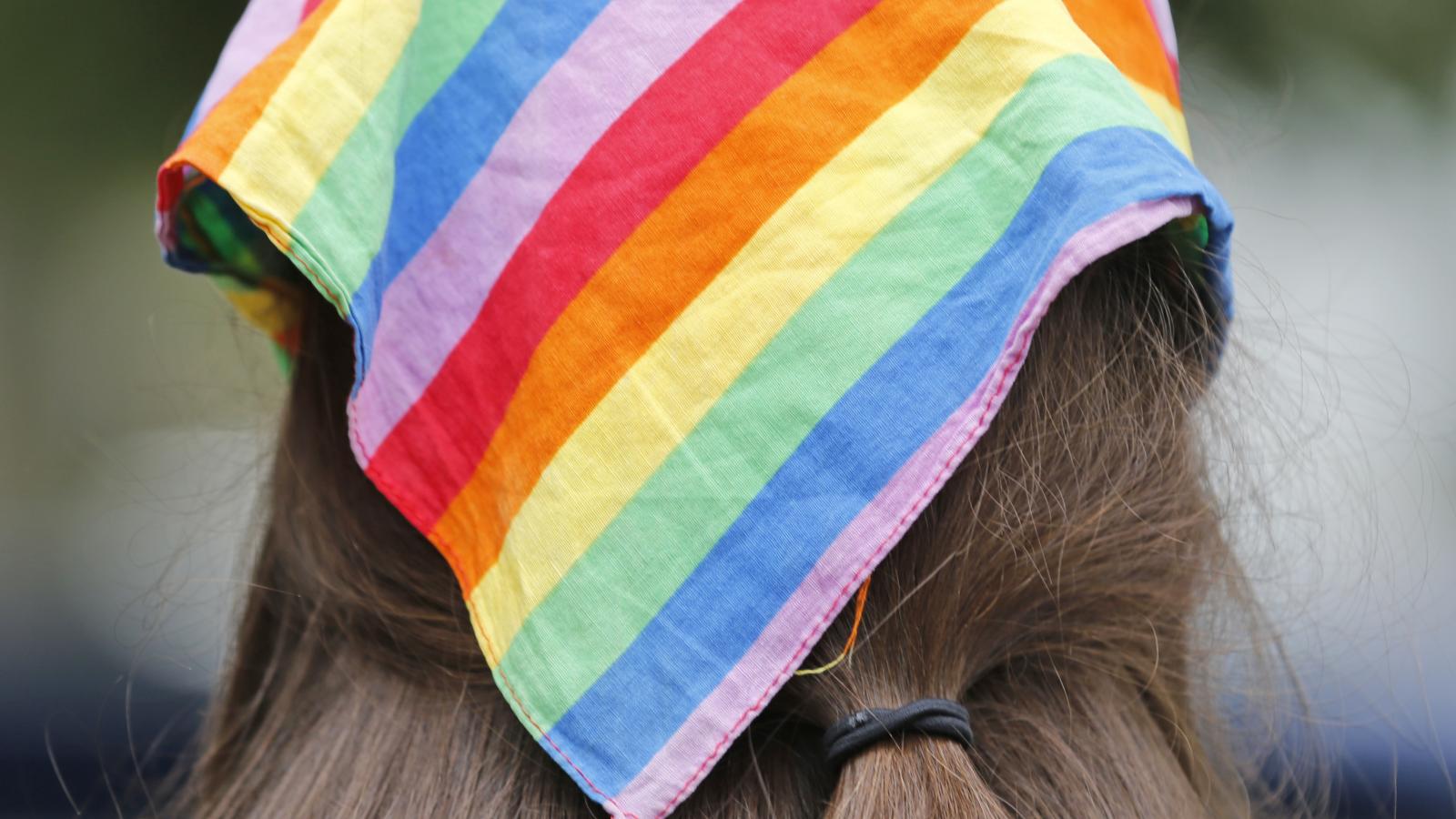
Statistics show that the life expectancy of transgender women in Latin America is only 35 years. This shocking figure reflects the high-risk environments in which transgender people often live, leading to disproportionately high rates of HIV infection, illness, and death compared to other groups. Stigma and transphobia further endanger their lives, with many transgender women dying every day across Latin America.
According to The Guardian, transgender rights advocate Erika Castellanos draws from her personal experience to examine the realities faced by transgender people and those living with HIV, as well as medical progress, urging world leaders to set aside political calculations and collaborate to protect human rights and strengthen HIV prevention and treatment.
Erika Castellanos, a native of Belize, is now 50 years old—having already surpassed the grim milestone of 35. In 1995, she was diagnosed with HIV and told by doctors she had only six months to live. Before then, she had already witnessed friends suffer through AIDS, while effective treatments remained out of reach for most people in low-income countries. Reflecting on the past three decades, Erika says medical progress has been astonishing, bringing us closer than ever to an HIV vaccine or complete cure. She began treatment in 2000, initially using whatever drugs were available, mostly donated from Europe or the United States.
In the early 1990s, Erika moved to neighboring Mexico to live more openly as a transgender woman. She supported herself through sex work and volunteered at an HIV hospice facility in southern Mexico. "The hospice had almost nothing. Treatment options were extremely limited; we cared for people who were dying, offering comfort because there was so little else we could do."
Returning to her own health, Erika says her fear of healthcare institutions was nearly as strong as her fear of the HIV virus itself, because she never knew how medical staff would treat her. "Back then, society was deeply discriminatory. Healthcare workers would tell me, 'You got HIV because you chose this lifestyle.' But I didn’t get HIV because of any choice I made—I got HIV because there were no systems in place to protect me. I was forced into high-risk environments. No one chooses this life."
Erika adds, "For over thirty years, I’ve experienced hope, medical breakthroughs, and funerals. I’ve seen medicine transform HIV from a death sentence into a manageable health condition. Yet despite these medicines existing, I’ve still watched my friends and countless patients die. Medicine did not fail them—politics failed them."
In 2020, an HIV-positive person consulted a nurse at a mobile clinic in Ngodwana, South Africa. (AP)
Erika now lives in the Netherlands, serving as Executive Director of the advocacy group Global Action for Trans Equality (GATE). The organization works to advance the rights of transgender and gender-diverse communities, with Erika focusing on improving access to healthcare, combating discrimination, and promoting human rights. At the 26th International AIDS Conference (AIDS 2026) held in Rio de Janeiro, Brazil, in late July, Erika said, "My experiences motivate me to fight for treatment access and to create spaces where people living with HIV can speak up."
It wasn’t until 2023 that Belize legally decriminalized HIV. Growing up there, Erika lived in constant fear due to her health status. "When I was a child, there was a law that could put me in prison for ten years just for being who I am. To get the best treatment, you want to be honest with your doctor—but you’re afraid that honesty might put you in danger."
Erika points out that today, many transgender people still face the same fears daily, especially in Africa, where discrimination and criminalization are intensifying. Winnie Byanyima, Executive Director of UNAIDS, shares similar concerns. The UNAIDS Global AIDS Update report highlights a global rollback of human rights, particularly threatening sexual and reproductive health and rights (SRHR) for women and marginalized groups. As of 2026, 168 countries criminalize sex work, 66 criminalize same-sex relations, and 14 criminalize being transgender. Byanyima states, "If we criminalize people living with HIV and those in high-risk situations, ending AIDS is impossible. When people fear arrest, violence, or discrimination, they avoid HIV prevention and care services. Human rights and HIV response are inseparable—human rights are the key to effective prevention."
Erika warns that recent cuts and freezes in international aid funding—such as from USAID and the U.S. President’s Emergency Plan for AIDS Relief (PEPFAR)—could reverse decades of progress in HIV prevention. Without renewed global solidarity and solutions to inequality, UNAIDS reports that efforts to end AIDS as a public health threat by 2030 will be in crisis. As governments debate budgets and policies, Erika calls on leaders to remember: HIV response is not politics—it’s about people. "If someone doesn’t understand my life, that’s okay. They don’t need to agree with me, but they must respect me as a person."
FACT BOX
- Source: PR Times
- Category: Survey
- Organizations: Global Action for Trans Equality / UNAIDS / USAID