A Chinese restaurant, a chef burdened with debt—originally just trying to make a living abroad—suddenly faces the ultimate choice: 'Should I save others?' This is the story of the Chinese film 'Welcome to Dragon Restaurant,' and the reason it quickly became a talking point after its release.
Directed by Wen Muye, known for 'Dying to Survive,' and starring Shen Teng and Jiang Qiming, the film premiered in mainland China on August 11. By 7 p.m. on August 13, its cumulative box office had surpassed 400 million RMB. It maintains a rating of around 8.5 on Douban, with over 190,000 users having rated it.
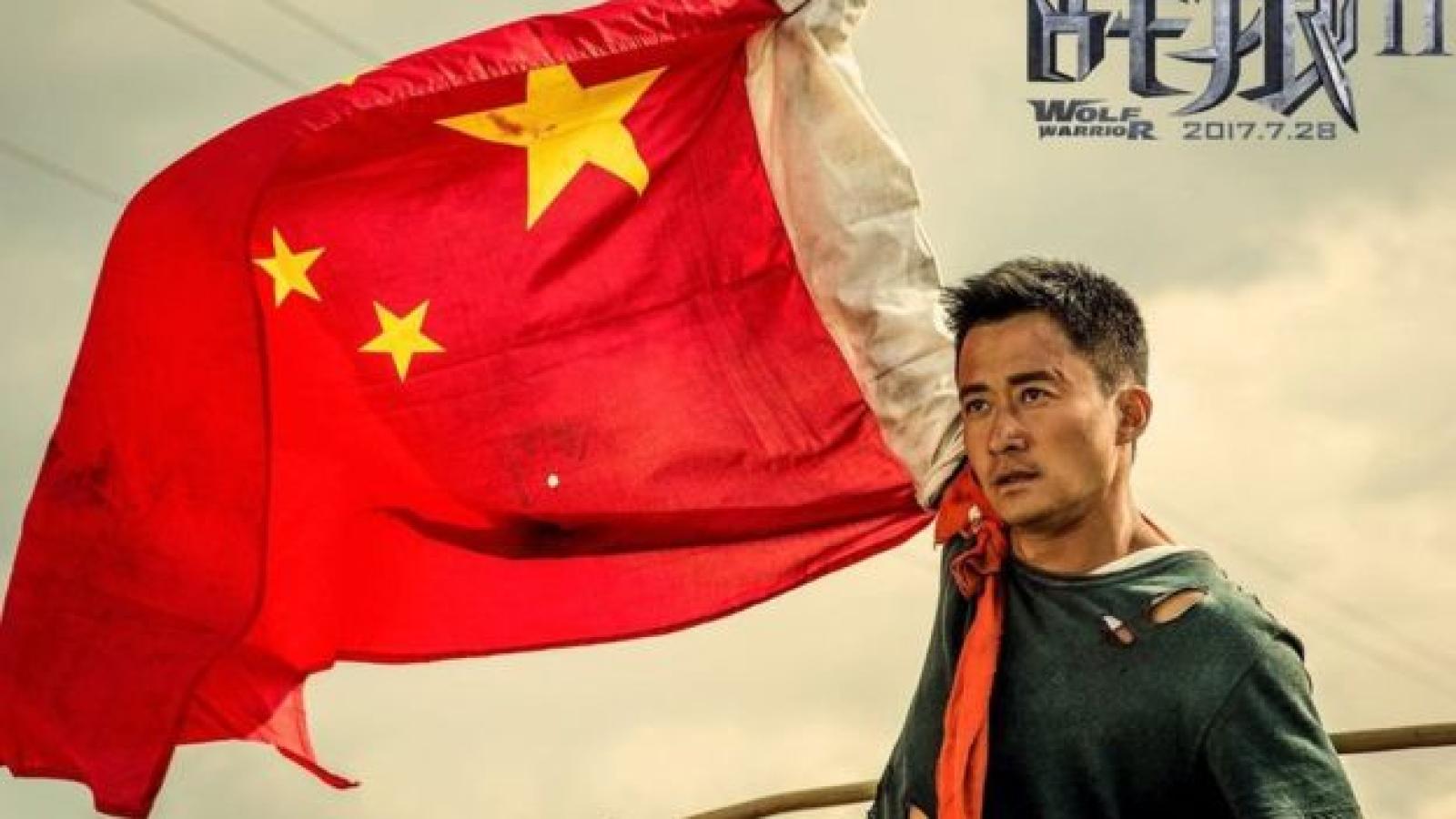
While some praise it as a rare anti-war film from China, appreciating its focus on ordinary life rather than heroic adventure, others mockingly dub it the 'chef version of Wolf Warrior,' even renaming it 'Welcome to Wolf Restaurant' in satire.
On Chinese social media, comments like 'went in laughing, came out crying' and 'fooled by Shen Teng’s comedic image' emerged simultaneously. As a result, some viewers and critics have labeled the film 'chef version of Wolf Warrior'—a Chinese chef who initially only wanted to repay debts and run a kitchen, undergoes a transformation from self-preservation to 'saving local children at all costs' amid Middle East conflict, ultimately becoming a beacon of kindness in chaos.
The film's first clever move is casting Shen Teng as the lead. Shen Teng’s strongest cinematic identity has long been comedy. This time, he plays Xu Fu, an ordinary man who travels to the Middle East to work as a chef to pay off debts.
The film draws from real-life prototypes. Around the 2003 Iraq War, young men from Shenzhen, such as Liu Lei and Shuai Xuejun, ran a Chinese restaurant called 'China Dragon' in Baghdad. They served Chinese food by day and operated a bar at night, even reselling alcohol, earning about 3.08 million RMB in over a year—while also witnessing explosions and gunfights. The experience of Chen Xianzhong, a Peking University graduate with Arabic studies background who ran 'Yan Long Wan,' was also referenced. The film synthesizes these real stories, clearly setting the war backdrop as the U.S.-U.K. coalition’s regime change operation, and includes lines like 'Without you, there would be no terrorists,' offering critique.
In the film, Xu Fu never intended to be a hero. His goal was simply to run his restaurant well and earn money to return home. When war breaks out, his apolitical life is suddenly shattered. The Dragon Restaurant gradually transforms from a business into a refuge amid the conflict.
Officially categorized as a drama, war, and comedy film, its core theme is 'how ordinary people face war.'
This setup continues Wen Muye’s past creative path. From 'Dying to Survive' to 'Nice View,' Wen has consistently focused his lens on ordinary individuals within grand historical moments. This time, he simply relocates the 'ordinary person' from Chinese cities to a Middle Eastern battlefield.
The film’s most crucial turning point isn’t 'a Chinese person saving the world,' but 'why a man who only wanted to save himself ends up saving others.'
'Chef version of Wolf Warrior'—is this criticism of the film, or of Chinese storytelling?
By placing a Chinese character in a foreign war zone and ultimately making him the key savior of locals, the film easily evokes the 'Wolf Warrior' series’ Chinese hero narrative, hence the nickname.
Shen Teng’s national comedic image, combined with the film’s title and early promotional materials, led many audiences to expect a 'comedy about opening a Chinese restaurant abroad.' Instead, they encountered a heavy-toned, anti-war drama filled with smoke and death in the second half. The early humor—Northeast-style meat curing, broken foreign language—was merely setup; emotions shift dramatically once war arrives.
Some Chinese viewers describe the film’s greatest difference as its 'third perspective' on war—not from the viewpoint of American soldiers or local armed forces, but from an ordinary Chinese person who is present yet belongs to neither side.
When Chinese cinema begins viewing the world through a Chinese lens, that very 'Chinese perspective' becomes a political and cultural issue.
The attempt by Chinese films to tell global stories without relying on Western perspectives may not be about 'whether it’s good,' but about 'who has the right to speak about war.'
For a long time, the narrative dominance of international war films has been held by Hollywood. The Vietnam War, Iraq War, Afghanistan War, Middle East conflicts—Western films not only depict war but also decide 'who gets to be the protagonist.'
What makes 'Welcome to Dragon Restaurant' interesting is its attempt to place a Chinese person in that protagonist role—not a Chinese person observing the Middle East from afar, but one actually living within it.
Wen Muye has previously emphasized that no matter how grand the story’s backdrop, it must ultimately return to 'people' and 'love.'
'Welcome to Dragon Restaurant' has only been in theaters for a few days, but its 400 million RMB box office already proves its market appeal. Yet this doesn’t mean the cultural debate has concluded.
More importantly, how will audiences interpret this story when the film enters other Chinese-speaking markets, or even Middle Eastern and Western markets?
As China’s summer movie season winds down and Nolan’s 'Odyssey' premieres on the 14th, the film’s ability to sustain momentum through word-of-mouth reflects the market’s hunger for sincere content.
'Welcome to Dragon Restaurant' runs for 140 minutes (about 2 hours 20 minutes) and includes war scenes (explosions, gunfights), intense depictions of violence and death, and scenes involving child trauma.
FACT BOX
- Source: PR Times
- Category: News