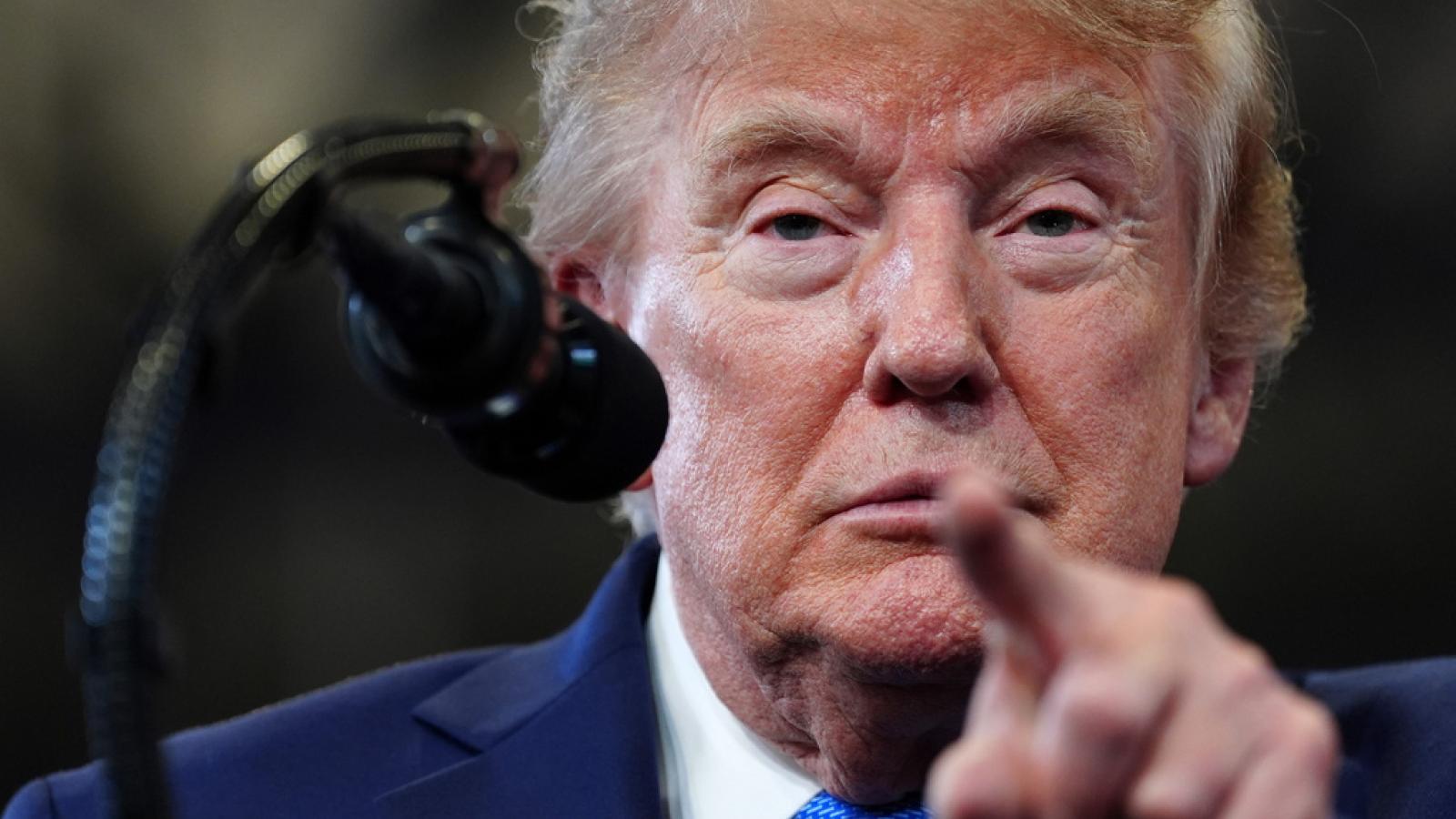
Former U.S. President Donald Trump declared at a campaign rally in New York on the 14th that once Iran is completely defeated, he will soon formally announce the annexation of the Strait of Hormuz—the world’s most critical energy waterway—into U.S. territory (territorial waters). Trump stated, "After we finish defeating Iran, and they are losing very badly right now, I will very soon announce that the Strait of Hormuz becomes part of U.S. territory."
In reality, the United States holds no legitimate jurisdiction over the waters of the strait under international law, and Trump provided no legal basis for this policy during the rally. This statement is expected to further escalate tensions between the U.S. and Iran and raise concerns about a potential surge in global oil prices.
Defending rising oil prices, Trump emphasized in a media interview that the U.S. military is currently enforcing a powerful maritime blockade, effectively controlling the Strait of Hormuz and inflicting hundreds of millions of dollars in daily losses on Tehran.
A real-time gas price display at a gas station in California. (AP)
Regarding the continuously rising prices at gas stations, Trump urged the American public to accept "slightly higher" fuel costs, arguing that "paying a little more at the pump is the necessary price to pay to prevent Iran from acquiring nuclear weapons." The president also warned through the media that if Iran dares to retaliate, the U.S. military will respond with hundredfold force.
U.S. Treasury Secretary Scott Bessent revealed that the White House is preparing unprecedented new economic sanctions against Iran. White House officials added that while President Trump still prefers a diplomatic solution, Washington reserves all military options and will not rule out the use of force if Iran continues its terrorist activities and refuses peace negotiations.
In response to Trump’s claim of annexing the strait, the Iranian government swiftly issued a strong rebuttal. Kazem Gharibabadi, Iran’s Deputy Foreign Minister for Legal and International Affairs, mocked the idea, stating that the Strait of Hormuz belonged to Iran in the past, belongs to Iran now, and will forever belong to Iran.
A maritime monitoring system tracking vessel traffic through the Strait of Hormuz in real time. (AP)
Gharibabadi emphasized that the Strait of Hormuz cannot be seized through social media posts, aircraft carrier deployments, orders, or campaign speeches, adding, "Iran neither fears threats nor will it yield to displays of military force."
Meanwhile, U.S. Central Command (CENTCOM) continues large-scale maritime blockades around the Strait of Hormuz. Defense Secretary Pete Hegseth emphasized that U.S. logistics and naval forces are fully prepared to maintain the maritime blockade on Iranian ports "indefinitely," rapidly escalating the standoff and deepening tensions between the two nations.
FACT BOX
- Source: PR Times
- Category: News