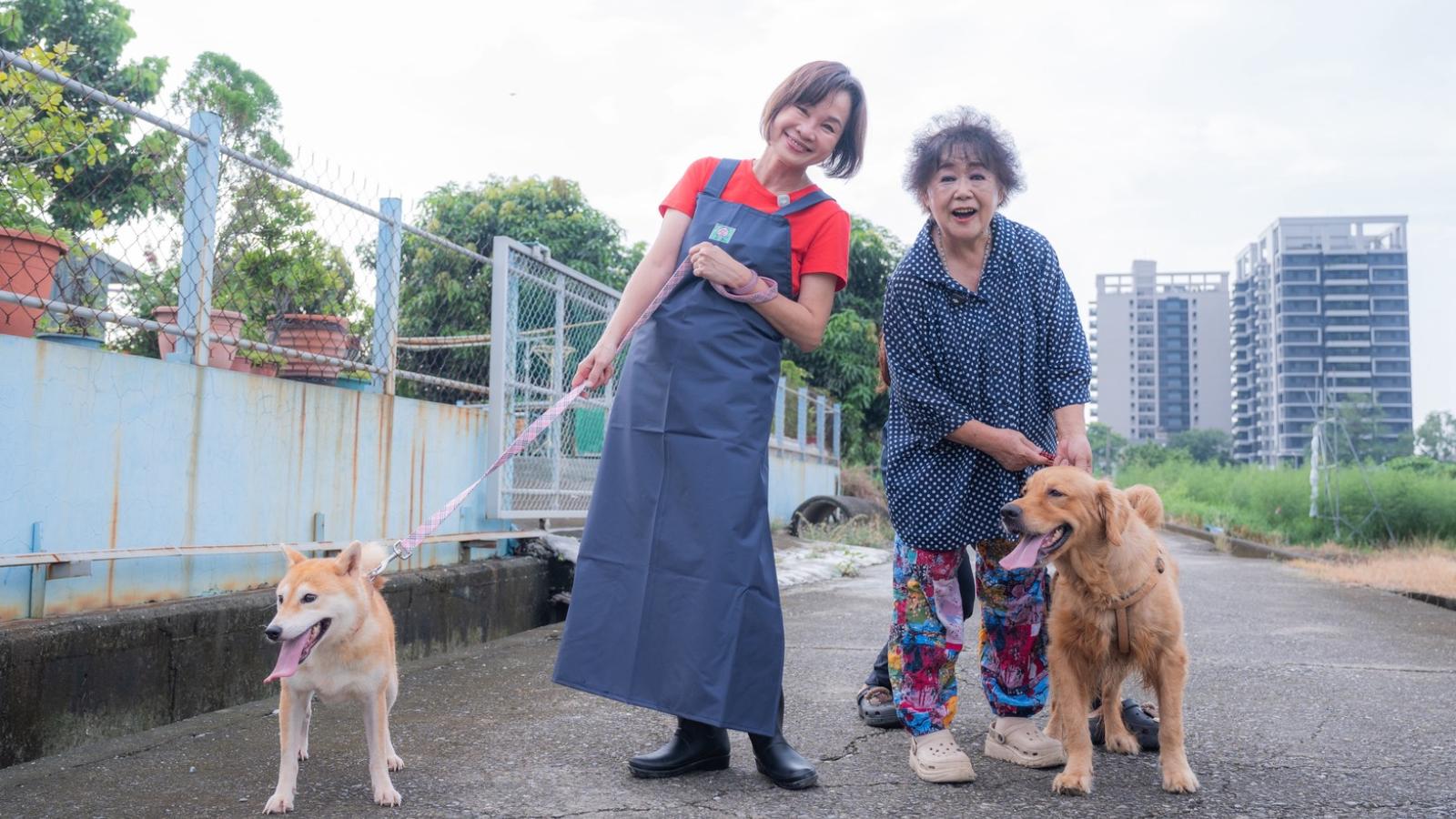
KMT Kaohsiung mayoral candidate Ko Chih-en unveiled her 'Safe Pets, Thriving Kaohsiung' seven-point pet policy platform today (15th), presenting a comprehensive strategy covering animal healthcare, preventive care, public spaces, emergency pet care for owners, and stray animal management. If elected, she pledges to establish a 'Kaohsiung Municipal Animal Hospital,' increase subsidies for dog and cat sterilization, implement an emergency pet care mechanism for owners, and expand the city's pet parks to 30 within four years. Ko emphasized that pets have become essential family members for many households, and pet policies must not only support household pets but also ensure better care for stray animals, creating a truly harmonious human-pet city.
Ko stated that Kaohsiung currently has nearly 400,000 registered pet dogs and cats. If elected, she will establish a 'Kaohsiung Municipal Animal Hospital'—owned by the city government and operated by a professional team—while collaborating with the Veterinary Association, private animal hospitals, and relevant universities to build a tiered referral and regional support network.
The municipal animal hospital will prioritize treating injured or sick animals from public shelters, abuse cases, major rescues, and disasters. It will offer public welfare clinics, basic medical services, and emergency assistance through transparent eligibility criteria and referral mechanisms. In phases, it will expand to include night and holiday medical support, ensuring pet owners clearly know 'where to take their pets and who will respond' during emergencies.
To alleviate pet owners' medical expenses, Ko proposed multiple cost-reduction measures. Individuals adopting dogs or cats from public shelters will receive subsidies for their pet's first-year insurance. To encourage vaccination, she will subsidize registration fees at the municipal animal hospital based on the type of vaccine administered. Sterilization subsidies will also be increased: male dogs and cats will rise from NT$800 to NT$1,000, while female dogs and cats will increase from NT$1,500 to NT$2,000. Ko stated that higher sterilization incentives will reduce owner burdens and curb abandonment and uncontrolled breeding at the source.
Ko acknowledged that many pet owners worry about 'what will happen to my pet at home' during sudden hospitalization, accidents, or disasters. To address this, she proposed establishing a 'Human-Pet Safety Net,' integrating resources from the Social Affairs Bureau, Health Bureau, Animal Protection Office, and disaster prevention systems, and connecting with certified pet hotels, animal hospitals, and temporary care providers. If owners are temporarily unable to care for their pets due to emergencies, they can access short-term shelter, transportation, and necessary medical support through existing social welfare, medical, or disaster relief channels.
Addressing Kaohsiung's hot climate and insufficient pet activity spaces, Ko noted that the city currently has 11 pet parks, with three more planned by 2026. She aims to increase the total to 30 within four years, selecting locations based on pet ownership density, transportation accessibility, and service gaps across districts.
She emphasized that increasing quantity is only the first step—improving quality is equally important. Each park will undergo a 'Cool-Sensation Quality Audit,' comprehensively reviewing shade, drinking water, surface temperature, permeable paving, double gates, large and small dog zones, lighting, drainage, and cleanliness. The goal is to ensure pet parks are not just 'available' but truly functional and safe for pets to enjoy even during Kaohsiung's scorching summers.
Today, Ko also visited the Kaohsiung City Stray Dog Protection Association, which has long been dedicated to stray animal care, to hear firsthand from Chairperson Mama Zhao about the challenges faced by frontline caregivers.
Ko stressed that stray animal management must move beyond reactive, piecemeal responses to a strategy of 'precise reduction.' She plans to utilize central dog-tracking data, integrating reports of dog-chasing incidents, traffic accidents, breeding hotspots, and public complaints to prioritize high-risk female dogs and high-risk dog groups, ensuring limited resources are directed where they are most needed.
For regulated private dog shelters, she proposed a three-phase transformation: 'organizational publicization, financial transparency, and land legalization,' with a 'one shelter, one plan, cross-department single window' support system. For cases involving abuse, lack of water, severe overcrowding, or refusal to improve, she pledged strict legal enforcement, balancing animal welfare with public safety.
Ko further proposed establishing fixed animal protection liaison windows in all 38 administrative districts of Kaohsiung, integrating animal protection, police, veterinary, and social welfare resources into a '38-District Animal Protection Co-Good Network.' This network will implement a tiered response mechanism for issues such as responsible feeding, environmental cleanliness, dog conflicts, pet registration, and sterilization.
She also plans to bring the existing animal education and adoption resources from Shoushan and Yanchao into local communities and use metrics such as repeated complaints, dog-chasing incidents, and case resolution rates to publicly evaluate policy effectiveness, ensuring animal protection policies reach every administrative district.
Ko emphasized that a great city must learn to coexist not only with people but also with animals. Pet policies must go beyond slogans and be implemented step by step—from healthcare and care services to activity spaces, sterilization, stray management, and community governance—'ensuring pets feel safe, owners feel at ease, and communities feel secure,' building a truly harmonious human-pet city in Kaohsiung.
FACT BOX
- Source: PR Times
- Category: キャンペーン