On August 14, after intense voting between ruling and opposition lawmakers, the Legislative Yuan finally completed the third reading of the 115th annual central government budget around 6:00 PM, ending a nearly one-year legislative deadlock. In response, Executive Yuan spokesperson Lee Hui-chih issued a written statement via media group chat around 10:00 PM, expressing regret that it took 351 days for the legislature to pass this year’s central government budget. While the overall across-the-board budget cuts were lower than last year, she noted that there were still unreasonable, targeted reductions and freezes on specific agencies and programs—particularly seven 'irrational' decisions that could jeopardize normal government operations.
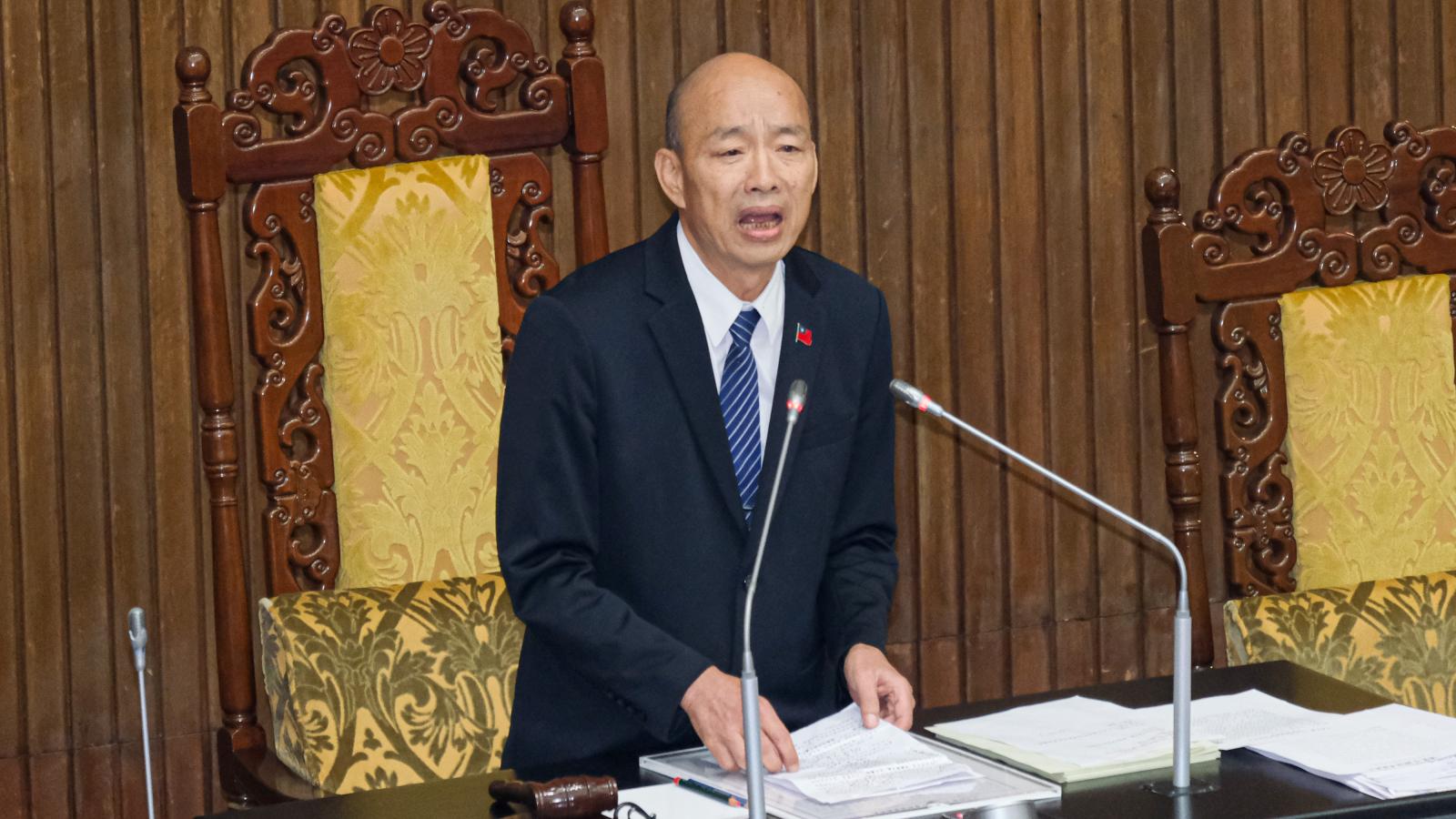
According to the final budget review passed on August 14, Premier Cho Jung-tai’s salary of over NT$1.48 million for September to December was fully frozen, and the Executive Yuan’s special expenses were entirely eliminated. Following the third reading, Legislative Yuan President Han Kuo-yu delivered remarks, addressing for the first time the Executive Yuan’s recent refusal to co-sign and implement laws passed by the legislature. He emphasized that laws legally passed through third reading must be co-signed and executed by the Premier, urging the Executive Yuan to uphold constitutional principles: “The damage is too great. I urge the Executive Yuan to promptly co-sign and implement these laws.”
In an indirect response to Han, Lee Hui-chih issued a written rebuttal late on the 14th. She relayed Premier Cho’s stance: “Personal matters are small; national matters are great.” She stressed that the power to initiate a veto or withhold co-signature is a constitutional authority granted to the Executive Yuan, which has always adhered to constitutional principles and never abused its powers. “Each veto or refusal to co-sign is a passive measure taken because the legislature has overstepped constitutional boundaries, and the Executive Yuan must protect the constitutional system.”
Lee emphasized that while the government should be supervised, policies scrutinized, and budgets reviewed, such oversight should not come through large-scale, unreasonable cuts to essential administrative resources. Doing so risks paralyzing constitutional agencies, harming the rights of frontline staff, depriving disaster response of critical resources, and undermining the public’s right to accurate information. The next fiscal year’s central government budget will be submitted to the Executive Yuan Council on August 20. She reiterated a call for the Legislative Yuan to conduct its review in a professional, rational manner and according to legal timelines, restoring normal state operations and enabling timely implementation of policies that benefit the nation and its people.
Lee detailed seven 'irrational decisions' in the 115th budget review. First, the drastic budget cuts to independent agencies threaten to paralyze personnel and operations. The Legislative Yuan slashed the budget of the independent National Communications Commission (NCC). Although the Executive Yuan submitted the NCC commissioner nomination list to the legislature on July 24, the NCC’s NT$57.82 million in basic administrative operating funds for August to December were entirely deleted. Continued obstruction of both personnel appointments and budgeting could prevent the NCC from fulfilling its legal duties, raising concerns that the legislature is using budgetary tactics to effectively paralyze constitutional and independent agencies.
Second, massive cuts to government policy promotion funds could impair the public’s right to accurate information. The original NT$1.379 billion in policy promotion funding requested by the Executive Yuan and its ministries was slashed by NT$684 million—nearly 50%. The Executive Yuan and Ministry of Culture’s media promotion budgets were fully eliminated, and the Executive Yuan’s Department of Information and Communications lost its entire NT$52.54 million in operational funding. However, policy promotion is not mere 'publicity'—it is a vital channel for informing citizens. Severely restricting the government’s ability to communicate information risks allowing misinformation to spread, making it harder for the public to access accurate, complete government information in a timely manner. Cultural promotion efforts by the Ministry of Culture will also face direct setbacks.
Third, the deletion of operational funds for the Department of Information and Communications affects even grassroots contract staff salaries. These funds are used not only for disseminating policy information but also for paying frontline contract workers. These staff have already contributed labor to various government operations in the first half of the year. Now, with the budget supporting their salaries fully deleted, their job security and operational capacity in the second half of the year are directly threatened. Lee stressed that budget cuts should not come at the expense of frontline workers’ rights, nor should those who have already provided services face uncertainty about their pay and employment mid-year.
Fourth, the President’s state affairs discretionary fund was drastically cut and frozen, leaving less than one-third of the annual budget effectively unusable. It is already mid-August, entering the final third of the year, yet NT$100 million was cut and NT$200 million frozen—rendering the fund practically inoperable. This deprives the President of essential flexible resources for public engagements, military visits, and other state duties.
Fifth, Lee argued that 'disasters don’t disappear just because budgets are cut,' yet the Executive Yuan’s basic resources for disaster site inspections were entirely eliminated. The NT$5.53 million 'Policy Promotion Liaison Fund' was cut—funds critical for covering the Premier’s travel and coordination during disaster assessments and post-disaster recovery. Premier Cho has already conducted nine disaster inspections nationwide this year. Coordination between central and local governments during typhoons and heavy rains is a fundamental government responsibility. But with this fund fully deleted, the Executive Yuan will lack a key administrative support resource when facing sudden disasters in the second half of the year.
Sixth, human rights and transitional justice—issues that must not be forgotten—were also drastically cut. Human rights and transitional justice are key indicators of democratic deepening and social progress in constitutional democracies. Taiwan endured 38 years of martial law, and much transitional justice work remains unfinished. Yet the Executive Yuan’s Human Rights and Transitional Justice Commission had its entire budget deleted, the Party Assets Settlement Committee’s operating funds were cut by 50%, and overseas travel expenses, special allowances, and subsidies were fully eliminated. Lee emphasized that democracy is more than elections—it is about the courage to confront the past. Transitional justice requires sustained institutional support and resources. The national progress on human rights and transitional justice will be severely impacted by these drastic budget cuts.
Seventh, Lee stressed that budget cuts are no longer isolated issues but threaten the government’s ability to function at all. From the NCC and Party Assets Committee to policy promotion, governance outreach, human rights, and presidential discretionary funds, these cuts are not merely about 'how much was cut'—they are about whether the government can maintain basic operations, respond promptly to societal needs, and allow constitutional agencies to fulfill their legal duties.
Lee reiterated that it is already mid-August, with less than one-third of the fiscal year remaining. Once funds are fully deleted or heavily frozen, the real-world impact will be immediate. While legislative oversight is a constitutional duty, budget reviews must prioritize national stability, public rights, and the common good.
FACT BOX
- Source: PR Times
- Category: News