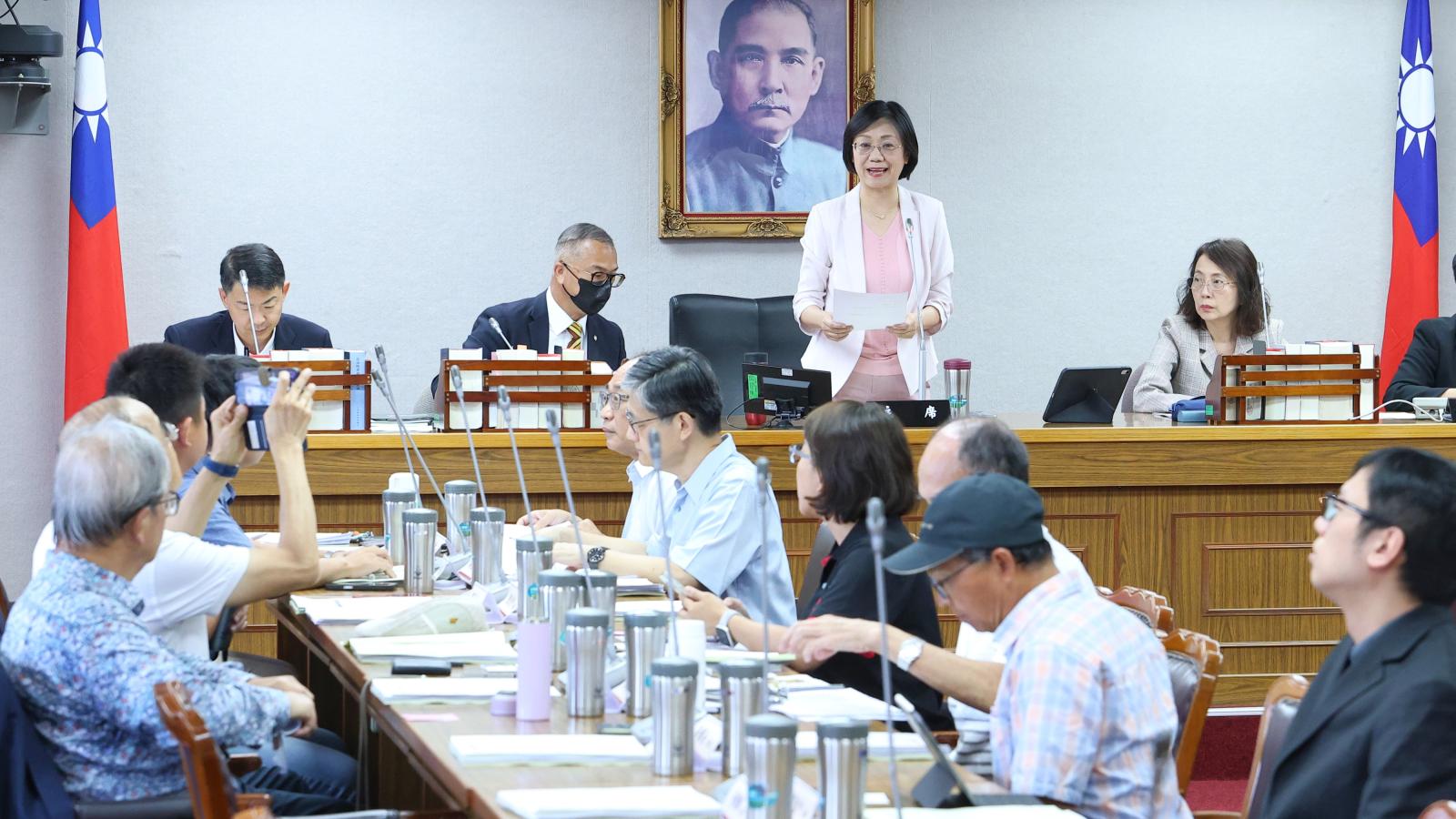
The Judicial and Legal Committee of Taiwan’s Legislative Yuan recently held a public hearing on institutionalizing salary adjustments and reforming personnel systems for military, civil servants, and educators. This is not merely a wage issue affecting hundreds of thousands of employees and their families—it directly reveals a sustainability crisis threatening Taiwan’s civil service and education systems. For years, salary adjustments for military and public employees have been shrouded in administrative discretion, dictated by political moods and electoral considerations. When national compensation becomes a political favor rather than a systematic reward reflecting labor value, the cost is a comprehensive decline in public governance capabilities.
Examining economic data from the past decade reveals a staggering disconnect between public sector compensation and overall economic growth. From 2016 to 2026, Taiwan’s GDP per capita is projected to surge from $23,091 to $42,000–$44,000. The monthly minimum wage has also risen from NT$20,008 to NT$29,500, a cumulative increase of 47.44%. In contrast, military and public sector compensation increased by only about 14.74% during the same period—falling far behind both economic growth and minimum wage hikes, and even failing to match the 17.84% rise in the Consumer Price Index (CPI). When factoring in a chained calculation of 17 key consumer goods closely tied to daily life, cumulative price increases reach 24.74%. This means grassroots personnel are experiencing a rapid erosion of real purchasing power and mounting cost-of-living pressures.
The long-term rigidity of salary structures has triggered a severe talent drain at the grassroots level. In education, the challenge extends beyond the impact of declining birthrates—it is a cliff-like collapse in the attractiveness of teaching positions. In recent years, more and more schools face situations where the number of applicants is fewer than vacancies, and substitute teacher recruitment repeatedly fails due to lack of interest. As administrative responsibilities and teaching workloads increase daily, salary competitiveness continues to decline. The departure of high-quality talent is simply the inevitable result of a system where bad money drives out good.
To break the vicious cycle of the state acting as a poor employer, the current legislative session must complete the institutionalization of compensation adjustments, shifting the pay raise mechanism from political patronage back to institutional justice. This transformation must be built on several core foundations. First, an annual regular review and legally triggered mechanism should be established. The competent authority must align with the central government’s budget timeline, submitting an annual assessment report and convening a review committee. Once cumulative price increases reach a statutory threshold, an adjustment plan must be automatically initiated. Even if the final decision is not to raise salaries, a clear rationale must be publicly provided.
Second, the review process must abandon the past practice of using vague terms like “overall considerations” as a blank check for bureaucratic evasion. Objective benchmarks—such as cumulative CPI and key consumer price indices since the last adjustment—must be established, supplemented by factors like recruitment and retention challenges and national fiscal conditions, to form a linked evaluation framework.
Third, the review committee must not become a bureaucratic monopoly. Substantive participation by employees must be guaranteed. Representatives from active-duty military personnel, national civil servant organizations, and teacher unions should have sufficient voting rights and seats, with nominees autonomously selected by representative groups—strictly prohibiting administrative agencies from appointing them. At the same time, information transparency must be enforced to ensure political accountability: research reports and financial assessments must be provided before meetings, and meeting minutes and voting results must be published within a set timeframe after. If the Executive Yuan ultimately alters or overturns the committee’s decision, it must present concrete evidence and be subject to legislative oversight.
Finally, beyond across-the-board base salary adjustments, various allowances and hourly rates reflecting expertise, special risks, and heavy workloads must not remain frozen indefinitely. A reasonable, linked compensation safeguard mechanism should be established, connecting public school teachers, private school staff, and childcare workers. Building an open, transparent, objective, and predictable review system is not an unreasonable demand—it is an essential path to restoring dignity to Taiwan’s civil service and education systems.
*The author is Deputy Director of the Policy Department at the National Teachers’ Association.
FACT BOX
- Source: PR Times
- Category: News