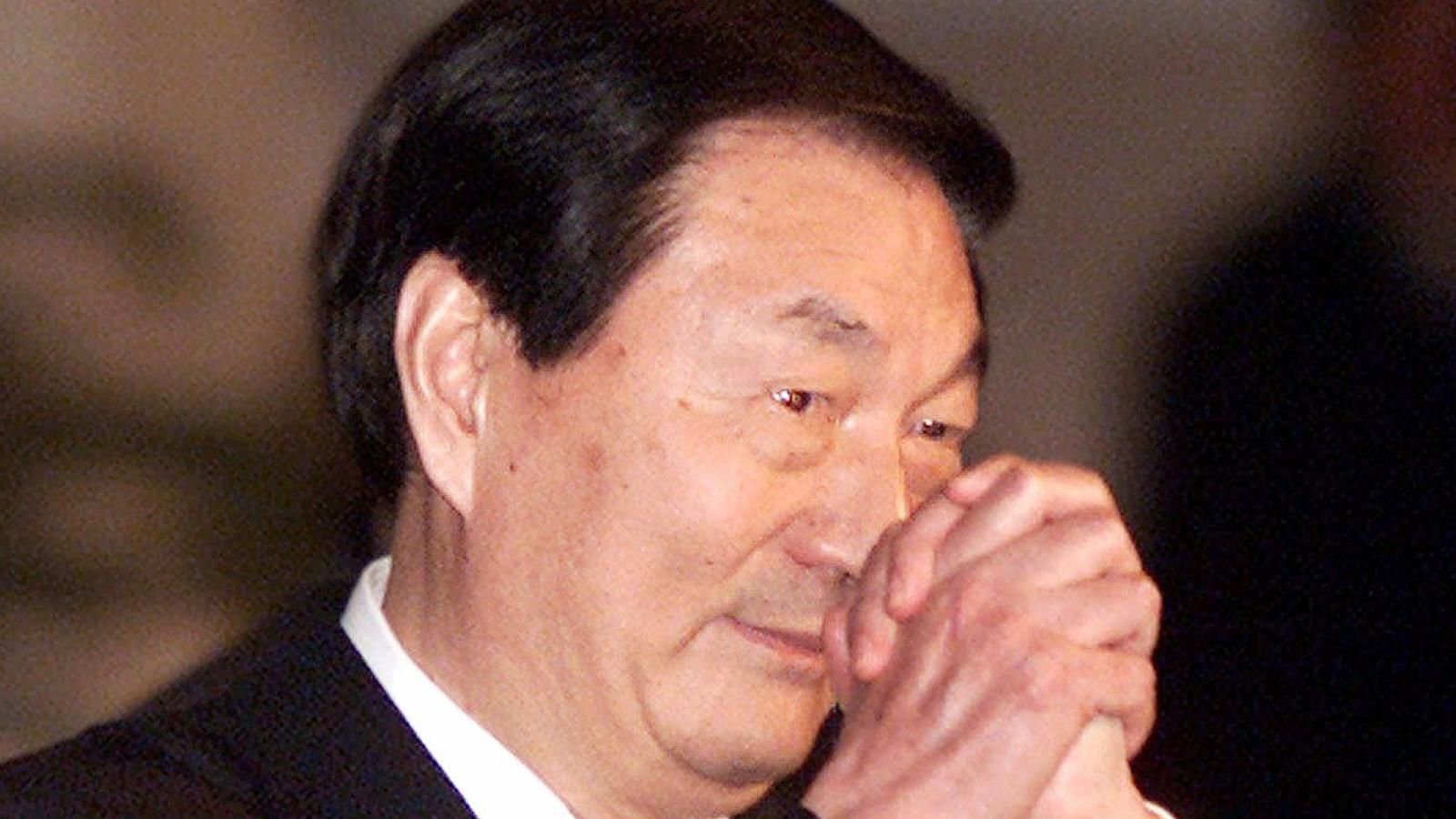
I was deeply saddened to hear of the passing of former Chinese Premier Zhu Rongji. Sitting at my desk, I was overcome with grief and profound admiration. Since the founding of the People's Republic of China in 1949, over seventy years have passed, and among all the figures in this period, the two I most deeply respect and admire are Deng Xiaoping and Zhu Rongji.
Looking back, without Deng Xiaoping’s extraordinary political courage and historical vision in boldly advancing reform and opening-up, China’s rapid economic rise would not have occurred, nor would the living standards of hundreds of millions of people have improved so dramatically. Deng Xiaoping once famously said with remarkable practical wisdom: 'It doesn't matter if a cat is black or white, as long as it catches mice.' After the reform and opening-up, especially following his 1992 Southern Tour speech, this idea took deep root. It broke through long-standing ideological rigidity and issued a powerful call for testing truth through practice and improving people's livelihoods through development. From then on, China's economy soared like an eagle, achieving globally recognized growth.
Yet behind this economic ascent often lie intertwined risks and challenges. In early 1993, I had the privilege of sharing dinner with Deng Xiaoping’s second son, Deng Zhifang. During our conversation about the 'cat theory,' I felt it was a classic insight. With such a direction, China’s strong economic growth seemed almost inevitable.
But at the same time, I realized that as the entire party pushed forward with economic development, if power lacked strict institutional constraints and oversight mechanisms failed to keep pace, various abuses could emerge. So, half-jokingly, I added a line to Deng’s 'cat theory': 'Whether black rat or white rat, a good rat is one that doesn’t get caught by the cat.'
This remark, though seemingly humorous, reflected my genuine concern at the time. I specifically warned that we must remain vigilant against corruption risks during rapid economic growth. When money, power, and interests intertwine, some who hold power may transform into 'crafty rats' adept at evading supervision.
I never imagined that this couplet would, to some extent, tragically come true.
As reform and opening-up advanced comprehensively and the economy rapidly expanded, the rule of law, oversight mechanisms, and boundaries of power had not yet been fully established. Opportunistic corrupt officials seized the moment to amass wealth through exploitation. 'Black rats' and 'white rats'—those skilled at exploiting loopholes and avoiding scrutiny—proliferated, plundering national and public wealth while damaging the reputation of reform and social fairness.
This is precisely why the emergence of Premier Zhu Rongji was so invaluable in the course of China’s reform history.
I deeply admire Zhu Rongji. He was a true statesman—someone who dared to speak the truth, unafraid of offending others, and willing to take responsibility. Facing the deep waters of reform and a complex web of interests, he left an indelible mark by advancing fiscal, financial, state-owned enterprise, and government institutional reforms, improving the social security system, and driving China’s accession to the World Trade Organization (WTO).
During his tenure, Zhu successfully navigated the Asian financial crisis, insisted on not devaluing the renminbi, restored financial order, and curbed economic overheating—laying a crucial foundation for China’s stable development and deeper integration into the global economy.
What people remember most is his swift and decisive rectification of bureaucratic misconduct and his bold stance against corruption. He dared to confront entrenched interests and corrupt officials.
In March 1998, shortly after assuming office as Premier of the State Council, Zhu delivered a powerful vow before domestic and international journalists: 'Whether it's a minefield ahead or an abyss of ten thousand feet, I will move forward without hesitation, dedicate myself fully, and work until my last breath.'
This was not mere rhetoric, but a solemn pledge made by a reformer to the nation, the people, and history.
Zhu once said he hoped that after stepping down, people would say he was an honest official, not a corrupt one. If they added that he had accomplished some practical things, he would be content. Looking back today, he was not only an honest official, but a Premier who truly delivered major, difficult, and practical achievements for the nation.
Zhu’s value lies not only in his economic expertise, but in his integrity, courage, and principles. He could slam the table and glare fiercely—but his targets were never ordinary citizens. They were those who held office without duty, falsified records, or took bribes. Behind his sternness was anxiety for the nation’s future, responsibility for the people’s welfare, and loyalty to the cause of reform.
Of course, no era’s reforms are perfect. State-owned enterprise reform, worker layoffs, and the transformation of housing and healthcare systems brought painful transitions and heavy burdens to certain groups. To fairly evaluate Zhu Rongji, we must neither ignore the costs of reform nor deny his courage and achievements in shouldering responsibility during uniquely difficult historical circumstances.
Deng Xiaoping opened the broad direction of reform and opening-up, giving China the courage to develop and prosper. Zhu Rongji, at the critical stage of reform, used strong measures to restore order, build institutions, and align China with the world. The former opened the country’s doors and liberated minds; the latter worked to reinforce the tracks and control risks on a high-speed train.
One told China: 'A cat that catches mice is a good cat.' The other, through his actions, proved that not only must good cats catch mice, but we must also prevent 'crafty rats'—those who evade oversight and embezzle public funds—from roaming free.
Reform needs not only speed but also order; not only vitality but also fairness; not only encouragement to create wealth, but also the need to cage power within institutions. Otherwise, the more developed the economy, the greater the space for rent-seeking; the more wealth accumulates, the deeper the social rifts caused by unequal distribution.
Today, as we remember Deng Xiaoping and Zhu Rongji, what I cherish is not only their individual wisdom, courage, and achievements, but the spirit of an era—one that dared to liberate thinking, face problems, take responsibility, and push forward reform.
Reform must not stop, but it must be accompanied by the rule of law. Development must not regress, but it must benefit the people. Anti-corruption efforts cannot rely solely on the courage of a few honest officials, but must depend on open, transparent, and effective institutions.
'Black cat, white cat' brought the wisdom for reform’s takeoff. 'Black rat, white rat' serves as a warning to future generations: while pursuing economic prosperity, we must never lower our guard against power and corruption.
FACT BOX
- Source: PR Times
- Category: News