Jürgen Habermas published The Theory of Communicative Action in 1981, introducing the concept of 'communicative rationality'—that for 'effective communication,' people must simultaneously meet four criteria: truthfulness, understandability, sincerity, and legitimacy. In a democratic political and social system, having an electoral system is only one aspect of practicing democracy. What truly matters is that people rationally discuss public issues. Applying Habermas’s four elements of rational communication, administrative agencies must serve as accurate information transmitters, ensuring the public knows the truth and understands the reasoning behind policy decisions. They must uphold openness, transparency, and honesty, and remain subject to public scrutiny in accordance with social norms, shared values, and legal regulations.
Yet recently, in decisions concerning the protection of people’s lives and safety, the government has repeatedly reversed policies without clearly explaining the rationale, prioritizing ideology and aggressively resisting public and opposition oversight. Recently, Tzu Chi was defrauded of over NT$1 billion in its BNT vaccine procurement, shocking the nation. Recalling the urgent vaccine shortage at the time, it was only through the joint efforts of civil groups and enterprises—Tzu Chi, the Yonglin Foundation, and TSMC—that BNT vaccines were successfully procured and donated to the government, overcoming government obstruction rooted in ideological claims that BNT was a 'Chinese vaccine' or 'packaged in Shenzhen.' The public was deeply grateful.
Now, whether to downplay the carcinogenic oil scandal or attack political opponents, the government’s response reveals an arrogant and abnormal attitude toward people’s suffering and anxieties. It not only evades responsibility but also attempts to manipulate public opinion to gain applause. This not only exploits the selfless contributions of civil groups but also reopens the post-pandemic wound of 'we struggled to survive' among the people.
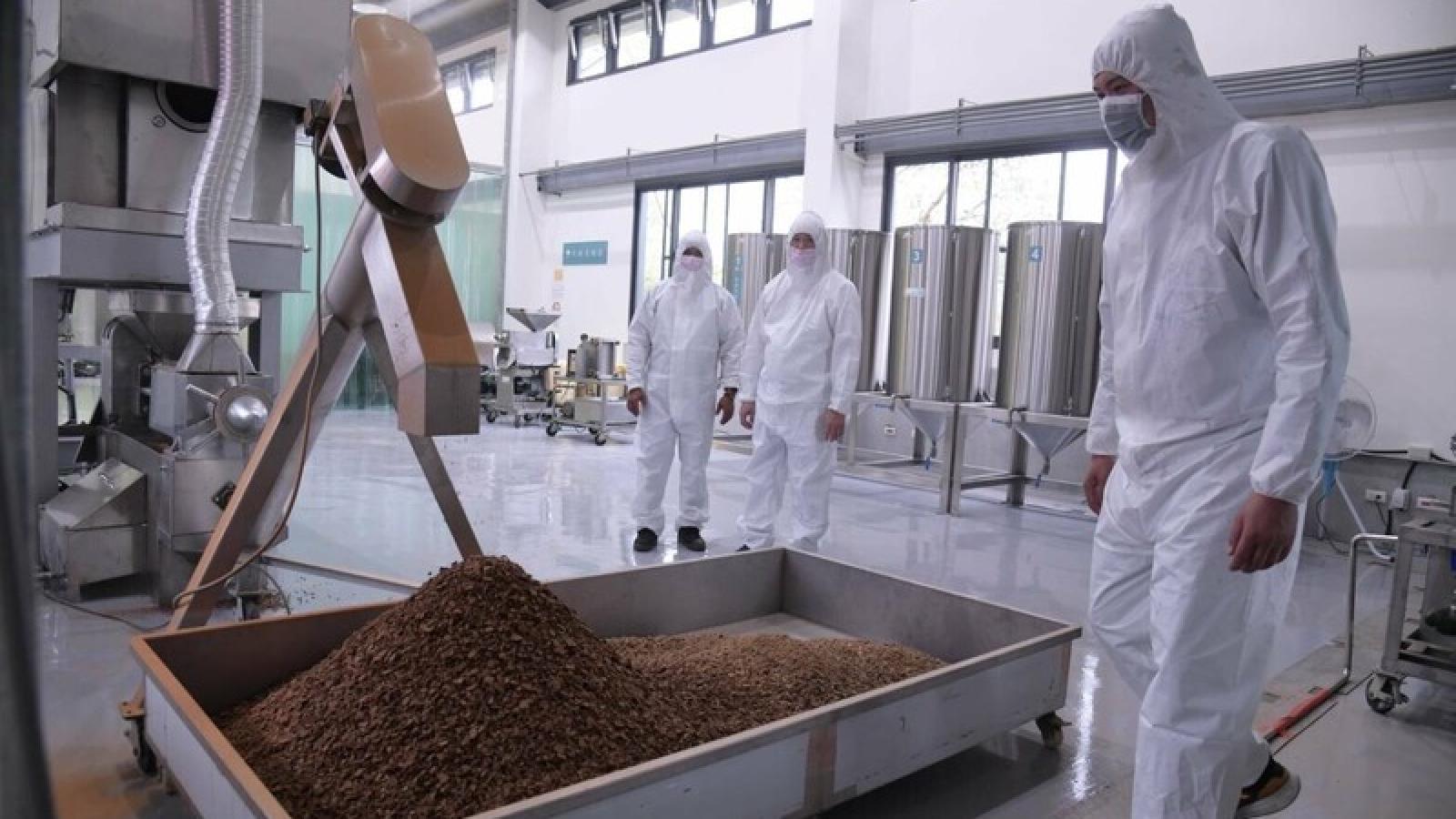
Regarding the carcinogenic oil incident, the government cited some experts claiming 'drinking water can metabolize benzo[a]pyrene' and 'sunbathing or drinking water also carries risks,' while ignoring voices like Professor Chan Chang-chuan of National Taiwan University’s School of Public Health, who pointed out that there is currently no direct human evidence proving increased water intake effectively reduces benzo[a]pyrene toxicity. Additionally, a Cabinet minister stated, 'If all oil products are recalled, people will soon have nothing to eat.' These conflicting narratives not only test public understanding of 'Group 1 carcinogens' but also challenge the government’s ability to present facts and engage in public dialogue.
Presenting objective facts and shouldering political and moral responsibility in communicating with the people is one indicator of whether a ruling party can unite the nation. Reviewing the meeting minutes where the 20% oil recall standard was announced, one expert warned: 'A 20% recall fails to consider varying consumption levels across different products.' Ultimately, without expert consensus, TFDA Director Chiang Chih-kang admitted he made the final policy decision. Later, Deputy Minister of Health and Welfare Lin Ching-i claimed she would 'take responsibility,' but as the incident continues to escalate, it echoes the '3+11' meeting records during the pandemic. Then-Minister Chen Shih-chung also said he would 'take responsibility,' yet no corresponding political accountability followed. Now, in the Tzu Chi fraud case, the ruling party absurdly demands the opposition apologize to Chen based on statements from the former vaccine broker—such distortion not only fails to uphold political responsibility but also deepens partisan division.
'Taking responsibility' should not be a mere political slogan. It must be practiced through transparent decision-making, respect for expertise, acceptance of societal oversight, and genuine accountability for flawed policies. In the film Pressure (72 Hours in Normandy), Colonel James Stagg insists on data-driven weather forecasting to prevent blind military deployment and loss of life. He declares: 'We must face facts! Objective facts!' This powerful statement resonates today, as Taiwan’s political parties and society collectively fall into ideological judgment, leading to fragmented, elephant-in-the-dark perceptions of public issues. People grow resentful and divided, rendering the president’s calls for 'unity' mere slogans.
With elections approaching, Taiwan has just endured the extreme polarization and ethnic rift of the 'Great Recall.' It is now more crucial than ever to return to rational dialogue. At this moment, governments and politicians must not manipulate ideology to deceive supporters for votes. The public must truly have the right to know, and facts must serve as a common foundation, allowing people of differing views to engage in rational conversation—only then can differences be resolved and unity restored.
*The author is a writer.
FACT BOX
- Source: PR Times
- Category: News