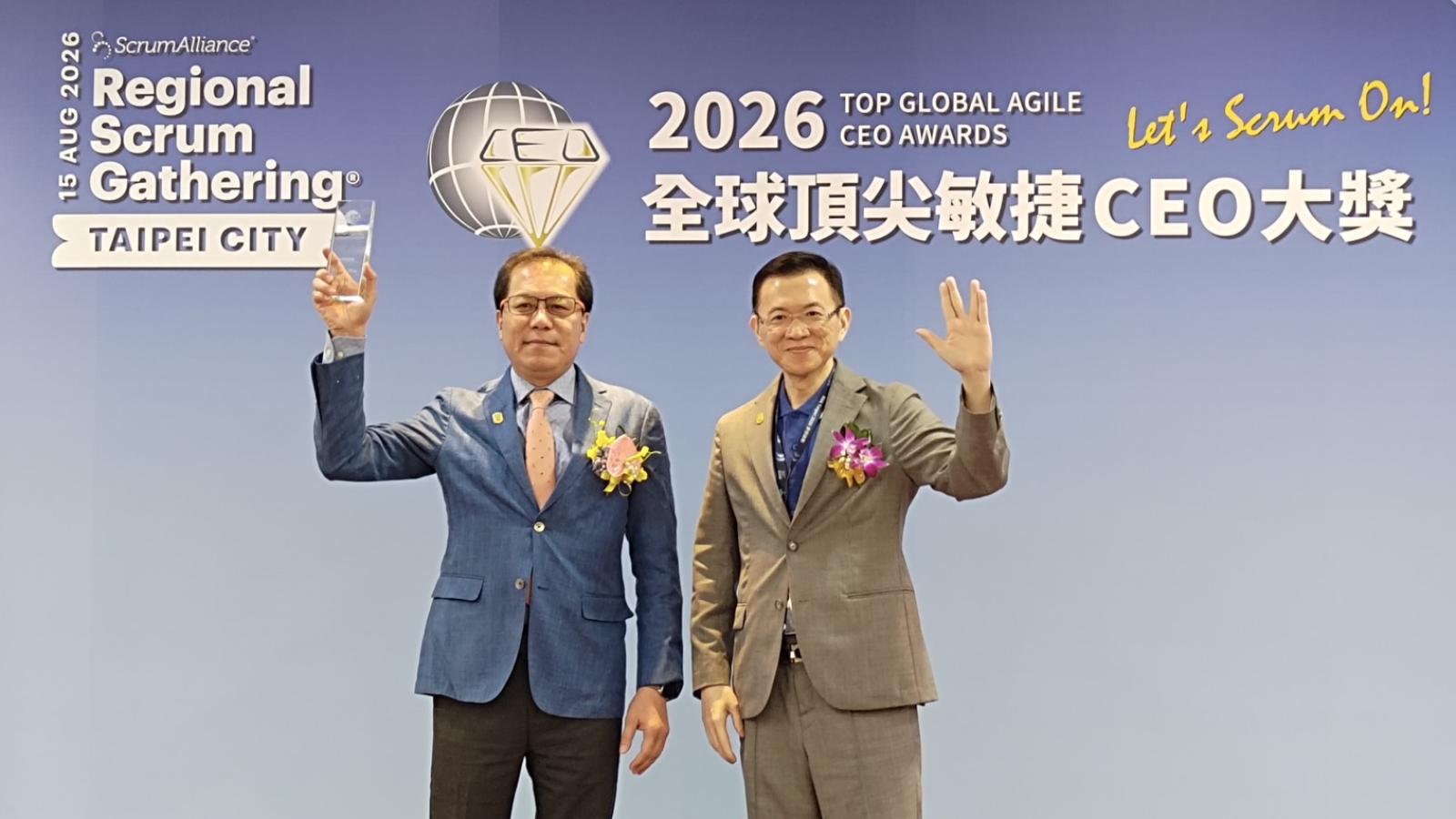
During typhoon periods, the daily volume of fruit and vegetable deliveries once surged past 400,000 packages. Faced with enormous public supply demands, even traditional agricultural distribution can break through with technology-powered agile management. In recent years, Taipei Farmers' Market Co. (TFAMC) has advanced the 'Agile Project for Enhancing Efficiency at the Fruit and Vegetable Packaging and Distribution Center' at Taipei's Second (Binjiang) Market. This initiative has significantly reduced organic produce sorting time from 8 hours to under 4.5 hours and cut on-site workers' walking distance by approximately 80%. General Manager Wu Fang-Ming was honored with the 4th 'Global Top Agile CEO Award' hosted by Project Manager Magazine, demonstrating concrete achievements in the intelligent transformation of agricultural supply chains.
The Fruit and Vegetable Packaging and Distribution Center on the fourth floor of Binjiang Market, operated by TFAMC, shoulders the critical responsibility of supplying vast quantities of fresh produce to the greater Taipei area and major distribution channels. On regular days, the center must process a heavy workload of 120,000 to 220,000 packages—covering 160 to 200 types of fruits and vegetables—within just 5.5 hours. During typhoon or other natural disaster preparedness periods, the daily processing volume has even exceeded 400,000 packages.
As the number of supply outlets and shipment volumes steadily increased, the traditional picking model, which relied on human intuition and experience, reached its limits. Starting in 2022 (Year 111), TFAMC established a cross-departmental collaboration team. Through process audits, data analysis, and workshop discussions, the team pioneered the introduction of the DPS (Digital Picking System) in the organic produce picking area.
After implementing the digital system, traditional warehouse operations were significantly improved. The daily volume of produce processed in the organic section increased from 30,000 to 40,000 packages. The sorting process, which previously took 8 hours, can now be completed in approximately 4 to 4.5 hours. Workers' walking distance was reduced by about 80%, greatly lowering the physical strain from frequent bending and carrying. The success of this pilot project smoothly extended to become the core foundation for introducing the DAS digital seeding system in the general produce shipping area.
With continuous growth in supply channels and market demand, TFAMC's supply chain management is undergoing deep upgrades. Statistics show that the number of stores supplied by TFAMC has gradually expanded from 198 at the end of 2022 to 248 by the end of 2025 (Year 114), while the total annual supply volume has steadily increased from 19,720 metric tons to 20,722 metric tons—further highlighting the importance of a high-efficiency distribution system.
Wu Fang-Ming emphasized that agile thinking is not exclusive to the tech industry. Agricultural distribution, facing daily fluctuations in weather, supply from farms, and consumer demand, requires even greater responsiveness. Over nearly five years, through full empowerment, cross-departmental collaboration, and data-driven mechanisms, TFAMC has successfully moved beyond its past reliance on individual experience and departmental silos, achieving substantial breakthroughs in logistics efficiency and organizational resilience.
As digital transformation results become evident, TFAMC has also been recognized with the '2026 Corporate Agile Talent Development Model Award.' To ensure the agricultural distribution system continues to adapt to market fluctuations and maintain stable supply, TFAMC has established long-term mechanisms through institutionalized talent development. To date, 34 CSMs (Certified Scrum Masters) have been trained, with a goal of certifying 53 CSMs by the end of August. This strengthens the grassroots teams' project execution capabilities. By deeply integrating agile methodologies with digital technologies, TFAMC ensures stable dispatching of bulk produce during all kinds of climate challenges and peak consumption periods, comprehensively enhancing supply chain resilience.
TFAMC hopes that through its CSM-certified personnel, it can showcase more achievements in Taiwan that prove 'agriculture can be agile, and traditional industries can innovate.'
FACT BOX
- Source: PR Times
- Category: News