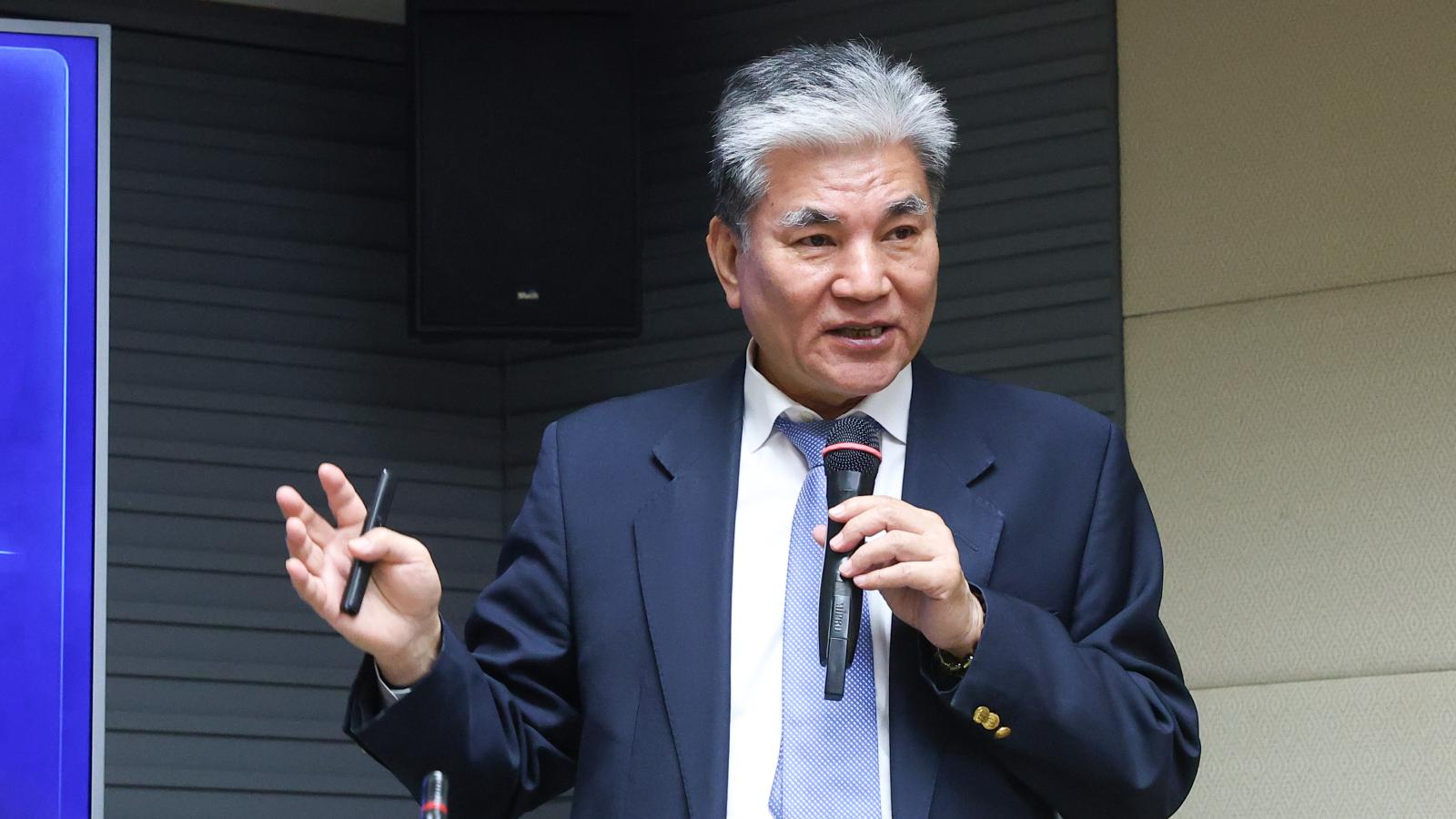
Taiwan has recently experienced robust growth in its semiconductor and artificial intelligence (AI) industries, leading to a surge in exports. TSMC has solidified its position as the global leader in chip manufacturing and entered the top ten most valuable companies worldwide, earning the title of Taiwan's 'national guardian mountain.'
However, former Interior Minister Lee Hong-Kuan warned on the 15th during the program 'Hongliu Vision' that Taiwan's structural issue—referred to as a 'Taiwan version of Dutch disease'—must be realistically examined.
Lee emphasized that as a global listed company, TSMC will inevitably expand overseas, taking domestic talent with it. 'It's not just one person leaving, but an entire family moving away,' he said. Taiwan, already the country with the world's lowest fertility rate, is simultaneously losing high-end technical talent. In the face of structural talent misallocation, the central government must take action.
Lee questioned, 'How long can semiconductors continue to support Taiwan? With AI developing rapidly, can the government guarantee Taiwan will maintain its advantage in the future?' He warned that the government's heavy reliance on the semiconductor industry means that if problems arise in this sector, Taiwan's economy could collapse—this is the 'Taiwan version of Dutch disease.'
Lee mentioned that in April, during a visit to China with Kuomintang Chairperson Cheng Li-chen, he toured a Xiaomi factory. He noted that nearly half of Xiaomi's employees are engaged in scientific research. Compared to China, he believes Taiwanese youth lack opportunities to participate in major projects or be nurtured through public infrastructure, something schools alone cannot provide.
Lee pointed out that Tsinghua University in Beijing invests in professors' startups and reinvests the profits back into the university. In contrast, Taiwanese professors are restricted by their civil servant status and cannot start businesses. DJI, the internationally renowned Chinese drone manufacturer, originated from such university-backed entrepreneurship.
He urged Taiwan to realistically re-examine its structural issues and asked: if China's AI and semiconductor industries surpass Taiwan's, where will Taiwan's competitiveness lie?
More exclusive reports from Feng Media: ・ Criticizing SMEs as the 'biggest victims' of non-nuclear families: Lee Hong-Kuan asserts, 'They are being abandoned by the world.' ・ Does the semiconductor industry's magnetic effect cause a talent shortage? Lee Hong-Kuan reveals a 'crisis the government dares not face': severe labor shortages in two industries.
FACT BOX
- Source: PR Times
- Category: News