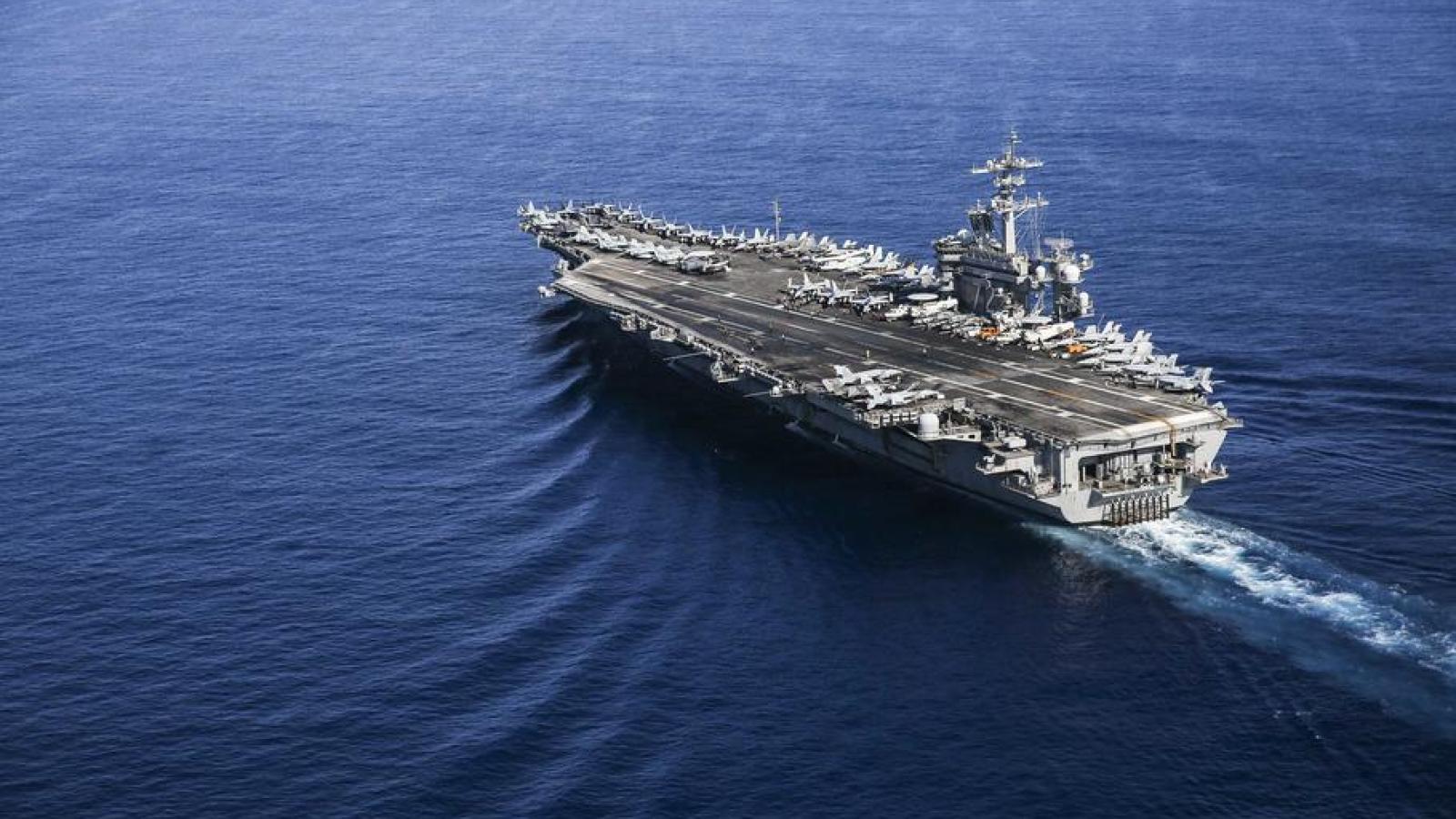
Thousands of U.S. Navy personnel living aboard an aircraft carrier for over 250 days are reportedly facing food shortages, sewage pipe malfunctions, and extreme mental and physical fatigue, prompting members of Congress to demand responses from the Pentagon and pressure the Trump administration to account for military deployments related to the Iran war. Military news outlets report that some sailors aboard the USS Abraham Lincoln attempted to jump overboard, while family members express growing concern over the crew's mental health. Defense Secretary Pete Hegseth stated on Thursday, August 13, that reports about conditions on the ship are "entirely false." The aircraft carrier departed California in November last year and was deployed to the Middle East ahead of U.S. attacks on Iran in February. The deployment, originally scheduled to end in May, has been extended multiple times. No return date has been announced, but several media outlets reported on Thursday that the U.S. is preparing to replace the Lincoln with the USS George Washington as part of a scheduled rotation. On April 14, 2026, deck personnel aboard the USS Abraham Lincoln (CVN 72) were conducting takeoff operations. (U.S. Central Command) Connecticut Senator Richard Blumenthal outlined the challenges facing the approximately 5,000-person crew in a letter to Hegseth: "shortages of basic supplies, contaminated water, plumbing issues, deteriorating mental health, flight deck safety concerns, and mail system disruptions, resulting in many care packages being lost in transit for months." The Democratic senator, a member of the Senate Armed Services Committee, wrote, "These reports warrant immediate attention, but they also raise a broader question: Can the Navy sustain the current operational tempo required of its aircraft carrier forces?" Another Democratic senator, Ruben Gallego, called on the military to allow congressional delegations to board the ship and "conduct oversight investigations into this dire situation." He posted on X: "There is no reason to deny us access." CBS, BBC's U.S. partner, cited two anonymous officials reporting that earlier this month, a sailor fell overboard and was rescued by helicopter, treated by military medics, and transferred off the ship for further care. The specific circumstances of the incident remain under investigation. On March 3, 2026, a photo released by U.S. Central Command showed a U.S. Navy sailor moving ammunition on the flight deck of the USS Abraham Lincoln (CVN-72), supporting operations in the Iran war. (U.S. Navy/AP) The Military Times and Stars and Stripes reported earlier this week that, according to family members, multiple service members had considered jumping overboard. Families say prolonged sea duty and onboard conditions are damaging the mental health of some personnel. Reports also include being unable to do laundry for over a week, lack of access to fresh food due to infrequent port calls, and crew members not always being permitted to leave the ship even when docked. A relative of a crew member told BBC that their family member had lost 65 pounds (29 kg) since the deployment began. The relative, who requested anonymity due to fear of retaliation, confirmed that their family member verified attempts by sailors to jump from the ship. In a recent WhatsApp conversation, the sailor said, "I'm so tired, completely exhausted." The sailor described constant noise and vibrations from engines and aircraft takeoffs and landings. The relative said, "He knows the mission and understands it's not an ideal environment. This isn't a vacation. He knows he must fulfill his duty. But there's been no docking, no stepping on land, no chance to relax or decompress. The entire ship is constantly vibrating. Morning, noon, and night, whether sleeping, eating, or showering, you feel the vibration. Your mind never truly rests." California Democratic Congressman Mike Levin summarized the issues on X: "Moldy showers, broken toilets, laundry equipment down for weeks, no hot water for extended periods, and meals reduced to half a cup of white rice and two tortillas. No soap, deodorant, or toothpaste." Following these reports, a Navy official told BBC they had not observed an increase in reports of suicidal ideation or attempts, citing disruptions to "traditional supply hubs" due to combat operations. The official stated on Wednesday, August 12: "First food, then hygiene supplies, then mail. Current reports from the ship confirm personnel continue to have access to clean water, functioning air conditioning, and healthy meal options." Hegseth told reporters in Panama on Thursday: "The government ensures that every vessel, every crew, every captain has everything we can provide at all times." He added, "Some deployments are longer than others, and my respect and gratitude for these sailors exceed anyone else's. They're operating in vast waters under harsh conditions with fewer port calls. Their performance is admirable." On November 19, 2019, the USS Abraham Lincoln (left) and its strike group passed through the Strait of Hormuz. (AP) When asked about conditions on the ship, Trump administration spokesperson Olivia Wales told reporters that Hegseth and Trump are committed to ensuring U.S. forces "have the resources needed to respond to any threat against America." Military publication Stars and Stripes noted that during previous long deployments, the Navy has taken measures to provide crew entertainment, including bingo games, art activities, and singing contests. A January 2025 study of 956 sailors found that personnel aboard U.S. Navy vessels experience the highest rates of "severe psychological distress" compared to other military branches. The study cited unique stress factors including "poor living conditions, noise, and demanding work schedules leading to insufficient sleep and rest." Meanwhile, analysis by USNI News of military data shows suicide remains a leading cause of death among U.S. Navy and Marine Corps personnel; Veterans Administration data indicates veterans have higher suicide rates than non-veteran Americans. Cai Pigliucci contributed to this report. If you are affected by any issues mentioned in this report and need support, please consider reaching out to medical professionals or support organizations: Taiwan (+886): Lifeline 1995; Zhang Laoshi Hotline 1980; Taiwan Suicide Prevention Center 0800 788 995 China (+86): Hope 24 Hotline 400 161 9995 Hong Kong (+852): Samaritans 2389 2222; Caritas Sunshine House 18288; Life Line 2382 0000 Macau (+853): Caritas Macau Life Line 2852 5222 Singapore (+65): Samaritans of Singapore (SOS) 1800 221 4444 Malaysia (+60): Lifeline Association (03) 4265 7995; Befrienders (03) 7956 8145 UK (+44): BBC Action Line; Samaritans 08457 90 90 90 Worldwide: Befrienders Worldwide This article was originally written in English. We used artificial intelligence to assist with translation, and it was reviewed by BBC journalists before publication. Learn more about how we use AI.
FACT BOX
- Source: PR Times
- Category: News