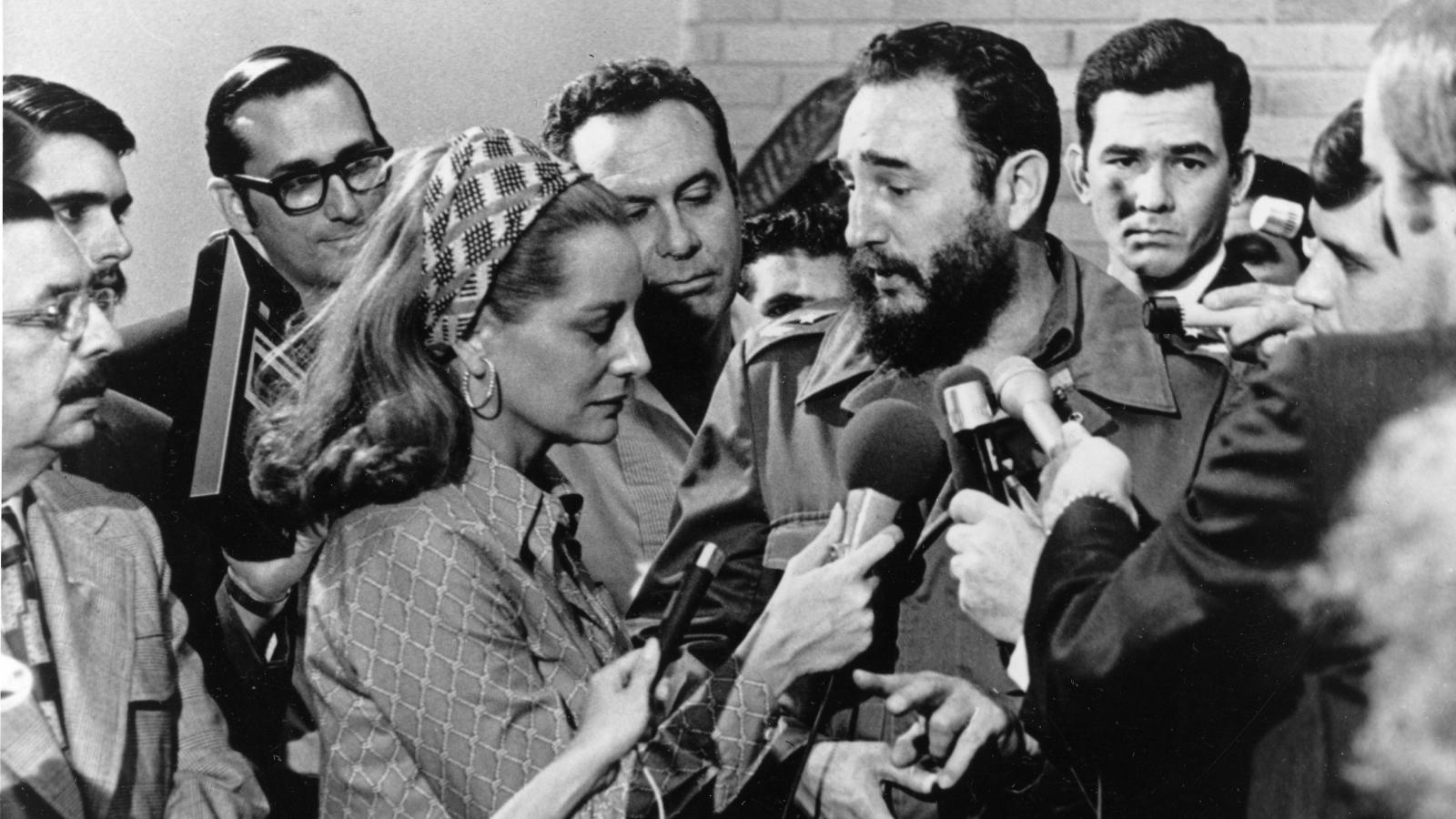
Throughout her childhood, from the moment she became aware of her surroundings, Alina Fernandez frequently received visits from Fidel Castro. As a young child, she didn’t understand why: the man who ruled Cuba with an iron fist for nearly 50 years was, in fact, her biological father.
Born in Havana in 1956, Alina was the product of an extramarital affair between Castro and Naty Fernandez, a beautiful young woman from Havana’s upper class. At the time, Castro was merely one of several guerrilla leaders; three years later, their movement overthrew dictator Fulgencio Batista and established a repressive communist regime on the Caribbean island.
In the decades that followed, an estimated 3 million people fled to the neighboring United States—including Castro’s own daughter.
Castro ruled from 1959 to 2008 and died of cancer in November 2016. Had he lived, August 13 would have marked his 100th birthday.
As his only acknowledged daughter, Fernandez spoke with BBC News Mundo in Miami, recounting her life story—a life deeply intertwined with one of the 20th century’s most famous and controversial political figures, yet someone she never wished to call “Dad.”
Earliest Memories and Midnight Visits
Her earliest memory of Castro is of a bearded man replacing Mickey Mouse on the television screen.
Now 70, she recalls: “Mickey Mouse disappeared.” In his place were “men with beards hanging from cars, who frightened me deeply and occupied the TV screen for days on end.”
The nation’s transformation fractured many families, and hers was no exception. Her mother embraced the revolution; but other relatives, including Orlando Fernandez—whom Alina believed to be her father—chose to abandon everything and board a flight to the United States.
Growing up without fully understanding these dynamics, Alina began receiving occasional visits from Cuba’s new leader at home.
She remembers Castro sitting on the living room floor playing with her and bringing her gifts. One gift stood out: “He gave me a doll dressed like himself, and I would always pluck its little beard out, because to me, it was just a baby doll.”
The Truth Revealed
But at age 10, she learned the truth about her biological father.
“My mother told me. She was planning to transfer me to another school and didn’t want someone to blurt it out on the street.”
Although Castro’s sporadic visits had made him somewhat of a father figure in her mind, the revelation brought a sense of “betrayal and deception,” as Fernandez described it. Many around her, including her best friend, had already heard rumors about her real father.
“It was like the clown’s secret: everyone in the circus knows,” she said with irony.
Fernandez never changed her surname to Castro, having refused for years to publicly acknowledge her biological father.
“When someone asked if I was his daughter, I’d say ‘no.’ Changing my name suddenly would have seemed tasteless. I didn’t see the point.”
As Fernandez grew up in Cuba, her frustration and disillusionment deepened—not only toward her father but also toward the new system imposed on the nation. Once people learned she was Fidel Castro’s daughter, they often asked her to deliver letters to the leader.
“Their family members had been executed, and they were trying to obtain exit permits to leave a place that was a living hell for them.”
Moreover, the cult of personality around the leader was omnipresent.
She said: “One man (Castro) would deliver seven-hour speeches on TV, which we were forced to watch, and then study in class the next day… It was a nightmare. You felt like you were living in a mental institution.”
After Fernandez and her mother lived in France for a period, Castro’s visits became rarer. According to her, Castro himself arranged for them to go to France to distance himself from her mother. After that, she said, the Cuban leader would still occasionally intrude into her life with sudden, capricious decisions—such as opposing her romantic partners or transferring her to another school.
She recalled: “Those were always crazy ideas. I learned to live without relying on him.”
When asked what Fidel Castro was like in private, Fernandez described him as intelligent, shrewd, polite, and possessing “infinite curiosity.” Yet she also claimed her father lied to her multiple times.
“He would forget what he told me and then give another version later.”
Communication between father and daughter was also strained. She said: “He was someone who only delivered long monologues. If he wanted to talk to me, it wasn’t to communicate, but to keep hearing himself speak.”
Escaping Havana
Fernandez said she wanted to leave Cuba from a very young age. Her relationship with her father grew increasingly distant, she rejected the system he built, and she suffered from the chronic shortages that plagued daily life.
She attempted to leave the country multiple times, but the regime denied her permission.
In the early 1990s, the collapse of the Soviet bloc triggered Cuba’s so-called “Special Period,” an extremely difficult era marked by hunger and blackouts. By then, Fernandez was openly dissenting, and even as the daughter of the Commander-in-Chief, she feared arrest.
“The sound of a car door slamming at night would make me think they were coming for me.”
Her big opportunity came on December 19, 1993, in a carefully orchestrated operation by close friends. A Spanish woman lent Fernandez her passport and ticket, while another altered documents so Fernandez could use them. Then, Fernandez took a taxi to Havana’s airport.
“From the moment I got in the car, I started practicing speaking with a Spanish accent, because at the airport, if they asked me to speak, I needed to sound Spanish. I completely fooled the driver.”
She wore a wig and heavy makeup to avoid being recognized and arrived at the airport.
“I passed through customs smoothly. The flight was delayed, so I sat quietly reading a book, thinking, ‘Well, whatever happens now, happens.’”
After a long wait, she boarded the plane. She flew to Madrid and was later granted entry into the United States.
Later, she applied for an exit permit for her 16-year-old only daughter. Reverend Jesse Jackson, a U.S. civil rights leader, intervened, and mother and daughter were finally reunited, welcoming the New Year together on the eve of 1994.
Fernandez lived in the U.S. and Spain before settling in Miami in 2001.
“At 40, I Finally Became Fidel Castro’s Daughter”
Since going into exile, the relationship she spent decades trying to hide has become the very tool she uses to expose Cuba’s reality.
She said: “The last thing I wanted to do in Cuba—talk about Fidel Castro or admit I was part of his family—I ended up doing all of it here. At 40, I finally became Fidel Castro’s daughter.”
In 1997, she published her memoir, Alina: Memoirs of Fidel Castro's Rebel Daughter, which became a bestseller in Spain and was later translated into multiple languages.
Asked how she felt upon learning of Fidel Castro’s death on November 25, 2016, she replied: “Neither great sorrow nor great joy. It wasn’t a shock to me.”
Today, under President Miguel Diaz-Canel, the political successor of the Castro family, Cuba faces a crisis many describe as more severe than the Special Period.
With the U.S. tightening its 60-year-old embargo, the country suffers from ongoing blackouts, widespread infrastructure decay, severe shortages, and hunger. For Fernandez, the current crisis is the result of the political and economic system her father imposed.
“When the state took over all businesses, everyone became utterly helpless.”
This article was originally written in English. We used artificial intelligence to assist with translation, and it was reviewed by BBC journalists before publication. Learn more about how we use artificial intelligence.
FACT BOX
- Source: PR Times
- Category: News
- Organizations: BBC News Mundo