Taiwan President Lai Ching-te recently warned that the Chinese Communist Party issued four directives toward Taiwan during the Beidaihe meeting, including 'opposing Taiwan's passage of the defense budget,' 'strengthening de facto governance over Taiwan,' 'enhancing the fifth column in Taiwan to promote unification,' and 'supporting patriotic forces to win elections.'
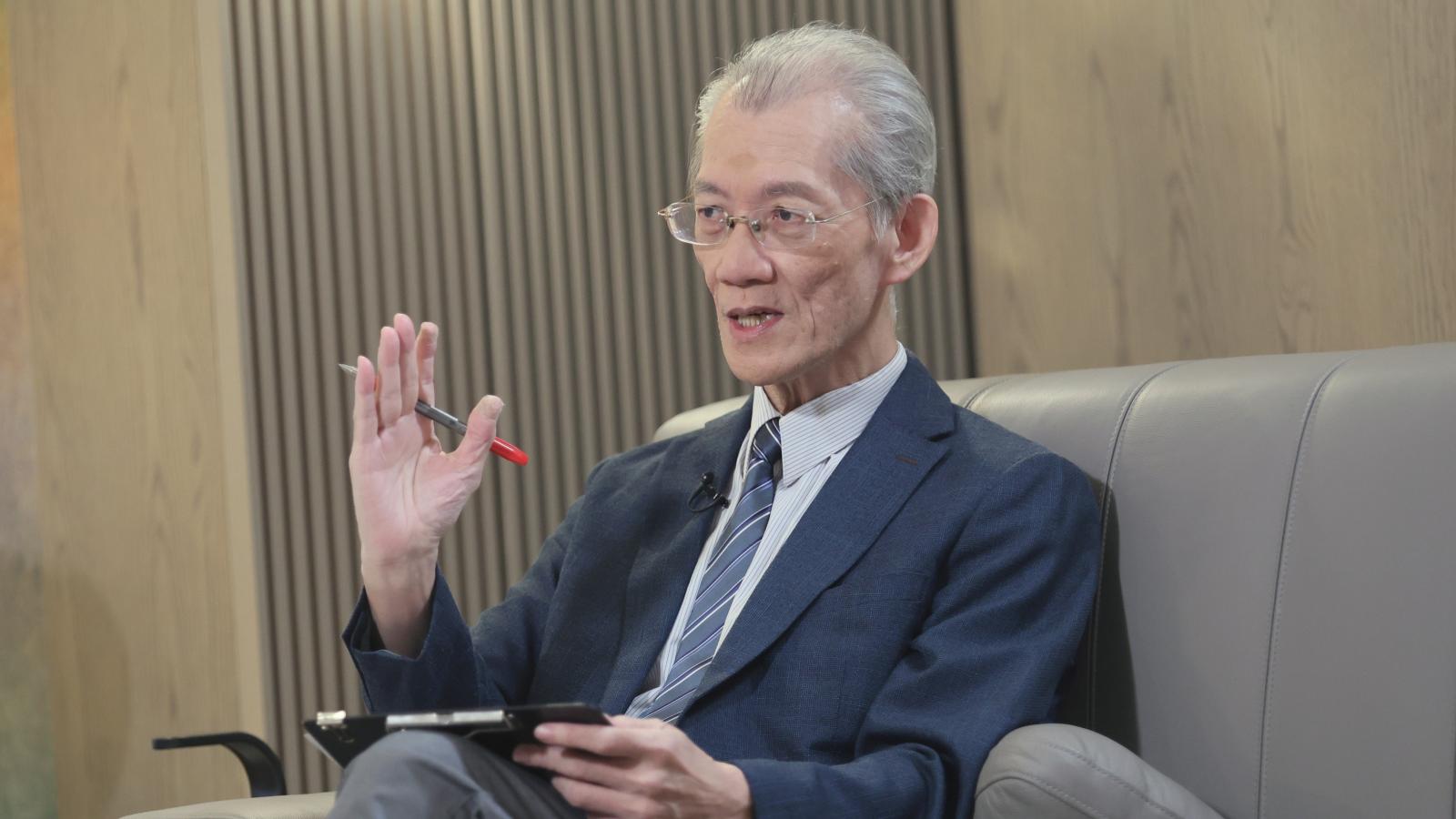
In response, Ming Ju-cheng, honorary professor of political science at National Taiwan University, appeared on the Storm Media program 'Xia Ban Han Ni Liao' and disclosed that as early as 2024, he learned the CCP aimed to occupy Taiwan's 'strategic high ground'—the Legislative Yuan—to obstruct the ruling party in Taiwan.
Ming explained that during the leadership of former Chinese leaders Deng Xiaoping, Jiang Zemin, and Hu Jintao, the Beidaihe meeting served a 'semi-formal consultative' function, allowing top party officials to exchange views during their summer retreats. However, under current Chinese President Xi Jinping, the meeting has been downgraded and is no longer considered an official conference. Despite this, Ming, a long-time observer of the CCP, emphasized that 'unofficial meetings are often more important than formal ones,' suggesting the Beidaihe meeting still holds significant influence.
Ming further revealed that in 2024, through a friend, he learned the CCP intended to occupy Taiwan's 'strategic high ground'—the Legislative Yuan. He pointed out that the discourse in the legislature and certain media outlets aligns 'almost identically' with CCP narratives. He warned that democratic societies have vulnerabilities: 'Some people think they are opposing another party, but in fact, they are helping the enemy.'
Ming noted that the CCP has already established a 'Taiwan Work Committee' (Taiwan工委) responsible for cross-strait affairs. He also exposed that some Taiwanese legislators have participated in hometown associations or friendship clubs established by Chinese spouses, where the Five-Star Red Flag is raised and volunteers are recruited in Taiwan. Moreover, the CCP uses family members as leverage to force Chinese spouses to carry out missions in Taiwan.
Regarding the Kuomintang's claim that 'cross-strait peace' will follow if they regain power, Ming criticized the price as Taiwan gradually becoming 'Hong Kong-ized' and 'mainland-ized.' He stressed, 'The way to avoid war is peace, and the most direct way to achieve peace is surrender.' He emphasized that even if a certain party comes to power and war is avoided, the CCP could still swallow Taiwan.
More exclusive Storm Media reports: · Could the CCP's military intervention ironically become the 'best campaign aide'? Ming Ju-cheng reveals its true objective: what it truly values · Hsu Chun-ying sentenced to seven years in first trial for aiding CCP election interference—Liu Shih-fang: 'We will revoke her Taiwan identity and residency status'
FACT BOX
- Source: PR Times
- Category: News