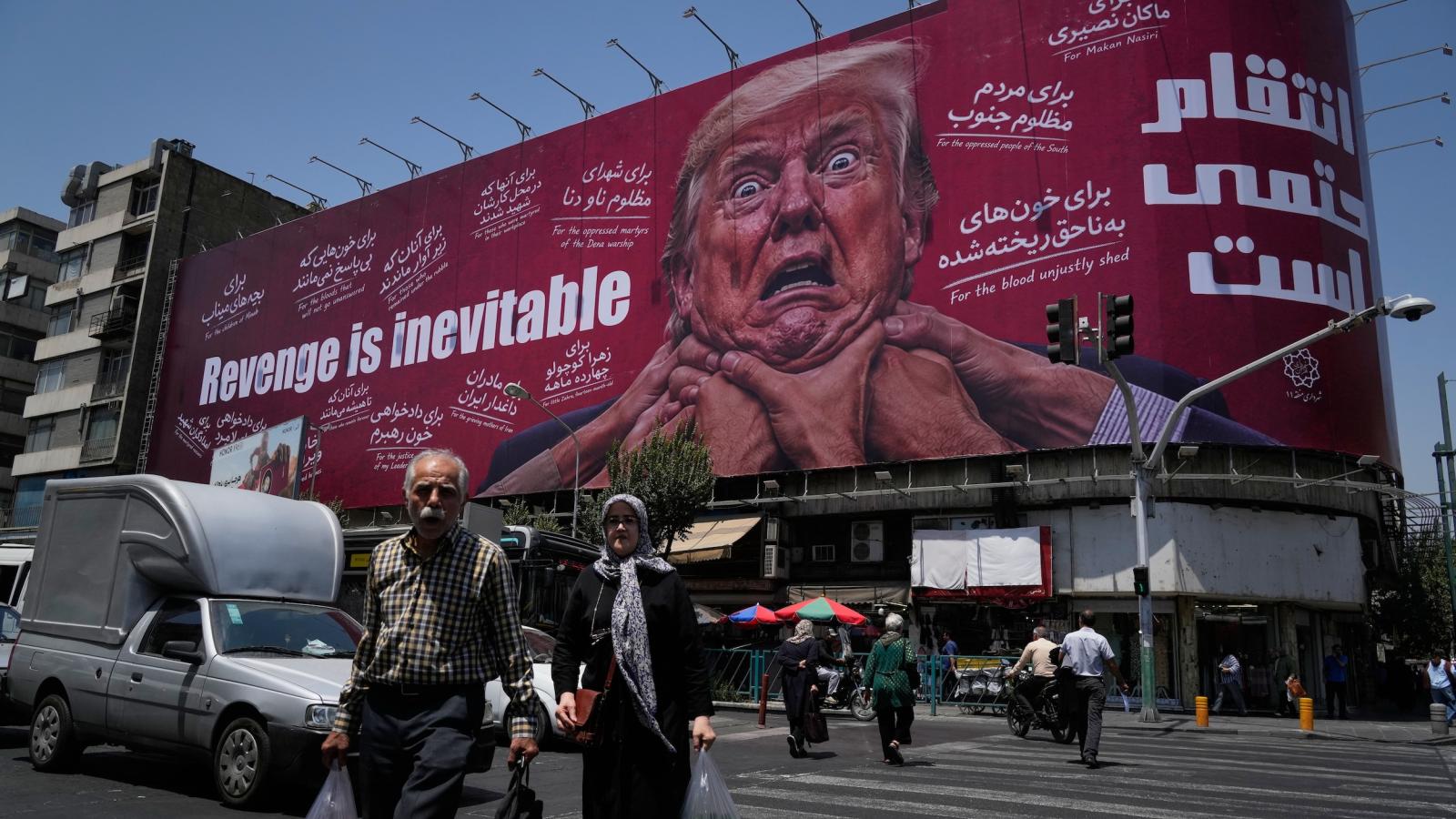
Seven months after the outbreak of war in Iran, despite immense pressure on the country's economy and infrastructure, its decision-makers do not appear eager to end the conflict. Tehran may hope to demonstrate that the United States alone cannot dictate the pace of this war; it may also aim to increase the military, economic, and political costs for the US, ultimately pushing Washington closer to accepting some of its demands. But many things depend on the answer to one key question: how much longer can Iran sustain this war? How strong is Iran's ability to prolong the war militarily? Some of Iran's defense industries and missile production facilities have become targets of attacks, but no independent data quantifies the damage. The UK's Royal Institute of International Affairs (Chatham House) stated in its latest assessment that there is currently no reliable estimate of Iran's existing missile stockpiles. The scale of Iran's ballistic missile salvos has decreased over time. However, combat capability cannot be measured solely by the number of missiles: drones and cruise missiles are easier and faster to produce, commanders killed so far have been replaced, and the command structure remains intact. Dr. Mohammad Ghaedi, lecturer in international relations at George Washington University, told BBC Persian: 'Iran will likely be able to sustain its attack capabilities for a long time, albeit at a lower intensity, and it can still create disruptions in the Strait of Hormuz.' Iranian decision-makers believe that prolonged conflict may also harm the United States. Intercepting Iranian missiles and drones has depleted some of the US's defensive stockpiles, and some US assessments warn these munitions cannot be quickly replenished. Ghaedi also stated, 'The war's impact on oil prices, and domestic political factors in the US, give Tehran hope that it can force Washington to accept some of its conditions.' Domestically, President Donald Trump's support among Republican voters remains relatively stable, but opinion polls consistently show that the American public disapproves of the conflict and is concerned that Trump has not achieved his war aims. If Tehran's calculations are correct, its goal may not be to militarily defeat the US: a longer, costlier war itself may be a form of pressure. There is currently no indication that military constraints alone would force Iran to stop the war. How long can Iran's economy endure? Even before the war broke out, Iran's economy faced high inflation, insufficient investment, rial currency depreciation, and widespread structural imbalances. According to the World Bank, Iran's economy contracted by about 2.7% during the 2025–2026 fiscal year, with only the final weeks overlapping with the war. The war has introduced new pressures. Data from Iran's Statistical Center shows the 12-month cumulative inflation rate has reached 62%. Southern provinces more affected by the war bear the heaviest burden—Hormozgan Province's inflation rate has exceeded 101%. In the labor market, according to Iran's Deputy Labor Minister, the war has led to the loss of over one million jobs, with about two million people directly or indirectly affected by unemployment. The International Monetary Fund (IMF) also predicts Iran's economy will contract by about 5.4% in 2026, with inflation approaching 69%. The war's duration and the extent of disruption to trade and oil exports will have a major impact. The Strait of Hormuz is both a pressure tool and a vulnerability: disruption of this waterway could increase the cost the US and global energy markets bear from the war; but US naval blockades and shipping restrictions also make it harder for Iran to export oil. However, economic pressure does not necessarily force a change in policy. Ghaedi says authoritarian governments can endure for years even under extremely difficult economic conditions. In his view, inflation, unemployment, and structural imbalances may increase public discontent, but unless accompanied by massive protests or internal government splits, Tehran's military policy will not change. Divisions within Tehran: How long should the war last? There is no consensus in Tehran on the best path forward. Iran's parliament speaker and negotiation team leader, Mohammad Bagher Ghalibaf, previously warned that Iran should not fall into a 'war of attrition' and criticized those opposing negotiations. But hardline Iranian MP Amirhossein Sabeti stated that even if the US accepted all of Iran's conditions and signed an agreement, war would still occur. This division cannot be simply divided into 'hawks' and 'doves': Ghalibaf also stated he would not accept any agreement that fails to safeguard Iran's rights. The disagreement lies more in how long sustained pressure should continue to create greater negotiating leverage for Tehran, and when its costs will begin to outweigh its benefits. What about public opinion? There are no independent, reliable opinion polls on public views regarding the ongoing war, and social media cannot represent society as a whole. However, Iran expert and visiting researcher at the German Institute for International and Security Affairs (SWP), Hamidreza Azizi, told BBC that for the Islamic Republic, the most dangerous front may ultimately be the domestic front. He pointed to severe inflation, economic problems, and the strain on national infrastructure as the reasons. A war that needs an exit strategy A prolonged war may also bring regional costs for Iran. In recent years, Tehran has attempted to repair relations with Gulf Arab states, especially Saudi Arabia. Continued attacks on these countries' bases, infrastructure, and shipping routes could reverse these efforts. So far, these countries have tried to de-escalate tensions and push for a return to negotiations. But the more they feel exposed to threats from Iran or its allies, the more motivated they will be to strengthen defense cooperation with the US, or even unite against Iran. For Tehran, any pressure a prolonged war exerts on the US only has political value if it can be converted into concessions at the negotiating table. It remains unclear what kind of agreement could provide Iran with an acceptable end to the war, or how such an agreement could be reached. Azizi stated: 'What's missing from Iran's strategy is a clear explanation of how to convert the leverage gained during the war into a lasting political agreement. Tehran has shown it can disrupt global energy supplies and make the US and its allies pay a price. But how it can sustain a state of prolonged confrontation with the US and Gulf states remains uncertain.' So far, neither military, economic, nor political constraints alone have stopped Iran from continuing the war. But the longer the war continues, the greater the domestic economic pressure, the more damage to Iran's regional relations, and the harder it becomes to reach an agreement sufficient to offset these costs.
FACT BOX
- Source: PR Times
- Category: News