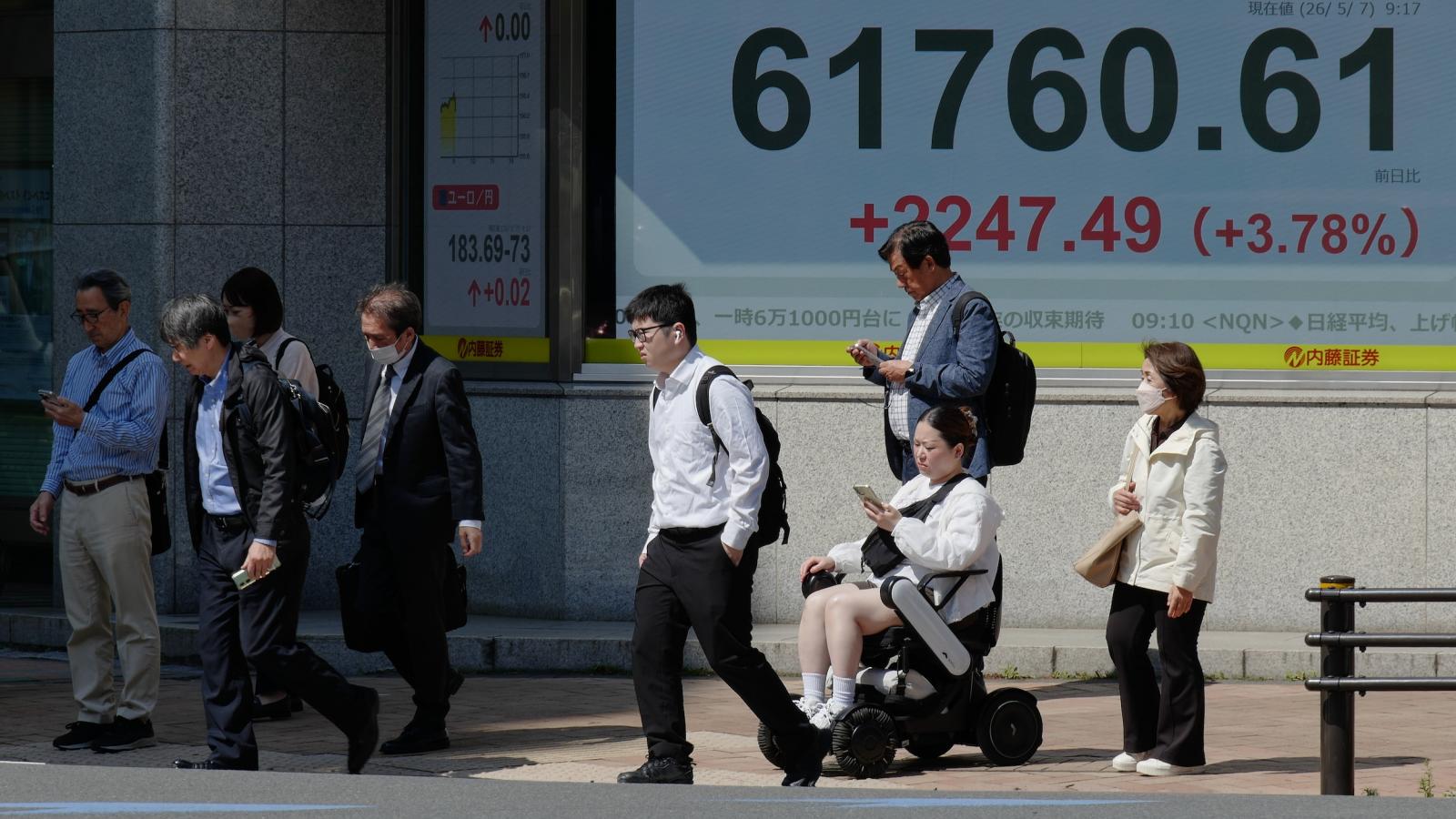
Despite Japan and the U.S. conducting historic forex intervention, the yen remains weak, highlighting structural crises in Japan's economy. The yen's depreciation has led to a decline in the purchasing power of Japan's middle class and increased import costs for businesses, making sustainable economic recovery difficult.
For foreign tourists, Japan is becoming increasingly affordable due to the weak yen. Japan has long been considered an extremely expensive travel destination, but now hotel accommodations and restaurant meals have become very reasonable—especially for those earning income in euros. In the past five years alone, the yen's exchange rate against the euro has fallen by a third.
On the other hand, for Japan's middle class, daily life has become abnormally expensive. Additionally, for companies that must import products from abroad, the weak yen also has negative effects. Due to exchange rate reasons, import costs have increased significantly.
About two weeks ago, Japan conducted its first forex market intervention in decades in conjunction with the U.S. to support the yen, which had fallen to approximately its lowest level in 40 years. However, this intervention only brought a brief respite: while the yen did appreciate, this effect has now almost completely dissipated.
Political Intentions and Carry Trades
But why has the currency of the world's fourth-largest economy experienced such a dramatic plunge?
In fact, Tokyo had, for a time, politically desired a weaker yen. The late former Prime Minister Shinzo Abe made an extremely loose monetary policy the cornerstone of his economic agenda. Since the 1990s, Japan's gross domestic product (GDP) has stagnated, and the national economy has been plagued by deflation and an aging population. Abe hoped to reactivate the rigid economic cycle through zero interest rates and loose credit policies. From this perspective, a weak yen is desirable, as it makes Japan's exports more attractive in international markets.
However, this strategy only achieved partial success. While Japan's exports did indeed grow significantly in the following years, citizens' real wages did not keep pace. The expected GDP growth was largely not achieved.
About five years ago, the situation further deteriorated. The reason was interest rate policy: to combat persistent inflation in the U.S., the Federal Reserve raised interest rates significantly, while Japan initially continued to maintain its low interest rate policy. As the gap between Japan's zero interest rates and the U.S.'s high interest rates continued to widen, it became increasingly attractive for international investors to borrow yen at favorable conditions and purchase dollars, which yield relatively higher interest. In the economic world, this profitable forex trade is called a "carry trade."
The Plaza Accord and Historical Background
To understand the structural background of the yen's weakness, one must look back at this country's history. Because at that time, the value of the Japanese currency played a decisive role.
After World War II, Japan experienced rapid prosperity similar to Germany's "economic miracle" years. The country had a huge catch-up demand for investment and could rely on a well-educated population. Driven by comprehensive industrial policy, rapidly increasing productivity, and relatively low labor costs, Japan's export products conquered world markets.
However, the U.S. saw the rising Japan as a threat to its technological leadership, particularly criticizing the country's huge trade surpluses as unfair. Washington accused the Japanese government of artificially depressing the yen exchange rate to make its export products more competitive. The U.S.'s criticism of Japan, in principle, is similar to recent accusations against China.
In 1985, pressure from the U.S. led several major industrialized nations to sign the so-called "Plaza Accord": the countries agreed to devalue the dollar against the yen. Incidentally, the German mark was also forced to appreciate under the same agreement at the time.
Economic Dilemma and Heavy Debt
More than 40 years later, the yen's exchange rate against the dollar is once again causing concern. Today, the negative consequences of a weak currency are dominating the Japanese economy. Theoretically, there is a simple way to strengthen the yen: the Bank of Japan must raise its benchmark interest rate again. In fact, by the latest this summer, the Bank of Japan has completed a major policy U-turn: the current benchmark rate is 1%, the highest in more than 30 years. But the bank must proceed with caution: if interest rates rise too quickly, this could trigger a wave of mass bankruptcies among small and medium-sized enterprises. Currently, many small and medium-sized enterprises depend on low-interest loans, and if interest rates rise, they will not be able to repay these debts.
For Japan, achieving sustainable economic recovery is extremely difficult. The country is facing rapid population aging, which ultimately means that the proportion of the working population is becoming increasingly lower. At the same time, government debt far exceeds 200% of its gross domestic product, making it one of the countries with the highest debt ratio in the world. In comparison, Germany's debt is only about 65% of its gross domestic product.
In this environment, forex intervention can only produce short-term effects, which is not surprising to the Wall Street Journal. In a commentary published at the beginning of the month, the famous U.S. financial newspaper gave specific advice: "A better plan to save the yen should include reducing government spending and reimplementing reforms to stimulate economic growth—thus making Japan a more attractive investment destination."
DW Chinese has Instagram! Search for dw.chinese to see more in-depth and easy-to-understand image and video reports.
© 2026 Deutsche Welle copyright notice: All content in this article is protected by copyright law. Unauthorized use is not permitted without special authorization from Deutsche Welle. Any improper behavior will result in claims for damages and may be subject to criminal prosecution.
FACT BOX
- Source: PR Times
- Category: News