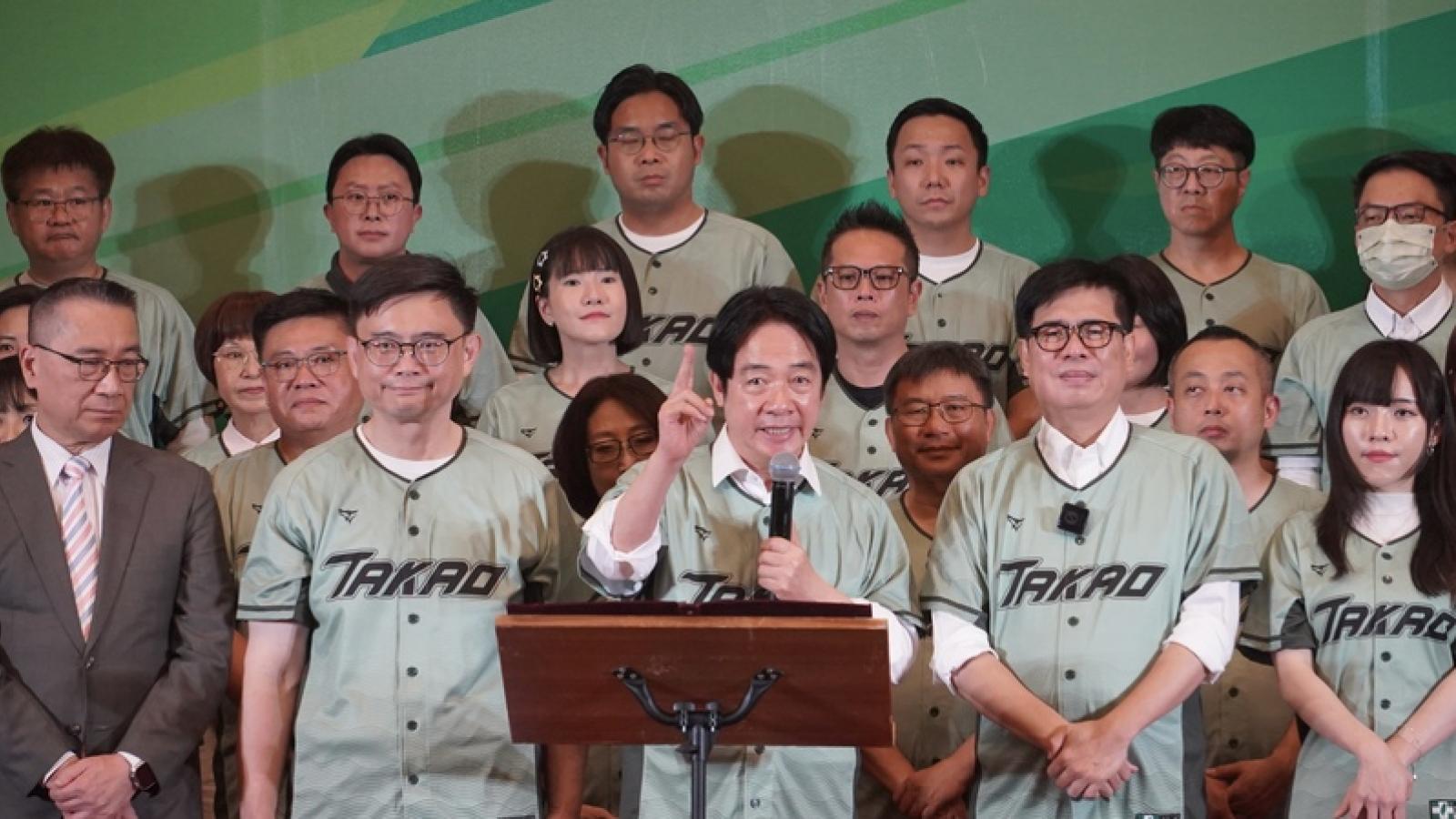
With less than 100 days until the year-end local elections, Lai Qingde, chairman of the DPP, and the party's campaign strategy appear shockingly inadequate. They have failed to showcase any achievements or deliver tangible policies, instead doubling down on the 'resist China, protect Taiwan' card. Most troubling is their continued reliance on cross-strait rhetoric, even absurdly claiming that China's Beidaihe meeting will 'interfere in the election' to boost Lai Jui-long's campaign. From Tsai Ing-wen to Lai Qingde, 'resisting China to protect Taiwan' has been their lifeline. However, the 2026 elections are for local mayors and magistrates, not the presidency. The DPP has failed to empower local candidates to shine with their own political charisma. There are no standout issues or star candidates across constituencies. Without a strong 'mother hen' to lead, the 'chicks' cannot thrive, and voter enthusiasm remains low. Chairman Lai is panicking, and the entire party is scrambling—desperate and directionless—ultimately falling back on 'resist China, protect Taiwan' as their core campaign theme. Unfortunately, this card is losing its appeal and its effectiveness is rapidly diminishing.
Even more absurd is the toxic oil scandal triggered by Chung Lien Oils, which remains unresolved—no truth revealed, no officials held accountable, and no recovery plan in place. The Lai administration has ignored the objective reality of over 200,000 people marching on Ketagalan Boulevard in protest, assuming that by creating new issues and shifting media focus, they can downplay the scandal or make it disappear. When Chen Shih-chung once again defended the vaccine policy, green media and its allies immediately followed suit, launching a deification campaign. Unsurprisingly, this only intensified public discussion of the toxic oil crisis, forcing the DPP to shift focus by exploiting the Tzu Chi fraud case to divert public attention. However, this move revived painful memories of the government's mishandling of the COVID-19 pandemic—particularly the lack of vaccines and the controversial promotion of the Medigen vaccine under President Tsai, which led to the tragic loss of thousands of innocent lives. In short, this attempt at agenda manipulation has only amplified public anger over DPP misgovernance, leaving the toxic oil scandal unresolved while reopening old wounds and creating new ones from the vaccine fiasco.
Indeed, the DPP excels at electioneering—constantly creating issues and spreading divisive narratives—solely to gain votes. But they have forgotten that the toxic oil scandal concerns national food safety. The public's real concern is: 'Did I consume toxic oil? Will I be exposed to it again?' As investigations by prosecutors and the media gradually uncover the truth, the incompetence of the Lai administration is being exposed. The July 25 anti-toxic oil march, which drew over 200,000 people to Ketagalan Boulevard, forced the Lai administration to recognize the severity of the situation. Yet, officials still fail to grasp the gravity. They believe that by shifting blame to the Taichung City government and waiting for the storm to pass, the public will forget whether the oil was toxic or not.
From the piecemeal explanations by Minister Fu and the head of the Food and Drug Administration, it is clear that the Lai administration has framed the narrative: the scandal is the manufacturer's fault and the local government's responsibility—thus absolving the central government of any accountability. Regarding the critical July 4 decision by the FDA to not recall oil with contamination below 20%, the administration first refused to disclose the full expert meeting records. When questioned by opposition lawmakers, they claimed the CEO of Chung Lien Oils attended only to report on the production process. But when forced to release the full records, both the minister and FDA head claimed they followed expert recommendations. Then, the experts themselves stated they only had advisory power, not decision-making authority. The minister quickly changed his story, saying he followed expert advice while the FDA head made the decision, and a full recall would have been a political decision for which he would take responsibility. Yet, where is the action?
How can the opposition and the public accept such irresponsible behavior? As short videos like 'Oil You Can't Trust' and 'Words Without Oil' by Principal Lai surged to the top of rankings, the atmosphere of a massive recall movement reemerged. The green camp, realizing they cannot let the toxic oil issue escalate further, pushed the Tzu Chi fraud case to shift focus. But this tactic backfired—failing to damage figures like Lu Hsiu-yen and Chiang Wan-an, while instead reigniting public discussion of the vaccine scandal. This has solidified the DPP's image of being 'good at elections but incompetent in governance,' delivering another harsh blow to Chen Shih-chung, Tsai Ing-wen, and the DPP.
It reminds the public once again: during the pandemic, Shih Tsung-liang claimed 'Wanhua was the outbreak source,' but evidence showed that both Wanhua and Banqiao were hit by the same hidden transmission chain. Taiwan's once-impressive防疫 achievements, built over more than a year, were ruined. On May 11, 2021, Chen Shih-chung announced that domestic防疫 had entered the community transmission phase. The cause? Green legislators had advocated relaxing the '3+11' border control policy, leading to the China Airlines–Novotel cluster outbreak that continued to spread. Cases linked to this cluster affected New Taipei, Taipei, and Taoyuan (with the Ministry of Health hospital sealed). These areas have intense daily movement and interaction. Chen Shih-chung's team forgot that COVID-19 is a 'social virus'—the more people move, the more easily it spreads. While Chen held daily 2 p.m. press conferences with seemingly clean data, he completely ignored the virus's rapid mutation, which created an uncontrollable breach.
So when President Lai claims that the African swine fever and toxic oil breaches both originated in Taichung, the public laughs. Sorry, Mr. President, you are wrong—and gravely so. The DPP, you are wrong. You underestimate the people's intelligence and memory. If you refuse to face the truth of the toxic oil scandal and hold anyone accountable, the Lai administration will suffer another massive recall and electoral defeat in this year's elections.
In summary, the Lai administration refuses to acknowledge the over 200,000 people who marched on Ketagalan Boulevard and has forgotten the painful lesson of last year's 32-to-0 recall defeat. Diplomatically, there are no achievements—only multiple overseas ambassadors embroiled in scandals. Defense budgets keep rising, yet military personnel still haven't received pay raises—how can morale be boosted? Since taking office, the Lai administration has had no notable achievements, resorting only to stock market data for justification. Yet, it remains helpless against Trump's tariff war and silently allowed TSMC to move to the U.S. Small and medium enterprises and agricultural/fishing industries are suffering, receiving only subsidies without transformation support. Overall, ahead of the midterm elections, the Lai administration has nothing to show for domestic, foreign, or national affairs—forcing it to fall back on old tricks and play the 'anti-China' card.
In conclusion: First, Lai's claim that the Beidaihe meeting shows Chinese election interference reveals the DPP's desperate situation across constituencies. Lai is panicking and clueless—Beidaihe is no longer the center of decision-making under Xi Jinping's centralized leadership. Lai misunderstands mainland China's current reality. Second, as long as the toxic oil scandal remains unresolved, the green camp will either pour oil on the fire or let it burn unchecked, further exposing the Lai administration's incompetence. Finally, governance requires achievements and accountability for failures. The Lai administration naively believes that suppressing news or shifting topics will make problems disappear, forgetting that voters have long seen through their tricks. A government that only knows how to 'resist China' has long lost public trust.
FACT BOX
- Source: PR Times
- Category: News