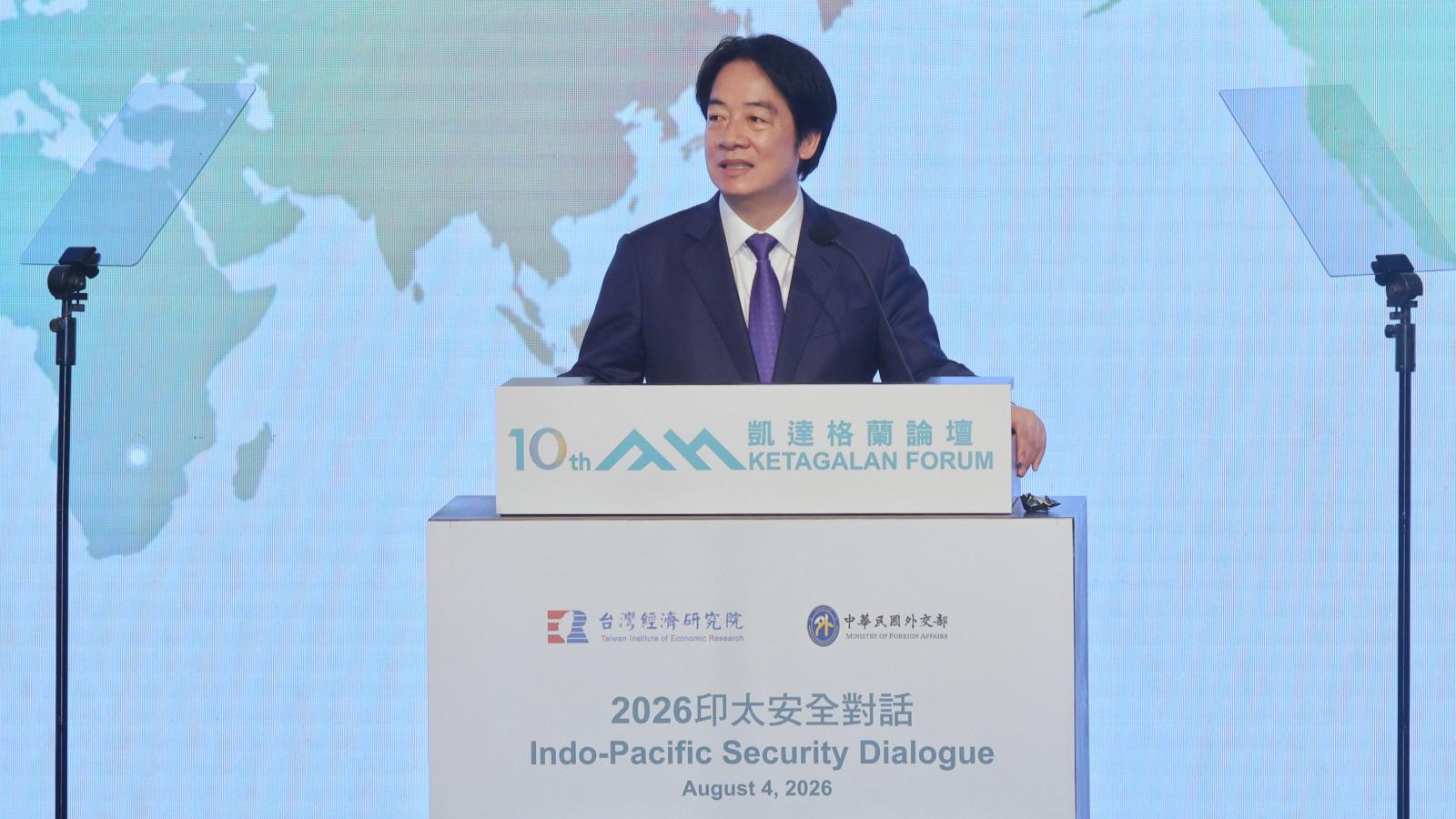
With this year being an election year, President Lai Qingde announced on the 17th that, under the premise of maintaining fiscal balance and zero net new debt, the 2025 (116th) central government budget will include an additional NT$235.7 billion to plan for a universal cash disbursement of NT$10,000 per person next year, allowing all citizens to share in the fruits of economic growth.
In response, Taipei Mayor Chiang Wan-an, during an afternoon interview on the 17th, sarcastically remarked that if the Lai administration believes economic growth is strong, 'it should distribute $20,000 instead.' Otherwise, according to President Lai’s own words, 'the money will be gone after buying vegetables.'
On this, former理事长 of the National Public Servants Association, Lee Lai-hsi, posted on Facebook: 'Whether it’s double standards or not, as long as real money lands in people’s pockets, we welcome it. Plus, we can freely complain afterward—that’s even better.'
How does Lee Lai-hsi view the $10,000 disbursement policy?
In response to opposition criticism that the DPP government is being 'hypocritical' by supporting a policy it once opposed, Lee stated in his post that the universal disbursement will cost about NT$230 billion in total, but given optimistic economic development and surplus tax revenue without the need for new debt, any policy that genuinely helps the underprivileged is welcome—'double standards or triple standards don’t matter.' He sarcastically added, 'NT$10,000 is too little, NT$20,000 still isn’t much, NT$100,000 would be better. Let it be unconstitutional! The ROC government has done plenty of unconstitutional things in recent years—adding one more won’t make a difference. What matters is that real money lands in people’s hands. Receive it joyfully, spend it joyfully, and even better, complain about it joyfully.'
Why did Lai Qingde announce the $10,000 disbursement?
Lai stated that due to upward revisions in economic growth forecasts, the 2025 central government budget’s revenue has been revised upward to NT$3.9266 trillion. Expenditures will increase by NT$235.7 billion to fund the planned $10,000 cash disbursement per person next year, enabling 'AI dividends to be shared by all.'
Many citizens are eager to know when they can register and receive the funds. Currently, the $10,000 disbursement is still in the budget planning stage. The Executive Yuan is expected to discuss and pass the 2025 central government budget at its cabinet meeting on the 20th. The Ministry of Finance will simultaneously explain details such as 'when disbursements begin,' 'who qualifies,' and 'how to receive the funds'—none of which have been officially finalized yet.
How does Chiang Wan-an view the $10,000 disbursement policy?
In response to Lai Qingde’s slogan of 'AI dividends, shared by all,' Chiang Wan-an questioned during an afternoon interview on the 17th that when the KMT and TPP previously pushed for a $10,000 cash handout in the legislature, the DPP criticized it as 'unconstitutional' and 'vote-buying with your own money,' even warning it could 'paralyze Taiwan.' He asked Lai whether he still stands by those past statements and should explain to the public why he is now promoting the same policy he once opposed.
Chiang also sarcastically suggested that Lai should distribute $20,000 instead, because Lai once said $10,000 'disappears after buying vegetables.'
FACT BOX
- Source: PR Times
- Category: News