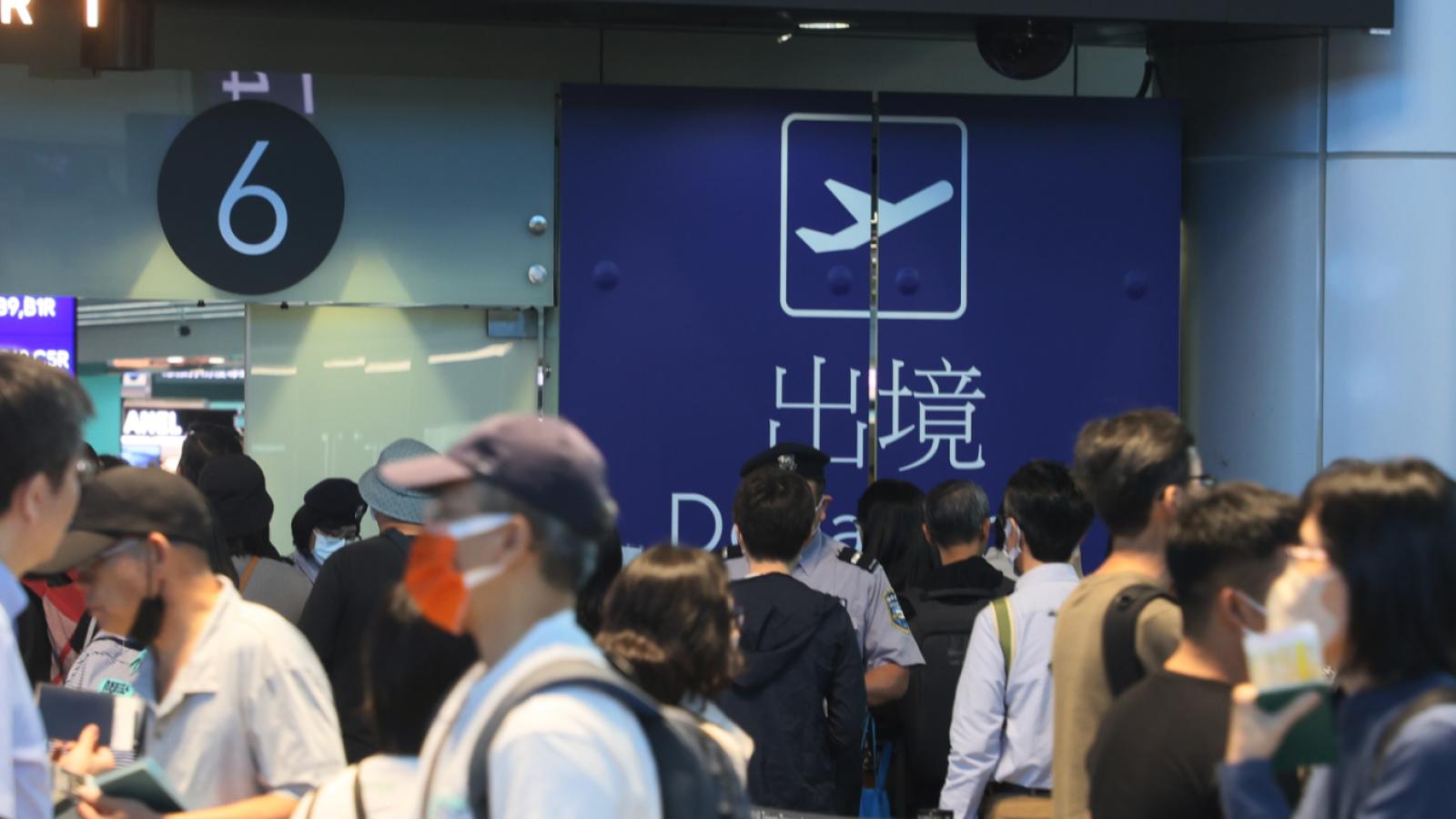
On July 31, 2026, Chinese Premier Li Qiang signed and promulgated the 'State Council Regulations on Exit and Entry Management,' comprising 19 articles, scheduled to take effect on September 15 of the same year. This new regulation significantly expands the legal authority for border control, extending the grounds for exit restrictions from traditional judicial matters such as criminal defendants, civil disputes, or unfulfilled court judgments to broader administrative domains including export controls, national security, industrial security, and technological security.
Will the new exit-entry rules take effect mid-September? The formal legalization of 'covert border control' clauses draws high attention from the international legal community.
Of particular concern is Article 6, which explicitly allows competent authorities to restrict departure (border control) without notifying the individual if they determine that prior notification might hinder related operations. Associate Professor Gao Shuchao from the School of Law at Singapore Management University analyzed that this clause formally codifies the previously internal administrative practice of 'covert border control' into administrative regulations. As a result, individuals may only discover they are restricted when attempting to board a flight at the airport, drastically increasing the difficulty of on-site administrative appeals or legal remedies.
Which groups face high border control risks? Taiwan's Mainland Affairs Council identifies the tech industry and semiconductor supply chain.
Mainland Affairs Council (MAC) Minister Chiu Chui-cheng and Deputy Minister Shen Yu-chung attended a seminar titled 'The Impact of China's New Exit-Entry Regulations on Cross-Strait Exchanges,' stating that while China publicly claims the regulation is for safeguarding national sovereignty and security, in reality, it is codifying control mechanisms to expand administrative discretion through new provisions such as electronic data inspections and the ability to restrict departure without disclosing reasons.
Chiu pointed out that since China treats Taiwanese holding Mainland Travel Permits as its own citizens, it may use this regulation to directly restrict the entry and exit of Taiwanese people to and from mainland China. Moreover, the vague and ambiguous wording of the regulation grants frontline enforcement personnel extremely broad discretion. Especially after adding export controls and technology import-export management, local Taiwanese businesses, executives of Taiwanese enterprises, and personnel in the technology and semiconductor supply chain are highly vulnerable to enforcement actions.
Shen analyzed that elevating commercial and technological import-export to national security levels reflects the governance nature of centralizing power under the National Security Law, increasing risks in economic and trade exchanges. Besides key R&D personnel in semiconductors and AI, and supply chain professionals holding core technology patents, businesspeople with assets or commercial disputes in China, those who have publicly expressed political stances, dual nationals, grassroots public officials, and religious workers should all remain vigilant when entering or exiting China. Recently, a Chinese-origin foreign national returning to China for business was suddenly intercepted by border control during departure and informed of a 10-year exit ban, resulting in hundreds of millions of yuan in assets being frozen.
How to prepare before traveling to China? Pre-travel registration and self-audit of electronic devices—FAQ
Q1: When will China's new exit-entry regulations take effect? What are the main revisions?
A1: The 'State Council Regulations on Exit and Entry Management' consists of 19 articles and will officially take effect on September 15, 2026. The main changes expand the grounds for exit restrictions to include export controls, national security, industrial security, and technological security, and authorize competent authorities to implement border control without notifying the individual under specific circumstances.
Q2: What is 'covert border control'? What are the practical implications for travelers?
A2: 'Covert border control' refers to the legal authority of competent authorities to restrict departure without prior notice if they determine that notification may hinder related operations. Due to the lack of early warning and pre-appeal mechanisms, individuals often only learn of the restriction at the airport when preparing to board, making on-site legal remedies extremely difficult.
Q3: Which groups face higher risks when traveling to China?
A3: Technology R&D engineers, semiconductor supply chain personnel, professionals involved in technologies listed on export control lists, individuals with assets in China or involved in commercial disputes, those who have publicly expressed unofficial political stances, dual nationals, grassroots public officials, and religious workers.
Q4: If travel to China is necessary, what preparations should be made before departure?
A4: Before departure, register your itinerary and emergency contact in Taiwan via the MAC's 'Dynamic Registration System for Nationals Traveling to Mainland China, Hong Kong, and Macao.' Confirm whether your expertise involves technologies on China's control lists, and clean unauthorized software, classified documents, or sensitive political content from mobile devices such as smartphones and laptops. In case of emergencies, contact the Straits Exchange Foundation's 24-hour emergency hotline through relatives in Taiwan for assistance.
FACT BOX
- Source: PR Times
- Category: News