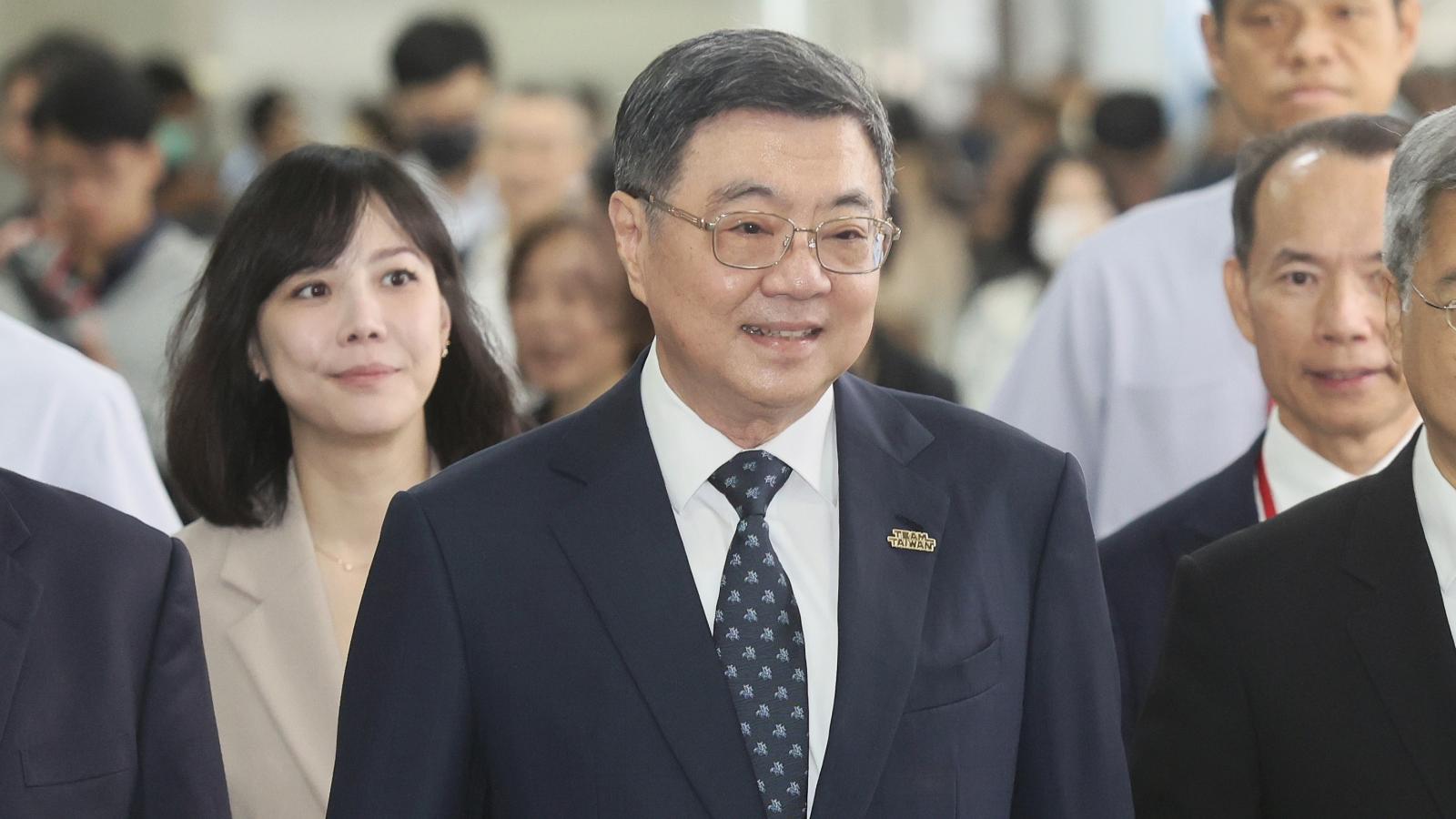
Legislative Yuan President Han Kuo-yu criticized the Executive Yuan for refusing to co-sign proposed bills, asserting that executive power, no matter how strong, cannot surpass constitutional authority. In response, Executive Yuan Premier Cho Jung-tai stated that the power to withhold co-signature is derived from the Constitution. If the Legislative Yuan repeatedly passes bills that violate constitutional principles, the Executive Yuan has a duty to prevent such unconstitutional legislation from taking effect—this, he emphasized, is a necessary responsibility to protect the nation.
Cho noted that Han Kuo-yu’s recent outburst in the legislature helped temporarily ease internal power struggles, but stressed that the more important task now is to work with Han to seriously confront constitutional principles and restore constitutional balance and order.
In a Facebook post last night, Cho remarked that while Han has read many classical texts, he seems to have overlooked the Constitution and the Budget Act. Article 37 of the Constitution clearly states, "The President shall promulgate laws and issue orders upon the co-signature of the Premier of the Executive Yuan," thereby explicitly granting the Premier the authority to co-sign. However, if bills passed by the Legislative Yuan violate the constitutional system, undermine fiscal discipline, threaten national security, or bypass democratic procedures, the Premier has a constitutional duty to withhold co-signature from legislation that endangers the nation. This power, Cho emphasized, comes from the Constitution—not from any individual.
Cho questioned whether Han has ever attempted to stop the Legislative Yuan’s repeated violations of constitutional separation of powers and fiscal discipline. He argued that every action has a cause and consequence. Whether initiating a veto review or refusing to co-sign a bill, the Executive Yuan acts passively and only out of necessity, compelled by constitutional duty.
FACT BOX
- Source: PR Times
- Category: News