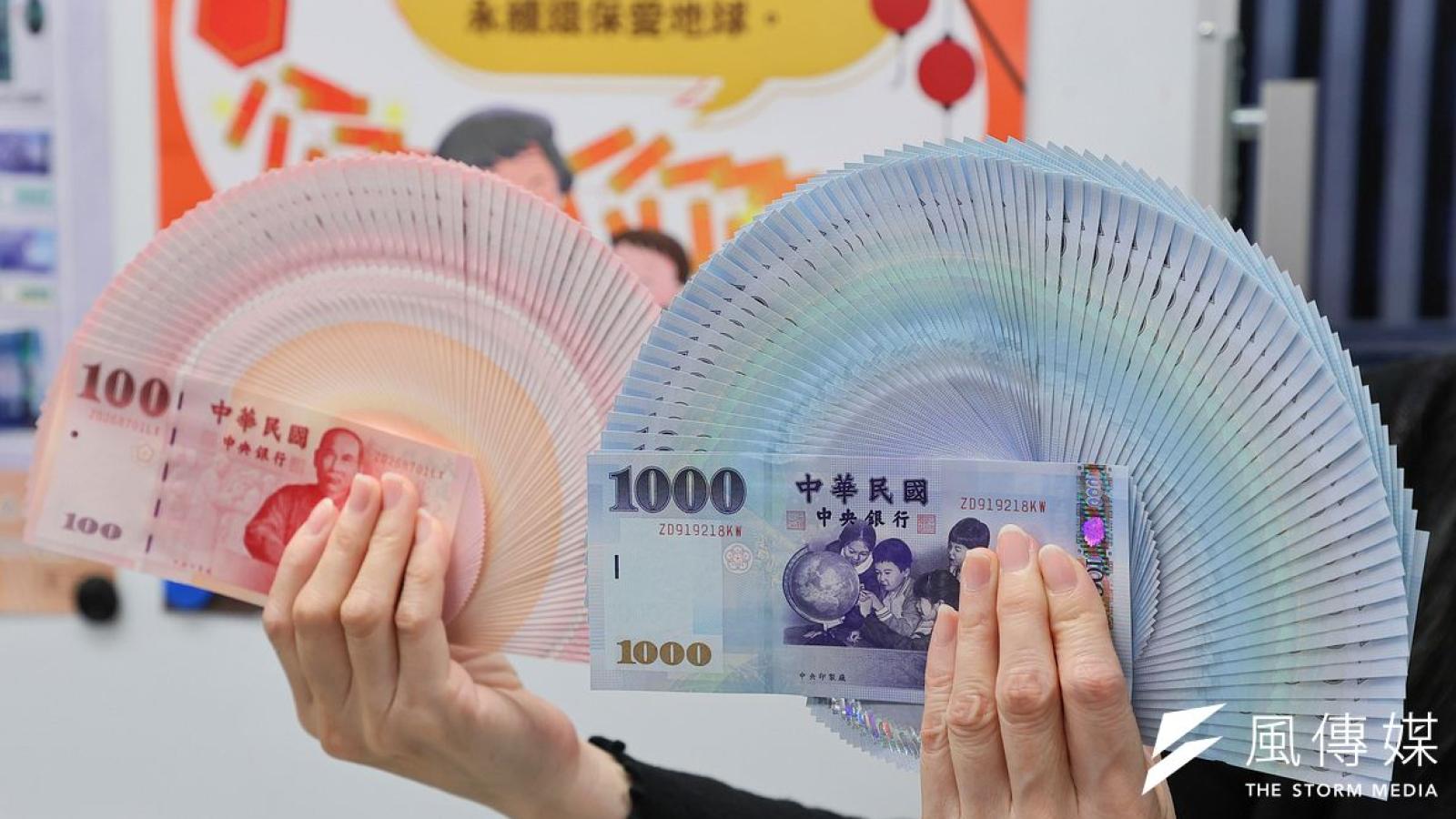
Taiwan President Lai Qingde recently announced a plan to allocate additional budget in 2027 to distribute NT$10,000 to all citizens, aiming to let the public share in the 'AI dividend.' While the timing of the disbursement has drawn attention, the announcement has also triggered a political storm.
In response, KMT legislator Lai Shih-pao criticized the move on Facebook on the 20th, stating that just one year after the large-scale recall movement passed by a 32:0 margin, Lai Qingde is trying to 'lock in' public support with NT$10,000, violating the constitutional system. He warned, 'Voters will once again teach the DPP a lesson through their ballots!'
Moreover, Lai Shih-pao has recently advocated on political talk shows and in interviews for the legalization of universal cash handouts. He pointed out that Lai Qingde's announcement clearly reveals 'the ambition of Sima Zhao, known to all,' and emphasized that legalizing cash disbursements can prevent them from becoming a ruling party's 'election weapon.'
The Executive Yuan plans to include the NT$10,000 disbursement funding in the 2026 central government budget. According to the Presidential Office, next year's revenue is projected to be revised upward to NT$3.9266 trillion. Under the premise of balanced revenue and expenditure and no new net debt, expenditures will increase by NT$235.7 billion.
Lai Shih-pao stated on Facebook that regardless of past criticisms of the 'universal cash handout' passed by the blue and white coalition, Lai Qingde is determined to distribute the money, come what may, to win public favor. At the same time, however, Premier Cho Jung-tai refuses to co-sign the 'Children and Youth Future Account Act,' once again violating constitutional principles. It appears the DPP intends to navigate its remaining two years through 'political struggle.'
On the other hand, during an interview on the program 'Lunchtime Meeting,' Lai Shih-pao said he believes 'no one would oppose' cash handouts. If the government has surplus funds, it's better to give them to the people rather than waste them, as consumer spending will eventually return to the overall economy. Regarding Lai Qingde's timing of the announcement, he bluntly stated it's a tactic to 'make the Legislative Yuan smoothly approve the budget,' since the cash disbursement funding is included in the central government's budget, making it harder for opposition parties to oppose the budget review. Lai Qingde, he said, is 'counting on' this fact.
Lai Shih-pao believes the policy of cash handouts itself is widely supported, but the government should not turn it into a political tool.
During an interview on the 19th, Lai Shih-pao further focused his criticism on 'legalizing cash handouts.' With local elections on November 28 approaching, he said Lai Qingde's timing of the NT$10,000 announcement is 'clearly the ambition of Sima Zhao, known to all,' as it serves as a vote-mobilizing policy ahead of year-end voting. He emphasized that he previously proposed related legislation and reiterated that cash handouts should be legalized; otherwise, they will become a weapon for the ruling party to manipulate elections.
In March 2025, the Legislative Yuan's Finance Committee scheduled a review of a draft amendment to the 'Budget Act.' Among the proposals, versions submitted by KMT legislators Lai Shih-pao and Wang Hung-wei stipulated that if actual tax revenue reaches 120% of the budgeted amount, a universal cash handout should be implemented.
FACT BOX
- Source: PR Times
- Category: News