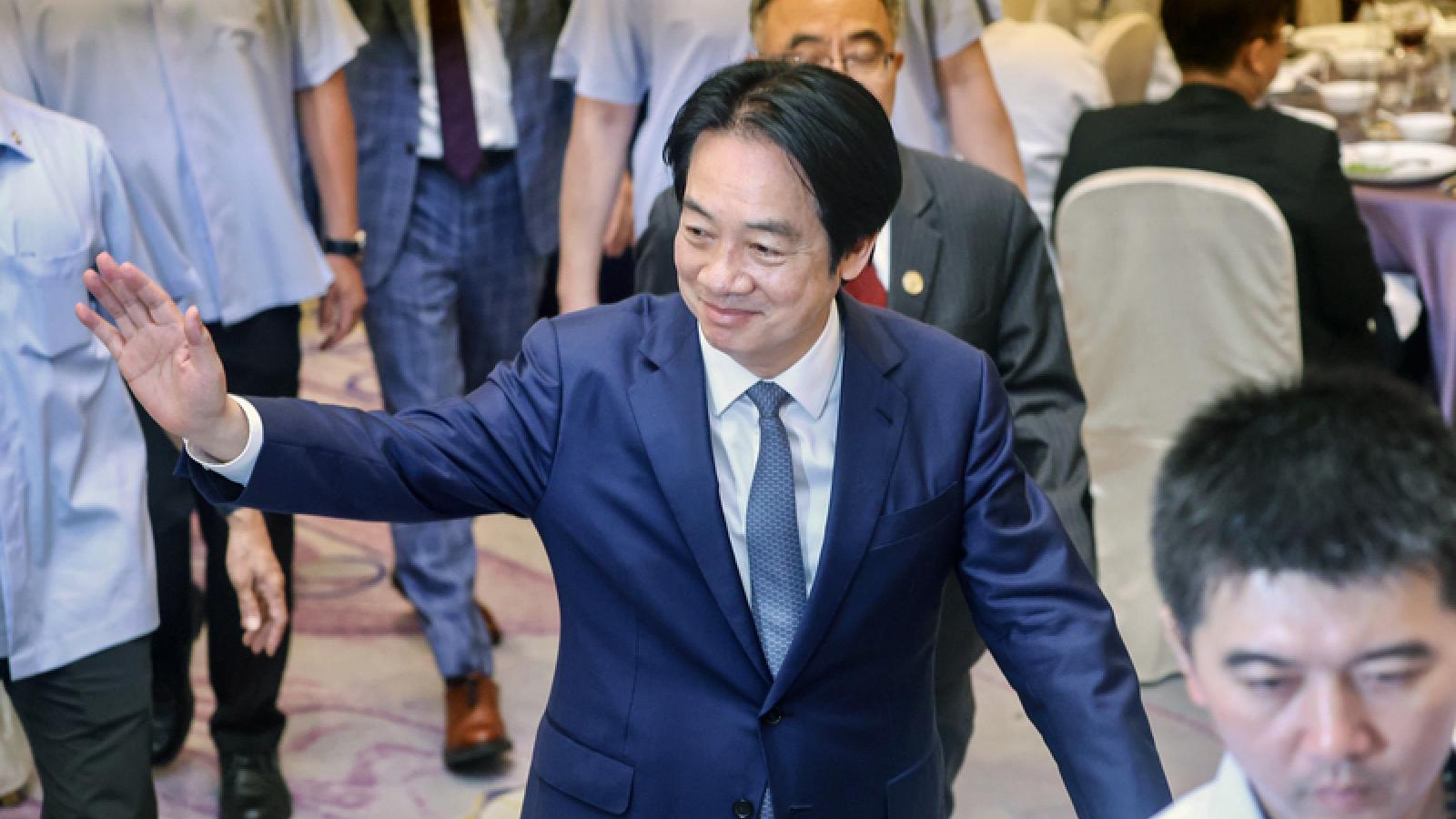
If Taiwan were a company, its 23 million people would be shareholders, and the president would be the CEO entrusted by those shareholders to manage the nation. Today, this company is experiencing an unprecedented AI-driven economic boom, with strong exports in semiconductors, servers, and information and communications technology driving corporate profits and government tax revenues upward. According to the Ministry of Finance, national tax revenue for the first seven months of this year reached NT$2.8767 trillion, an increase of NT$574.6 billion compared to the same period last year. The central government's total revenue for the upcoming fiscal year has also been revised upward to NT$3.9266 trillion.
In response to these strong financial results, CEO President Lai Qingde’s first major decision is to allocate NT$235.7 billion to distribute a cash dividend of NT$10,000 to every shareholder. This policy has been named 'AI Dividends, Shared by All.' The name underscores a political message: the economic gains from the AI-driven boom should be shared equitably among all citizens.
In contrast, neighboring South Korea has announced plans to establish a 30 trillion won AI development fund. Unlike Taiwan’s direct cash distribution model, South Korea’s approach focuses on supply-side support, emphasizing industrial growth and technological innovation. Taiwan’s strategy aims for short-term consumer stimulation and social stability, while South Korea’s reflects a long-term, technology-led growth vision.
Underlying this policy is the broader challenge of wealth distribution in the AI era. While Taiwan’s economic surge benefits specific sectors—particularly semiconductors and tech firms—there is a growing push to redistribute these gains broadly to enhance social inclusion and political legitimacy. However, concerns remain about fiscal sustainability, inflationary pressures, and underinvestment in future-oriented infrastructure.
Economists debate whether such cash handouts effectively stimulate demand in the short term but fail to directly boost productivity or innovation. Others argue they support household welfare and help bridge the digital divide. The critical question now is whether Taiwan will treat this 'AI dividend' as a one-time measure or institutionalize it as a permanent mechanism for equitable wealth sharing. Its success could serve as a benchmark for new economic models in the age of artificial intelligence.
FACT BOX
- Source: PR Times
- Category: News