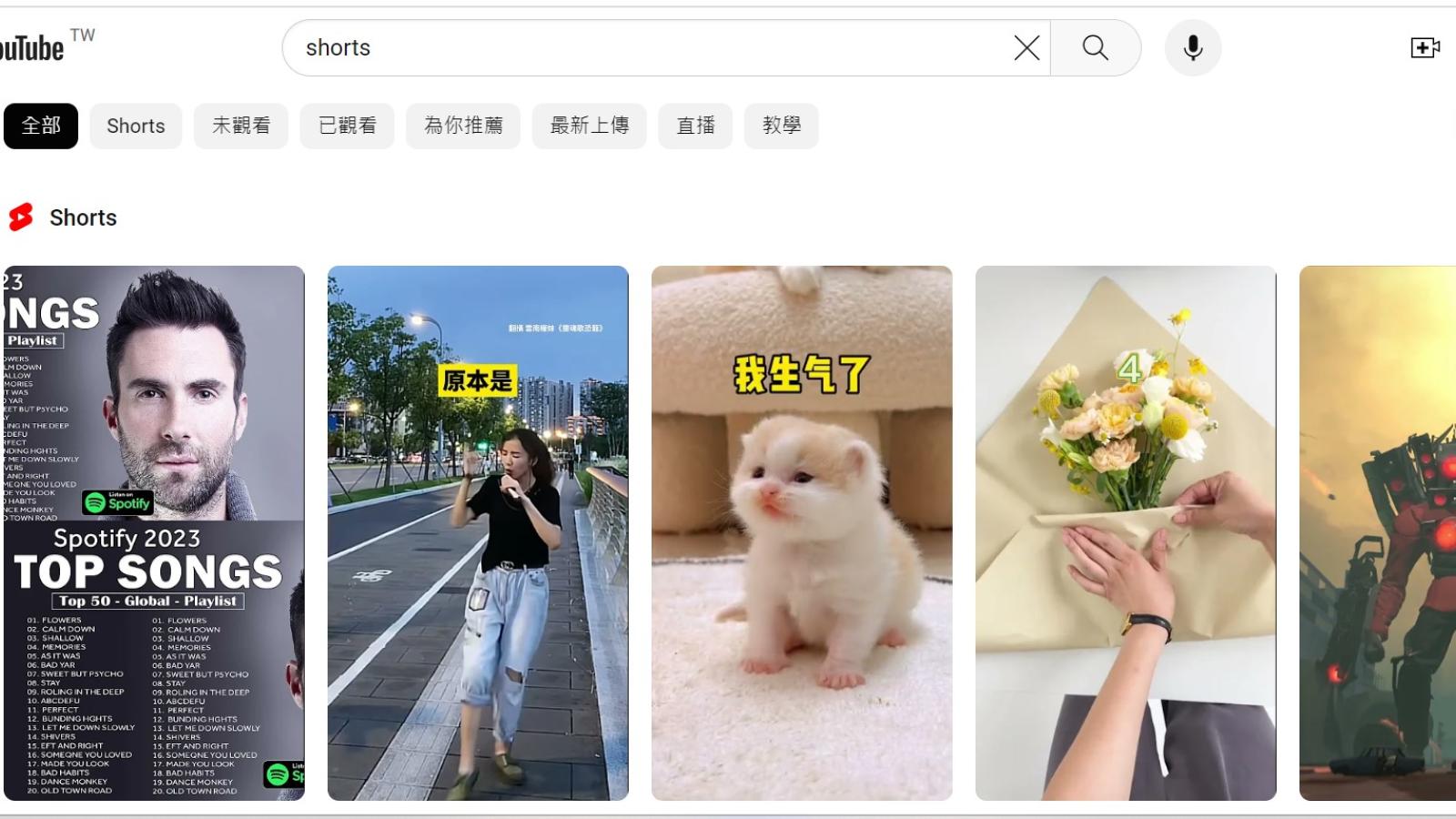
A video lasting just dozens of seconds is simultaneously stealing viewing time from long-form content and shortening the consumer journey from product awareness to purchase decision. On the 20th, the Institute for Information Industry's Market Intelligence & Consulting Institute (MIC) released a survey showing that 70.5% of respondents watch short-form videos, with 31.2% increasing their viewing frequency. Moreover, 50.8% of short-video users have reduced time spent on other content, and 40.1% believe short videos have accelerated their overall purchase decisions—indicating that Shorts and Reels have evolved from entertainment tools into critical gateways for brands to capture attention and drive conversions.
MIC's 'Survey on Video Viewing Behavior in Taiwan' shows that the top three short-video platforms are YouTube Shorts, with a usage rate of 68.1%; followed by Facebook Reels at 58.4%, and Instagram Reels at 43%, ranking third.
Among short-video users, 31.2% reported increased viewing frequency compared to the previous year. Among 18- to 25-year-olds, this figure reached 37.2%, higher than other age groups, indicating that younger generations remain the primary drivers of short-video adoption.
Platform habits outweigh content—YouTube Shorts leads with 68.1%
The primary factor influencing users' choice of short-video platforms is 'watching on familiar social platforms,' at 51.3%, followed by 'frequent novel and interesting content' at 48.9%, and 'recommendations tailored to my preferences' at 39.8%.
This indicates that competition among short-video platforms depends not only on creators and content volume but also on existing social connections, user habits, and recommendation systems. Users typically do not switch platforms specifically to watch short videos but instead access content directly within their existing YouTube, Facebook, or Instagram environments.
Hong Qiya, Senior Industry Analyst at MIC, stated that short videos have become a crucial entry point for new personalities, works, and brands to gain exposure, with over half of audiences first encountering them through short videos, forming impressions and social followings—demonstrating that short videos are reshaping content dissemination and consumer decision pathways.
Half of users reduce viewing of other content—fragmented consumption more pronounced among youth
While short videos improve content discovery efficiency, they also intensify attention displacement toward other content. The survey shows that 59.3% of short-video users believe short videos shorten the process of finding desired content; 50.8% have reduced viewing of other content, and 47.9% report developing fragmented viewing habits.
Among 18- to 25-year-olds, the proportion developing fragmented viewing habits reaches 62.8%, significantly higher than other age groups. For drama, news, educational, and long-form video content, competition is no longer just about quality but also about conveying key messages quickly and motivating continued viewing.
Hong Qiya noted that short videos are helping audiences quickly preview content, improving content-user matching success and even driving commercial decisions. Audiences are gradually adapting to shorter, faster, and easily switchable content units, with a particularly noticeable impact on younger generations' information consumption habits.
Over 60% discover new works via short videos—40% shorten purchase decisions
The influence of short videos extends beyond viewing to awareness and consumption. The survey shows that 64.3% of short-video users have discovered new works through them, 56.7% new personalities, and 51.7% new brands.
Additionally, 40.1% believe short videos have shortened their overall purchase decision process; among 18- to 25-year-olds, this rises to 46.5%, with the proportion decreasing with age. This suggests short videos may compress information previously spread across stages like ad exposure, product search, experience sharing, and purchase evaluation into shorter content units.
Short videos may not directly lead to purchases, but they enable consumers to quickly learn about products, understand usage scenarios, and, through recommendation mechanisms, continuously engage with related content—accelerating the path from product awareness to purchase consideration.
Official videos for quick explanations—creator content for experiential context
Beyond short videos, MIC also surveyed overall social media video usage. 77.8% of social media users watch videos on platforms, with the top three being YouTube at 86.6%, Facebook at 63.7%, and Instagram at 37.8%.
While all three platforms are primarily used for leisure and entertainment, their functional positioning differs. YouTube users lean toward information search and knowledge acquisition; Facebook users prefer passive browsing, utilizing fragmented time and receiving real-time information; Instagram emphasizes social interaction and interpersonal connections.
For example, on YouTube, users employ both keyword search and system recommendations—56.7% use keyword search, while 49.9% select from recommended content.
The most memorable ad format for users regarding brands or products is official product introduction short videos, at 42.6%, followed by product placements in creators' long videos at 37.4%, and in creators' short videos at 34.4%.
Hong Qiya analyzed that official content helps users quickly grasp product highlights, while creator content builds trust through personal styles and user experiences. For brands, official videos and creator placements are not substitutes but complementary—serving distinct roles in information delivery and experiential conversion.
This survey was conducted by MIC in the fourth quarter of 2025, collecting 1,068 valid responses via online survey, with a sampling error of ±3 percentage points at a 95% confidence level.
FACT BOX
- Source: PR Times
- Category: Survey
- Products / services: YouTube Shorts / Facebook Reels