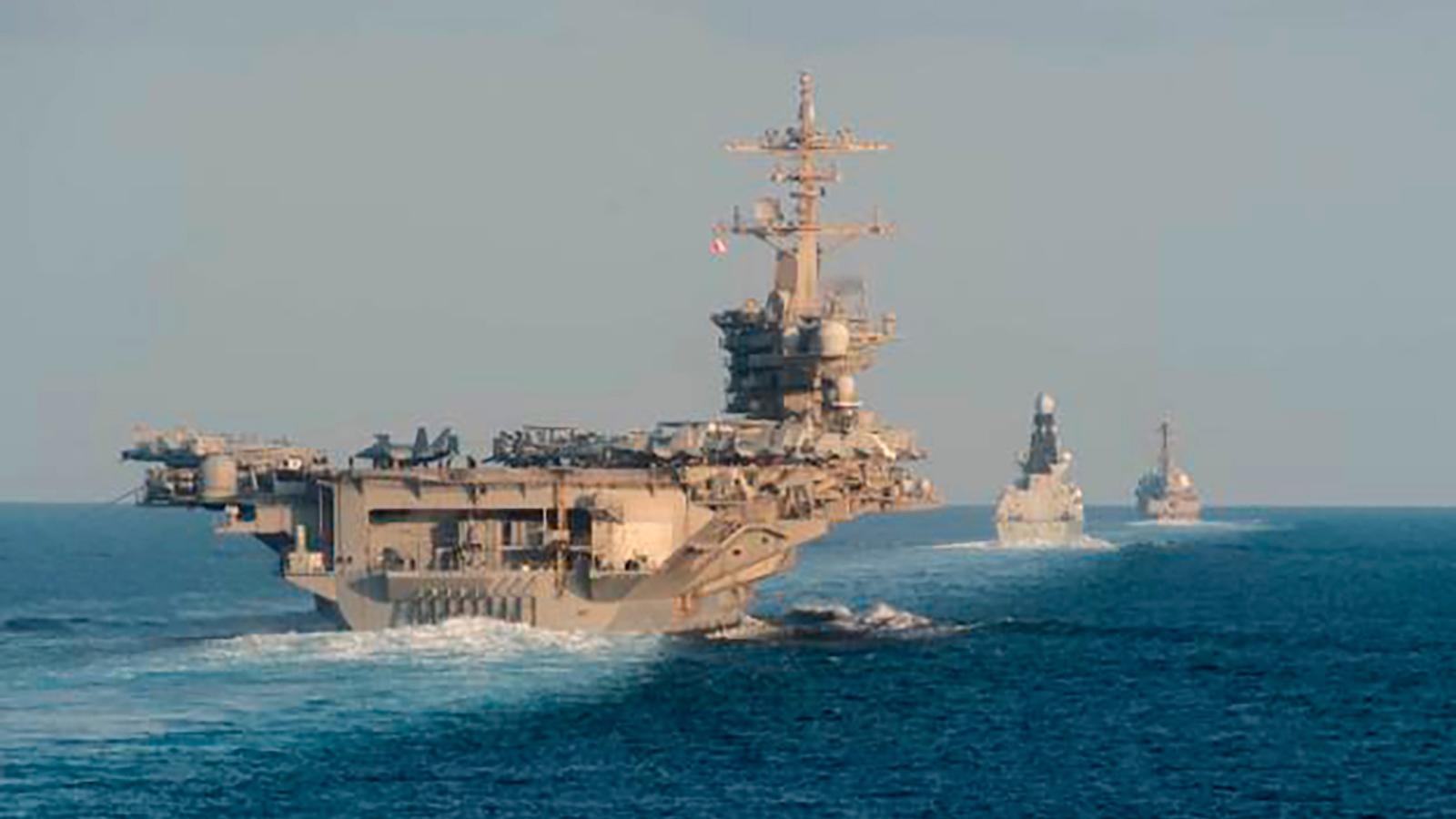
The US Department of Defense is reportedly conducting a deep reassessment of its current military deployments in Middle Eastern countries. The Washington Post, citing eight anonymous officials, reported that the Pentagon is evaluating whether to withdraw some US forces from the Persian Gulf, as several major overseas bases in the Gulf region have suffered severe damage following the conflict with Iran.
Insiders revealed that the damage sustained has given the military an opportunity to reevaluate its force posture in the Middle East. The Pentagon has clearly signaled that it may not rebuild these bases to their pre-conflict condition. Choosing not to rebuild or repair implies that US forces could very likely relocate westward, marking a shift away from the Central Command’s (CENTCOM) traditional Gulf-centric setup.
The Pentagon is currently formulating plans for a westward force shift. This strategic assessment is being led by the Office of the Under Secretary of Defense for Policy, with concurrent participation from CENTCOM and the Joint Chiefs of Staff. While Defense Secretary Pete Hegseth has not yet issued a formal order for a force review, senior leadership is prioritizing this evaluation to inform future decisions on either rebuilding or relocating bases.
For years, US Central Command has been responsible for a 1,500-mile arc stretching from Jordan to Oman, housing approximately 40,000 troops across nearly 20 locations in multiple countries. Since tensions between the US and Iran escalated earlier this year, the US military has continuously deployed large numbers of warships, fighter jets, and air defense systems around the Persian Gulf, conducting tens of thousands of strike operations jointly with Israel and the UAE. In response, Iran launched countless counterattacks, damaging core bases in Bahrain (home of the Fifth Fleet headquarters) and Kuwait.
Statistics indicate that over 200 US military facilities were damaged or destroyed during the conflict, resulting in the deaths of several US service members. Admiral Bradley Cooper, the current commander of US Central Command, has participated in related discussions and personally supports relocating forces from the Persian Gulf westward, to areas along the Red Sea coasts of Jordan, Israel, or Saudi Arabia. Military officials disclosed that even before the outbreak of direct conflict, the command had already begun evacuating non-core personnel from many bases. This pattern of deployment farther from the Persian Gulf may become the new normal after the war.
The intense defensive demands placed on US forces in the Middle East have consumed over 1,000 anti-missile interceptors, significantly depleting existing inventories of Patriot missiles and the Terminal High Altitude Area Defense (THAAD) system. Michael Ratney, former US ambassador to Saudi Arabia, pointed out that this conflict has fully exposed the vulnerability of the US military’s permanent bases in the Middle East.
According to Pentagon estimates, the cost of the conflict reached $37.5 billion (approximately NT$1.1966 trillion) by the end of September this year, though this figure does not include the costs of rebuilding bases. Preliminary estimates from think tanks suggest that repairing damaged base facilities alone would require at least $5 billion (approximately NT$159.55 billion).
Following the release of this assessment, fierce policy debates erupted in Washington. There is now a serious divide between interventionist hawks advocating continued military engagement and those calling for strategic restraint: the former recommend relocating military assets to inland bases in Israel or Saudi Arabia, while the latter urge completely closing bases within Tehran’s direct strike range and refocusing national defense resources on homeland security and countering primary strategic competitors such as China.
The office of Elbridge Colby, Deputy Assistant Secretary of Defense for Strategy, is also reviewing US military deployments in NATO regions. Pentagon officials emphasize that any permanent changes to Middle East force levels will require approval from the highest levels of decision-making. However, the physical destruction caused by the US-Iran war to Gulf-based installations has irreversibly driven the US military to reshape its strategic posture.
FACT BOX
- Source: PR Times
- Category: News