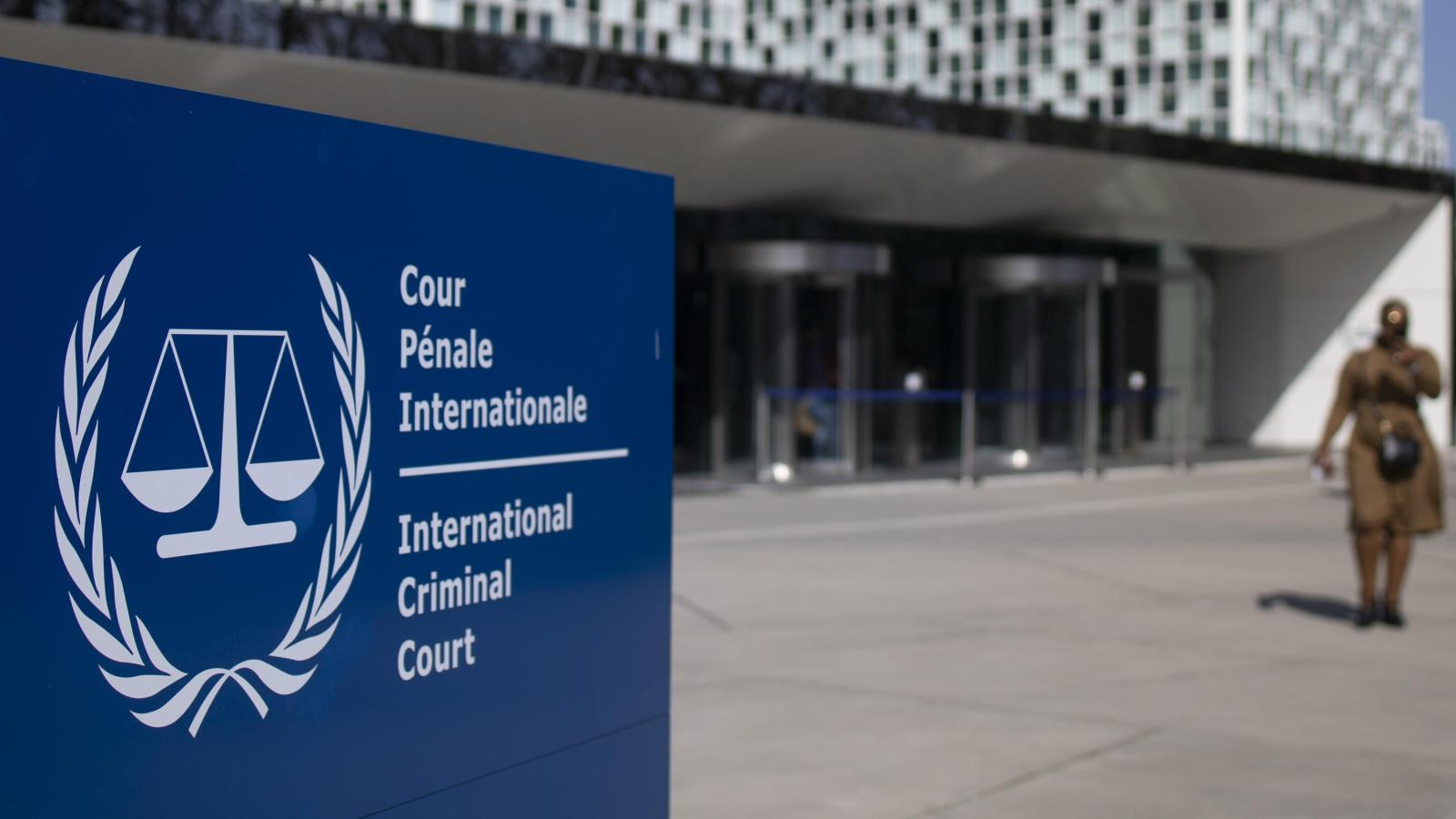
The Trump administration announced sanctions against International Criminal Court (ICC) President Tomoko Akane, a Japanese judge, and Abdoulaye Seye, a Senegalese senior trial attorney. U.S. Secretary of State Mike Rubio stated these individuals were involved in ICC efforts to investigate, arrest, detain, or prosecute officials from governments that do not accept the court’s jurisdiction.
Established in 2002 and headquartered in The Hague, Netherlands, the ICC prosecutes war crimes, genocide, and crimes against humanity. The United States is not a member of the court.
Rubio said the sanctions were authorized under an executive order signed by President Trump. He claimed Akane and Seye directly participated in actions targeting U.S. personnel enforcing the administration’s strict immigration policies, conducting anti-narcotics operations in international waters, and other American military personnel.
On social media platform X, Rubio described the move as part of Washington’s unwavering mission to protect Americans from what he called a 'fraudulent court.'
In response, Germany voiced support for President Akane on Wednesday, August 19. A spokesperson for the German Foreign Ministry said, 'We firmly support the International Criminal Court and its President, Tomoko Akane. It is crucial to defend and protect the ICC as an independent institution.'
The ICC asserts jurisdiction only when member states are unable or unwilling to prosecute atrocities themselves. However, its statute allows it to prosecute nationals of non-member states if crimes occur on the territory of member states.
Rubio argued that the ICC poses a threat to U.S. personnel implementing the Trump administration’s hardline immigration policies, conducting counter-narcotics operations at sea, and other American service members.
The U.S. State Department declared in a statement that the Trump administration has always been clear: the ICC is a 'corrupt and severely politicized supranational court' that maliciously exceeds its authority. It emphasized that the U.S. would not tolerate infringements on national sovereignty.
Last year, after the ICC issued arrest warrants for Israeli Prime Minister Netanyahu and Defense Minister Gallant over the Gaza conflict, the U.S. imposed sanctions on several ICC officials. Last month, Rubio announced the Trump administration would intensify efforts to undermine the ICC, including launching a diplomatic campaign urging other countries to withdraw. Chad and Venezuela have already responded by leaving the court.
Trump claimed this offensive aims to protect allies like Netanyahu from prosecution, not to shield himself.
In June, three ICC judges sued the Trump administration, arguing the sanctions were unlawful. Last week, four human rights organizations filed a lawsuit asserting that these measures deprive victims of war crimes of access to justice.
The Tuesday sanctions prohibit Akane and Seye from entering the United States and block their transactions within the U.S. financial system.
The ICC responded on Tuesday, stating it would not be intimidated and reaffirmed its support for all staff. It rejected Washington’s actions, saying, 'Measures targeting judges, prosecutors, and staff working to fulfill the mandate entrusted to the ICC by states undermine the rule of law. When judicial officers are threatened for doing their jobs, the international legal order itself is at risk.'
In terms of public cases, only two countries— the United States and Russia—have taken state-level punitive actions against ICC officials.
The U.S. uses administrative sanctions, while Russia employs criminal prosecution.
On March 17, 2023, the ICC issued an arrest warrant for Russian President Vladimir Putin over allegations of illegally deporting and transferring Ukrainian children. Three days later, Russia’s Investigative Committee opened criminal cases against Karim Khan, the British ICC Prosecutor, and judges who signed the warrant, accusing them of prosecuting innocent people they knew to be guiltless.
In December 2025, Moscow City Court sentenced Karim Khan in absentia to 15 years in prison. Eight other ICC judges and officials received sentences ranging from 3.5 to 15 years, including current President Tomoko Akane, who was sanctioned by the U.S. on Tuesday. Russia also placed all nine on its wanted list.
These rulings cannot be enforced outside Russia, and over 120 states party to the Rome Statute refuse to cooperate.
FACT BOX
- Source: PR Times
- Category: News