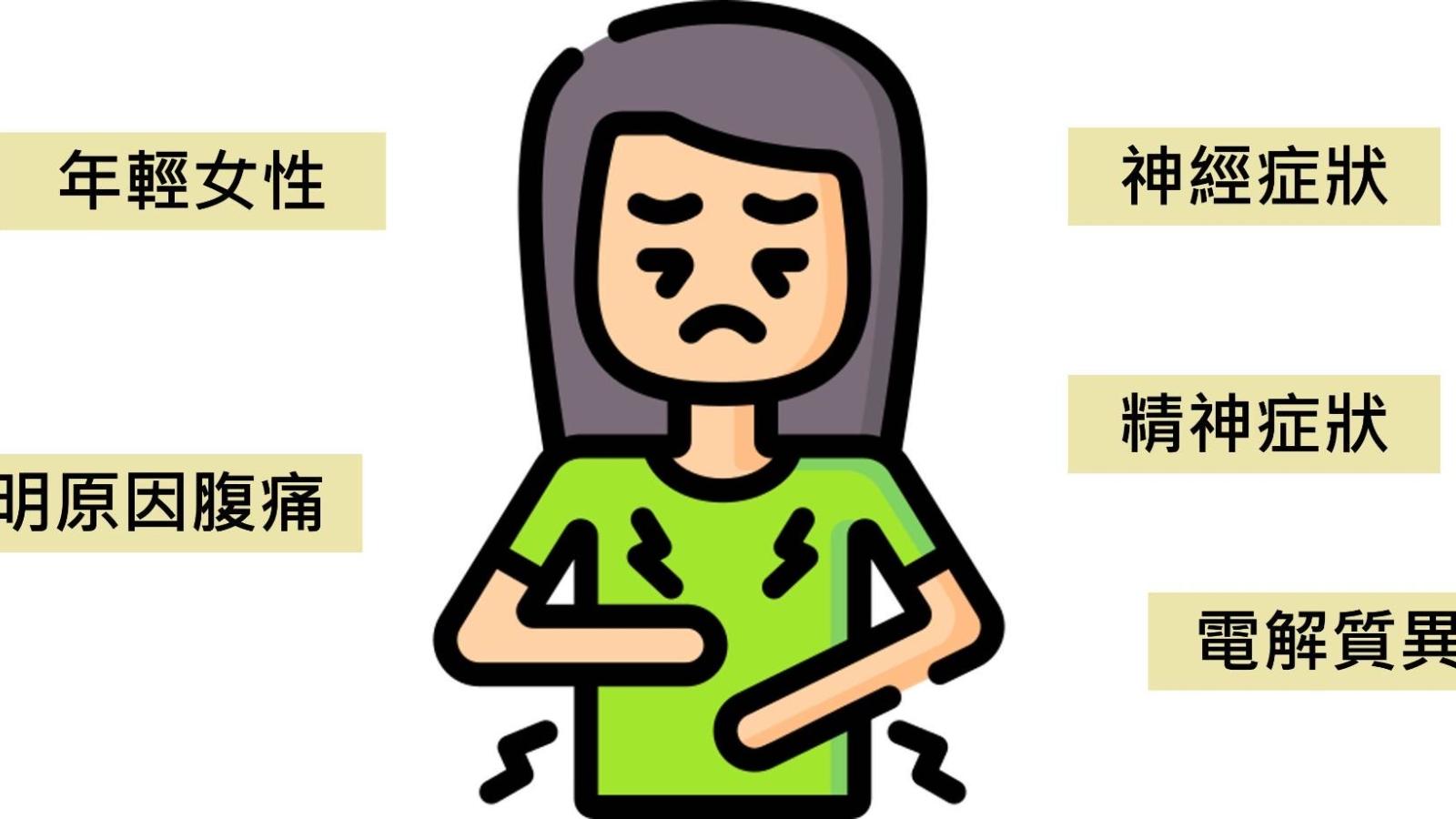
Recurring episodes of severe abdominal pain with no identifiable cause through gastroscopy or CT scans may indicate more than just gastrointestinal issues. A 28-year-old woman had endured unexplained abdominal pain for years, experiencing such intense pain that she writhed on the floor and required multiple emergency hospitalizations, yet no underlying cause was ever found. Only after being referred to Linkou Chang Gung Memorial Hospital for further evaluation was the true culprit identified: the rare condition known as Acute Intermittent Porphyria (AIP). Following treatment, genetic counseling, and lifestyle education, she has not experienced any further attacks.
Dr. Hung-Chou Kuo, Deputy Director of the Department of Neurology at Linkou Chang Gung Memorial Hospital, explained that AIP is a rare inherited metabolic disorder typically manifesting after puberty, with women of reproductive age being particularly susceptible. In Taiwan, hereditary porphyrias include acute hepatic porphyria and chronic cutaneous porphyria, with an overall incidence rate of approximately one in 300,000. However, only about 100 patients are registered under the National Health Administration, and genetically confirmed AIP cases number fewer than 100. This underestimation of prevalence—similar to international trends—likely stems from frequent misdiagnosis.
Dr. Kuo noted that hereditary porphyria results from enzymatic abnormalities in heme synthesis, leading to excessive accumulation of toxic porphyrin intermediates in the body, which in turn causes various clinical symptoms. These can broadly be categorized into two types: chronic skin lesions and acute neurovisceral symptoms. Patients with chronic skin lesions have extremely sensitive skin; some develop blisters, scarring, and pigmentation upon sun exposure, while others suffer wounds from minor trauma that heal poorly. Certain cutaneous porphyrias, such as Erythropoietic Protoporphyria (EPP), may present with itching or burning pain—neuropathic symptoms—triggered by light exposure. Patients with acute neurovisceral symptoms often experience gastrointestinal complaints like abdominal pain, vomiting, and constipation, or less commonly, psychiatric symptoms including depression, confusion, anxiety, and delirium.
Among acute hepatic porphyria cases currently reported in Taiwan, at least 90% are AIP, followed by Variegate Porphyria (VP). A small number of patients presenting with acute abdominal pain also show signs of pre-existing chronic skin conditions.
Dr. Kuo emphasized that due to the rarity and variable presentation of acute hepatic porphyria, patients often visit diverse departments—including gastroenterology, neurology, family medicine, psychiatry, internal medicine, and obstetrics/gynecology—making these conditions easy to 'hide' behind other symptoms and thus difficult to diagnose.
During an attack, a patient's urine gradually turns reddish-brown when exposed to light (right), compared to normal urine (left). (Provided by Chang Gung Memorial Hospital)
He stated that when patients repeatedly experience severe, unexplained abdominal pain—especially if accompanied by neurological symptoms, autonomic dysfunction, hyponatremia, or a history of multiple emergency visits or hospitalizations for the same issue—clinicians should consider AIP in their differential diagnosis. During acute attacks, initial screening can be done via urine tests measuring porphobilinogen (PBG) and aminolevulinic acid (ALA), followed by confirmatory blood enzyme and genetic testing. Elevated PBG levels in urine may gradually turn reddish-brown under light exposure—a crucial diagnostic clue.
Current treatment for acute hepatic porphyria attacks involves hospitalization and intravenous administration of heme-based agents for three to five days to suppress abnormal heme overproduction in liver cells and alleviate symptoms. Most patients can gradually return to normal life through treatment, genetic counseling, and lifestyle education. For patients who continue to experience four or more acute attacks within a year despite appropriate medical intervention and poor response to heme therapy, applications for preventive medications covered by national health insurance may be pursued.
Led by Dr. Kuo, the Acute Intermittent Porphyria Center at Linkou Chang Gung integrates diagnosis, acute episode management, long-term follow-up, genetic counseling, and patient education into a comprehensive care model. Family members carrying related genetic variants are also included in health management programs to help them understand their personal risk. The center regularly hosts patient support meetings and collaborates clinically and academically with international hereditary porphyria centers, continuously accumulating AIP clinical experience. It aims to build a complete clinical database and research platform for acute hepatic porphyria, enabling precision medicine approaches to predict disease progression.
Dr. Kuo cautioned that although acute hepatic porphyria is a genetic disorder, not everyone with the gene mutation will develop symptoms. Lifestyle factors such as fasting, rapid weight loss, smoking, alcohol consumption, hormonal fluctuations during menstruation in women, or taking certain drugs metabolized by the liver—which increase the liver cells’ demand for heme—can act as triggers. Research indicates that approximately 5–8% of female patients experience recurrent attacks synchronized with their menstrual cycles; this subgroup may benefit from preventive medication.
Dr. Kuo urges individuals—particularly young women—who frequently seek medical care for recurrent or severe abdominal pain, especially when standard tests reveal no cause and symptoms include nausea, vomiting, palpitations, high blood pressure, hyponatremia, darkened urine, altered consciousness, seizures, or limb weakness—to proactively inform physicians of prior similar episodes and request AIP-related testing when necessary. Those with a family history of acute hepatic porphyria should especially disclose this to their doctors. Although AIP is rare, early recognition, accurate diagnosis, appropriate treatment, and removal of triggers can significantly reduce the risk of repeated acute attacks and severe neurological complications.
FACT BOX
- Source: PR Times
- Category: News