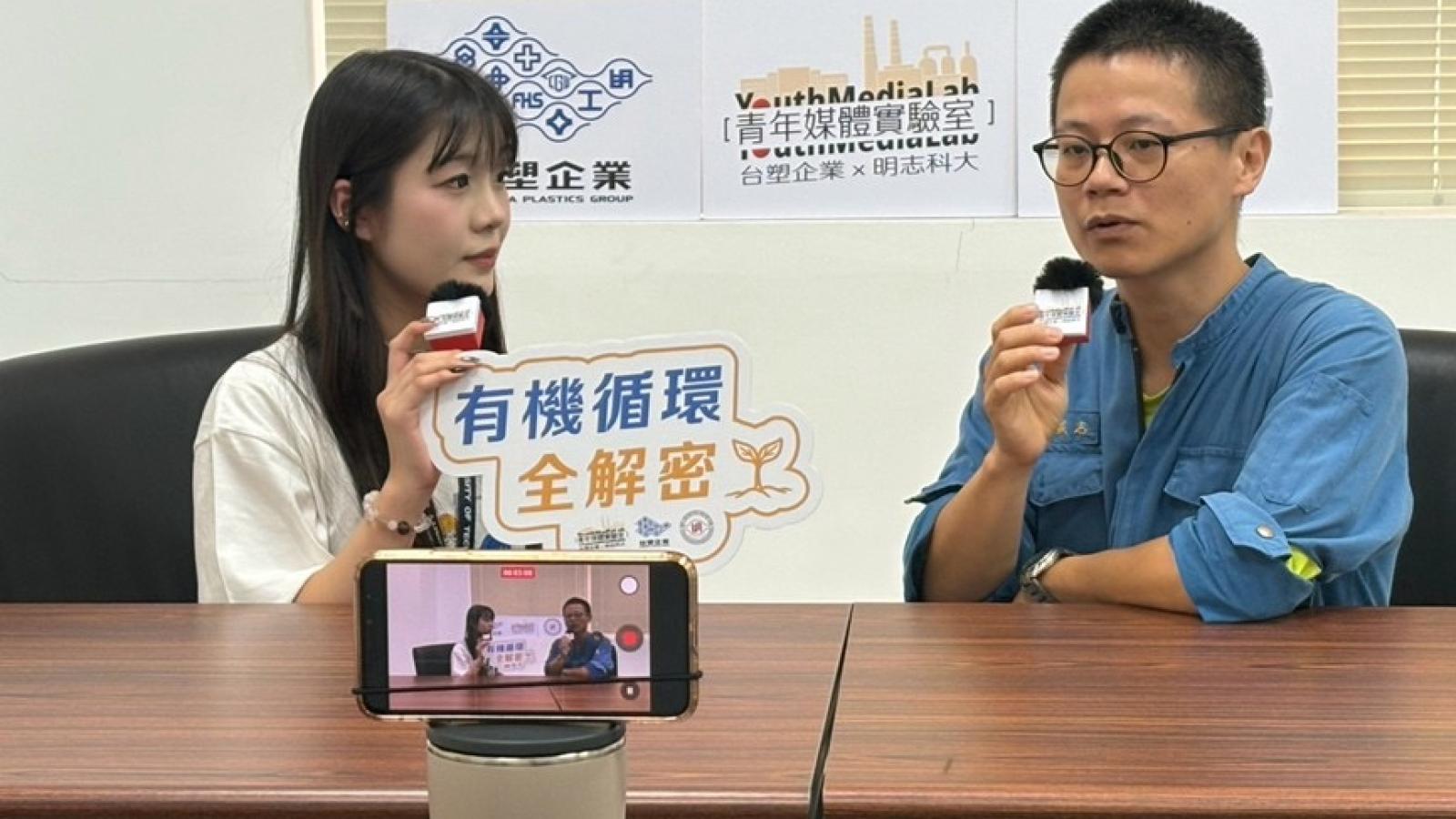
High school students are no longer confined to classrooms—they’re now picking up cameras and stepping into the heart of industry as reporters. Formosa Plastics, in partnership with Mingchi University’s Digital Marketing Design Program, held the 2026 New Media Talent Training Summer Camp from August 17 to 20. The event brought high school students from across Taiwan to the Mailiao Six-Light Industrial Park, where they conducted interviews, filmed footage, and translated complex topics into compelling new media content on industrial safety, environmental monitoring, and local community development.
Becoming Youth Correspondents: From Asking Questions to Filming It All Themselves
On August 18, participants visited the Formosa Mailiao Six-Light Industrial Park for on-site reporting. They took full responsibility—from understanding interview themes and observing operations, to designing questions and conducting person-on-the-street interviews—collecting first-hand audiovisual materials. Facing engineers and technical experts, students actively asked questions, striving to transform complex industrial knowledge into accessible new media content for younger audiences.
The camp began with a tour of the park’s ecological exhibition area, where students learned about the company’s concrete sustainability practices from the perspectives of ecological conservation and environmental management. No longer passive visitors, students assumed the role of investigative reporters, identifying issues, pursuing answers, and capturing the authentic reality of industrial operations through their lenses.
Five Reporting Themes in Focus: Safety, Environment, and Community Co-Prosperity Covered
Participants then split into groups to explore five key thematic areas. At the Six-Light Fire Department, they learned about the park’s safety protection systems and emergency response mechanisms. At the Nan Ya Composting Plant, they observed how automated micro-negative pressure technology converts food waste into organic fertilizer, witnessing the actual process of resource recycling.
Students also visited an air quality monitoring station to understand around-the-clock environmental surveillance operations. They further toured agricultural and fisheries support sites, learning how Formosa assists local farmers and fishers in improving product quality through cultivation techniques, water quality management, and aquaculture guidance.
More Than Just a Tour: The Industrial Site Becomes a Real-World Classroom
Unlike traditional lecture-based teaching, this camp emphasized learning by doing. Students had to independently identify reporting angles, design interview questions, and select filming shots—transforming intricate topics like industrial safety, circular economy, and environmental monitoring into narrative-driven new media productions.
Formosa Plastics and Mingchi University stated that by combining industrial fieldwork with audiovisual creation, they aim to cultivate young people’s digital content production skills, independent thinking, and proactive inquiry abilities. By channeling these stories through the eyes of youth, they also hope society can see the connection between industrial sustainability and regional development from a fresh perspective.
FACT BOX
- Source: PR Times
- Category: Event