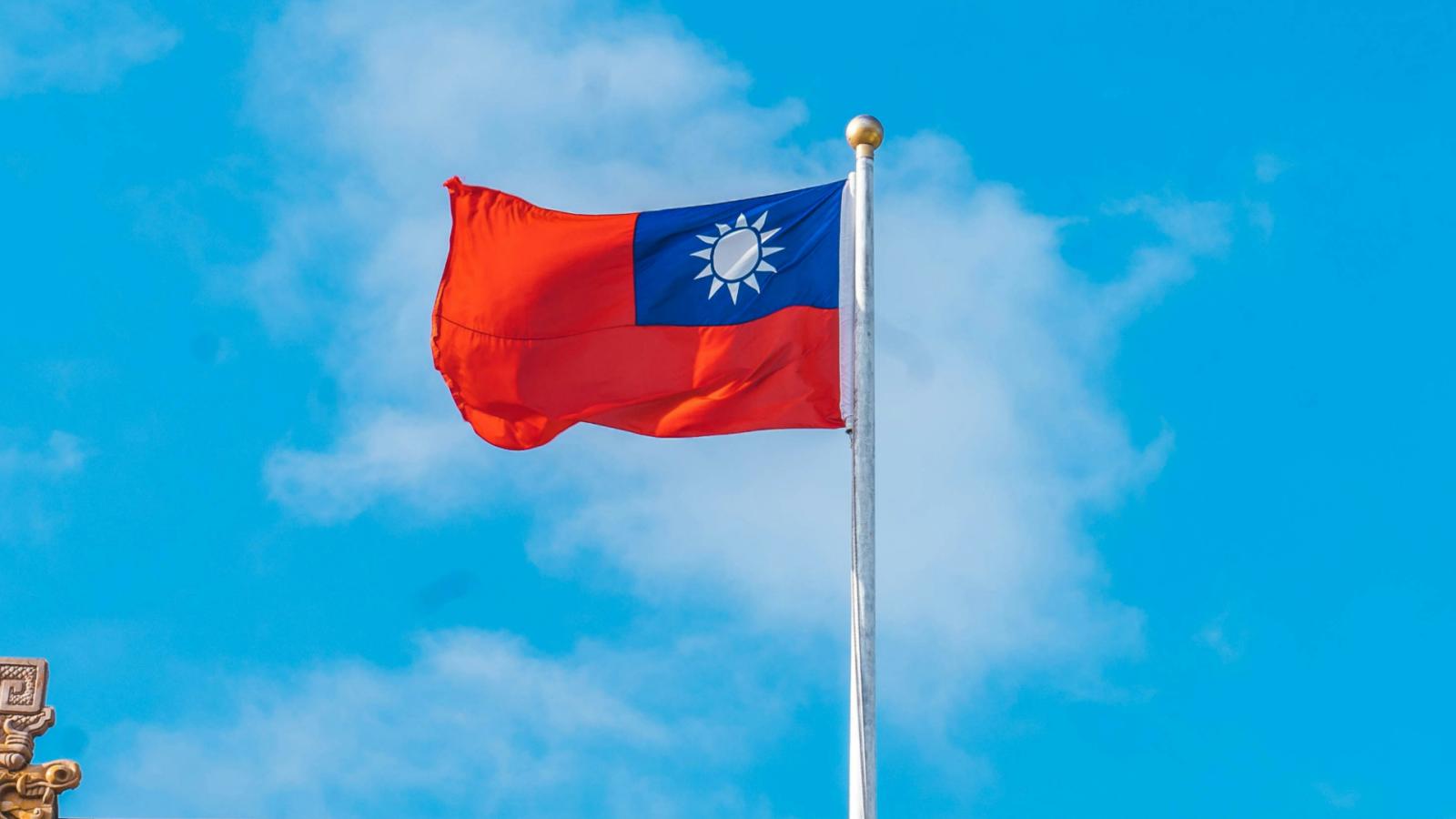
People living in Taiwan are constantly divided over the name of their country. From presidents and party leaders such as Lee Teng-hui, Chen Shui-bian, Ma Ying-jeou, Tsai Ing-wen, Lai Qingde, and Zheng Liwen, everyone sings a different tune. So whose version of the 'Republic of China' is correct? Whose definition of 'Taiwan' is accurate? What about 'Republic of China Taiwan'? Every election season, politicians exploit questions like 'Does the Republic of China still exist?' and 'Is Taiwan a sovereign independent state?' to win votes. Alas, it's often dizzying and leaves people feeling lost.
Kao Kung-lien, former vice chairman of the Straits Exchange Foundation, was once a key figure in cross-strait negotiations. This May, he discussed with 20 experts and scholars who have practical experience in cross-strait affairs: if Beijing seeks peaceful unification, what is the most important task? Surprisingly, the top answer was 'acknowledging the factual existence of the Republic of China'—a long-held desire hidden in their hearts.
How does the U.S. government view Taiwan? Briefly, under the Taiwan Relations Act, the three U.S.-China joint communiqués (including the Shanghai Communiqué), and the 'Six Assurances,' the U.S. does not formally recognize Taiwan as a sovereign state, nor does it formally recognize that the People's Republic of China holds sovereignty over Taiwan.
The U.S. deliberately maintains a legal and diplomatic ambiguity—neither recognizing Taiwan's sovereignty as belonging to Beijing nor recognizing Taiwan as an independent country. This is known as 'strategic ambiguity.'
Many assume that 'the U.S. sells weapons to and protects Taiwan' means it recognizes Taiwan as a country. This is incorrect. The U.S. can conduct security cooperation with non-formally recognized political entities. The design of the Taiwan Relations Act (TRA) is precisely to maintain substantive security relations without restoring formal diplomatic recognition.
In short, the Taiwan Relations Act safeguards Taiwan's security and autonomy; the Shanghai Communiqué merely indicates that the U.S. is aware of China's claims over Taiwan; and the Six Assurances confirm that the U.S. does not recognize China's sovereignty over Taiwan. Together, these do not mean 'the U.S. recognizes Taiwan as a country,' but rather 'the U.S. maintains an undetermined stance on Taiwan's sovereignty while providing substantive support and security commitments.' This creates a sensitive paradox in the psychology of the Taiwanese people—a point political figures must understand, especially during elections. Zheng Liwen recently stated clearly: 'Taiwan has never been a sovereign independent country.' Legally and diplomatically, this reflects reality. However, without proper context, such statements can trigger negative voter reactions and easily be labeled as echoing the Chinese Communist Party.
What about the Republic of China? More precisely, from academic and diplomatic perspectives, the U.S. stance on the ROC is not that it 'does not exist,' but rather that it 'does not grant diplomatic recognition, yet acknowledges its factual existence and effective governance in Taiwan.'
In other words, the ROC in the U.S. view is closer to 'a political entity that actually exists and exercises governance in Taiwan,' not 'a sovereign state formally recognized by the U.S.' This arrangement—'factual existence acknowledged but no formal recognition'—has been the core design of U.S. Taiwan policy since 1979, enabling the U.S. to maintain diplomatic relations with Beijing, support Taiwan, and stabilize the status quo across the Taiwan Strait.
What does international law say? According to the 1933 Montevideo Convention, a state typically possesses: a defined territory, a permanent population, an effective government, and the capacity to enter into relations with other states. Taiwan, in fact, largely meets these conditions, leading many scholars to call it a de facto state. However, becoming a universally recognized de jure sovereign state involves diplomatic recognition and UN representation.
Many believe that 'the U.S. sells weapons to and protects Taiwan' equals recognition of Taiwan as a country. This is a common misunderstanding and bias among pro-independence camps and the DPP. The recognition of a political entity is entirely different from that of an independent state. The U.S. engages with the ROC and Taiwan authorities as a political entity. Tsai Ing-wen and Lai Qingde often say, 'Taiwan is a sovereign independent country, and its name is the Republic of China.' This does not reflect the actual situation. Yet elections are arenas for manipulating illusory perceptions of sovereignty—a concept the Communist Party often fails to grasp. Leaders of the KMT must therefore be extremely cautious in their statements.
Indeed, the '1992 Consensus' brought a rare period of peace to the Taiwan Strait during Ma Ying-jeou's era. But as 'opposition to Taiwan independence' has replaced 'one China, respective interpretations,' the KMT must evolve with the times to maintain the dynamic and complex balance of 'maintaining the status quo.'
FACT BOX
- Source: PR Times
- Category: News