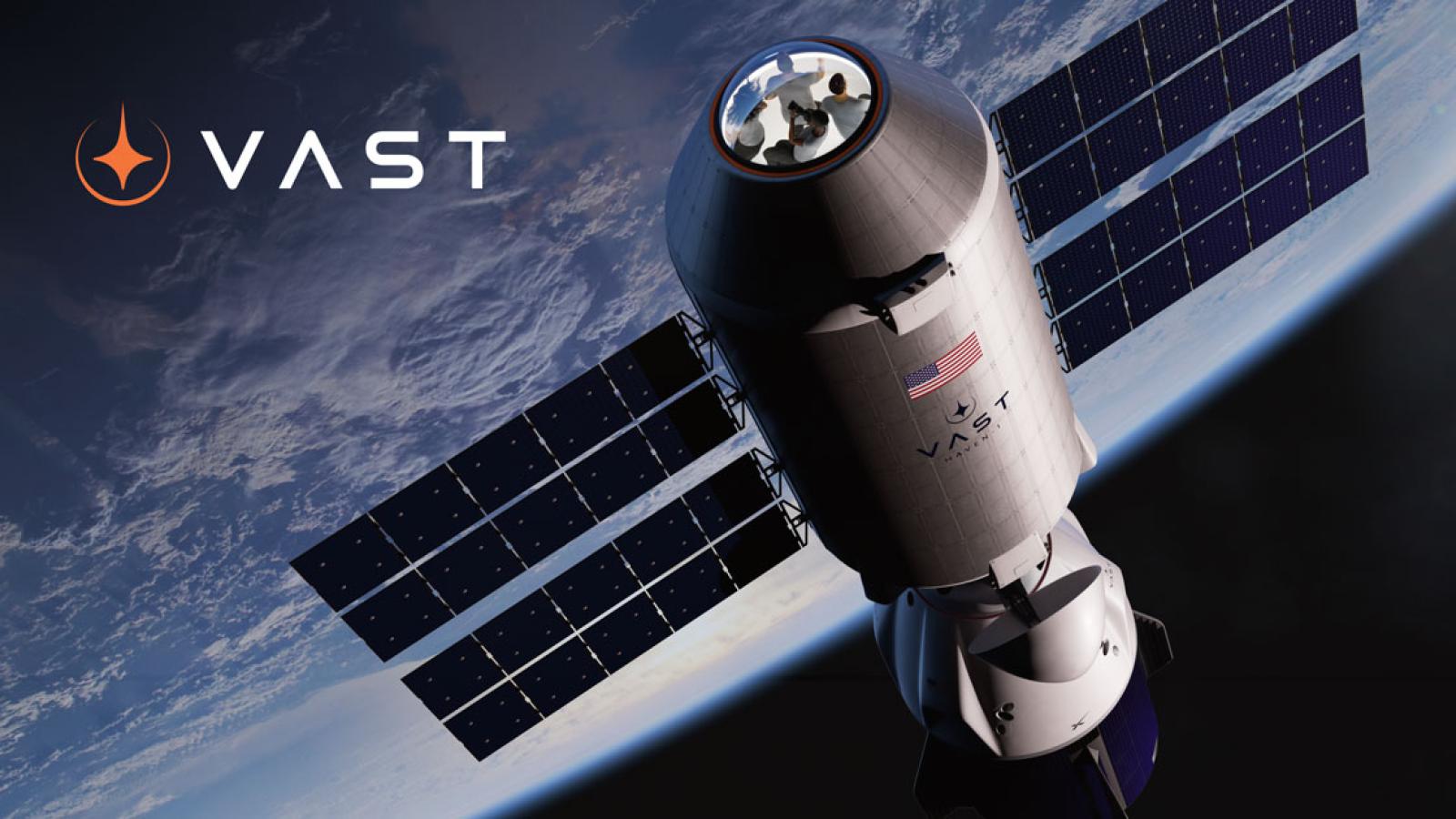
As the International Space Station (ISS) is set to retire by around 2030, its retirement is not just a generational transition but marks a shift from government-led to commercial capital and private enterprise-led near-Earth orbital infrastructure. A competition that can be called the most important space infrastructure race for the next few decades is quietly underway. Vast Space, invested by the 'Outliers Space Venture Fund', is the most aggressive in resource investment and the fastest in physical hardware progress in this race. Vast's biggest differentiation is not that it has a beautiful space station concept image, but that it has already sent the first hardware into space, completed on-orbit verification, and fed back the experience to the next generation system. Unlike the traditional aerospace industry model driven by government contracts, Vast adopts a capital-first, vertical integration, and rapid iteration strategy: self-funded, vertically integrated, and rapidly iterated, proving that 'private capital can build a space station that is faster, cheaper, and better than government agencies'.
I. The Importance of the International Space Station The International Space Station (ISS), which has maintained continuous human presence since November 2000, is one of the largest international cooperative scientific programs in history, jointly built and operated by space agencies from the United States, Russia, the European Space Agency (ESA), Japan (JAXA), and Canada (CSA). The construction, assembly, and related transportation/launch costs of the ISS are estimated to be around $150 billion, depending on different statistical methods. If the operating, research, and retirement costs over several decades are also included, its complete lifecycle cost will be even higher.
The ISS has maintained continuous human presence since November 2000, making it one of the largest international cooperative scientific programs in history. It is jointly built and operated by space agencies from the United States, Russia, the European Space Agency (ESA), Japan (JAXA), and Canada (CSA). Its core value can be summarized in four aspects: • Scientific Value: The microgravity environment on the ISS is a unique experimental condition that cannot be replicated on Earth. Over the past two decades, researchers from more than 100 countries around the world have completed over 2,500 scientific experiments on the ISS, ranging from protein crystal research (helping to develop safer and more effective drugs), tissue chip (tissue chip) human organ simulation, space-grown crops, to the exploration of colloidal, bubble, and fluid behavior in basic physics. Many research results have been directly transformed into medical and civilian technological progress on Earth. • Economic Value: According to the latest NASA statistics, the commercial economic scale driven by the ISS in low Earth orbit (LEO) has exceeded $345 billion, covering satellite deployment, space manufacturing, biotechnology research and development, and other fields. P&G once used the ISS to study colloids to improve the formulas of shampoos and fabric softeners, and the small biotechnology company LambdaVision used the microgravity environment to improve the manufacturing process of retinal implants, showing that the ISS has long evolved from a purely scientific research platform into a commercial infrastructure that nurtures new industries and the growth of existing enterprises. • Exploration Value: The ISS is a key test site for testing the long-term effects of space habitation on the human body (such as bone loss and muscle atrophy) and refining the procedures for spacewalks and external maintenance operations before humans embark on missions to the Moon, Mars, and other deeper space destinations. These technologies and operational procedures, which have been repeatedly verified and improved over more than two decades, are indispensable knowledge bases for subsequent deep space missions. • Geopolitical and International Cooperation Value: The ISS has long served as a symbolic platform for space powers such as the United States and Russia to 'replace geopolitical confrontation with scientific cooperation' in the post-Cold War era, proving that even during periods of bilateral tension, space scientific research cooperation can maintain a certain degree of international communication channels and mutual trust. This symbolic significance itself has an immeasurable strategic value.
Because the scientific, economic, exploration, and geopolitical value created by the ISS is so enormous and multifaceted, NASA has listed 'ensuring human presence in low Earth orbit does not stop due to the retirement of the ISS' as a priority policy goal. This is also the fundamental reason for the birth of the 'Commercial Low Earth Orbit Destination' (CLD) program mentioned at the beginning of this article, and Vast Space is one of the most active contenders in this succession race.
II. Who Will Succeed the ISS? NASA has confirmed that the International Space Station will be retired by around 2030, at which time it will be guided by a dedicated deorbit vehicle built by SpaceX to re-enter the atmosphere and burn up. To maintain continuous human presence in low Earth orbit, NASA has launched the 'Commercial Low Earth Orbit Destination' (Commercial LEO Destinations, CLD) program, funding private companies to develop successor solutions.
The current competitors in the first phase (CLD Phase 1) include: the main character Vast Space in this article, Axiom Space, Blue Origin (Orbital Reef), Starlab Space, and Northrop Grumman.
It is worth noting that in March 2026, NASA proposed a new 'Ignition' framework, which adjusts the original 'independently flying space station' model to a 'government-led core module, private suppliers providing modules' hybrid model. The second phase (CLD Phase 2) draft RFP was published in July 2026, stipulating a hard deadline of 2029 for manned test flights, with the formal bidding expected to be completed in spring 2027. NASA will then evaluate the technical and product development of the CLD Phase 2 winning bidders and select one company to sign a formal NASA CLD contract.
Vast is currently the only company among the five bidders for CLD Phase 2 that has 'designed, built, and actually flown' a spacecraft (Haven-Demo), making it the highest-profile contender for CLD Phase 2 and the formal CLD contract.
The author visited Vast in June 2026 to simulate a weightless state in space. (Image source: Author provided)
III. Vast Space Company Introduction Vast was founded by tech entrepreneur Jed McCaleb in 2021, headquartered in Long Beach, California. Initially, it mainly relied on the founder's funds (Jed's personal net worth is estimated to exceed $2.5 billion), allowing Vast to adopt a relatively long-term, hardware-intensive R&D strategy. Later, it gradually introduced institutional and strategic investors. CEO Max Haot leads a team of about 1,000 employees to realize McCaleb's vision.
Unlike the vast majority of space startups that rely on external venture capital, Vast was initially completely self-funded by McCaleb. He has publicly stated his willingness to invest up to $1 billion of his personal wealth. This 'uninterrupted by fundraising pressure' nature is one of Vast's most unique competitive advantages in this race.
(Source: Author provided)
IV. Fast, Ruthless, Precise: Vast's Phased Strategy Vast is the only company among the five bidders for CLD Phase 2 that has actually flown a spacecraft (Haven-Demo), with the highest profile. Vast's strategy is phased progress, with each mission paving the way for the next step, but its execution speed is clearly ahead of its peers.
Mission 1: Haven Demo (completed in February 2026): Full verification of the spacecraft Vast's fully integrated spacecraft Haven Demo completed its flight mission in February 2026, testing the key systems and hardware/software required for the future Haven-1 space station. This makes Vast the only commercial space station company that has 'self-designed, built, and actually flown' a spacecraft. Compared to competitors who are still in the design and model stage, this is a substantial and verifiable technological verification lead.
Mission 2: Haven-1 (target launch in early 2027): First single-module demonstration station Haven-1 is a single-module demonstration-type space station with a habitable volume of 45 cubic meters (about the size of a one-room apartment), planned to be launched by SpaceX's Falcon 9 rocket. In June 2026, Vast completed the integration of the Haven-1 thermal control system and completed the vacuum testing of its independently developed 10-kilowatt Hall thruster. The life support system is currently being tested at the Long Beach headquarters. Vast emphasizes that its hull structure panels, pressure shell welding, and life support systems are all independently developed and manufactured, while strategically cooperating with specialized companies such as Impulse Space in specific subsystems such as propulsion to balance schedule and quality. Vast states that its vertical integration model has reduced the manufacturing cost of major structures by about 10 times compared to traditional space station projects.
Mission 3: Haven-2 (first module target launch in 2028): Aiming for the NASA CLD formal contract Haven-2 is a modular multi-module space station. The first module will be 5 meters longer than Haven-1, with nearly twice the habitable volume, and will continue to use the Haven
FACT BOX
- Source: PR Times
- Category: Event
- Organizations: NASA / SpaceX / Axiom Space
- Products / services: Haven-Demo / Haven-1