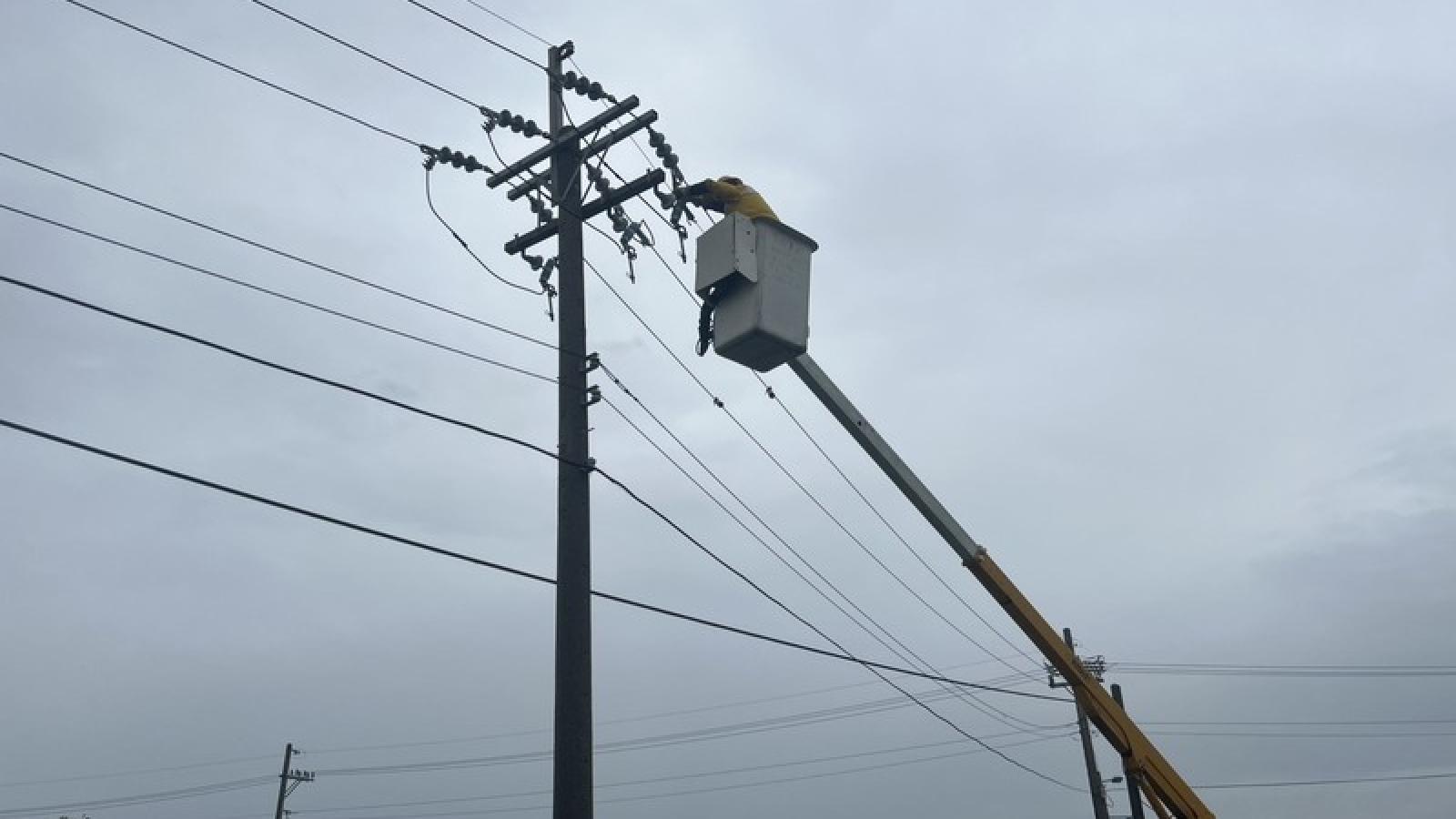
According to the UK's Daily Telegraph, hackers linked to Iran's Islamic regime successfully breached a small British power plant, causing it to shut down for four days. This incident marks the first known cyberattack of its kind on the UK's electricity infrastructure, theoretically difficult under strict 'air-gapped' security protocols.
The UK government has not disclosed the name of the affected facility, but sources indicate it was relatively small and did not significantly impact national power supply. Government officials stated the plant fell well below the legal threshold for reporting critical infrastructure incidents, with its capacity negligible compared to the overall grid.
The report suggests this attack may be part of a coordinated campaign linked to recent cyber intrusions into multiple US water infrastructure systems. While critical infrastructure is supposed to be physically isolated from the internet, the increasing use of automation and connected devices has exposed new vulnerabilities.
A UK government spokesperson emphasized the high resilience of the national energy system, stating the incident posed no risk to the broader energy network. Despite recent military setbacks, Iran's asymmetric advantage in cyberspace remains a concern. The UK House of Commons Intelligence and Security Committee previously assessed that while Iran's likelihood of launching impactful cyberattacks on UK critical infrastructure is low, cyber warfare remains a key asymmetric domain for the regime.
Similar threats persist in Taiwan. According to the Republic of China National Security Bureau's January 2026 report, '2025 Analysis of PRC Cyber Threats to Taiwan’s Critical Infrastructure,' cyber intrusions by China-linked hacker groups against Taiwan's nine categories of critical infrastructure reached an average of approximately 2.63 million per day in 2025—up 6% from 2.46 million in 2024 and a significant increase from 1.23 million in 2023.
The nine categories include government agencies, energy, communications, transportation, emergency services and hospitals, water resources, finance, science parks and industrial zones, and food supply. The energy sector saw the most dramatic increase in attacks, surging over tenfold compared to the previous year, while emergency services and hospitals experienced a 54% rise.
Chinese cyber units have been actively probing the network devices and industrial control systems of Taiwan's state-owned and private energy companies, including oil, electricity, and natural gas firms, attempting to implant malware during software updates. Their goal is to gain intelligence on energy operations, material planning, and backup deployment strategies.
Key China-linked hacker groups include BlackTech, Flax Typhoon, Mustang Panda, APT41, and UNC3886. Over half of the attacks exploit software and hardware vulnerabilities, followed by distributed denial-of-service (DDoS), social engineering, and supply chain attacks, often used in combination.
Some attacks correlate with the PLA's 'joint combat readiness patrols' around Taiwan or politically sensitive periods.
Taipower officials have publicly stated the company's systems endure approximately 30,000 cyberattacks daily, spiking to millions within short periods during sensitive events. In August 2026, the UK's Financial Times cited research by Israeli cybersecurity firm Dream, revealing that China-linked hackers used open-source AI tools to launch autonomous cyberattacks on Taiwan's government systems in early July.
The tool deployed multiple autonomous agents to map system architecture, identify vulnerabilities, and adapt strategies, infiltrating at least 85 government user accounts and stealing over 2,500 personnel records. The breach later extended to the nuclear safety regulatory authority and at least seven energy companies. Researchers noted internal communications were conducted in simplified Chinese.
Taiwan's national security and cybersecurity agencies continue to conduct vulnerability assessments, penetration drills, and backup preparations for critical infrastructure like energy and communications through joint defense mechanisms, international cooperation, and exercises such as Han Kuang.
FACT BOX
- Source: PR Times
- Category: News