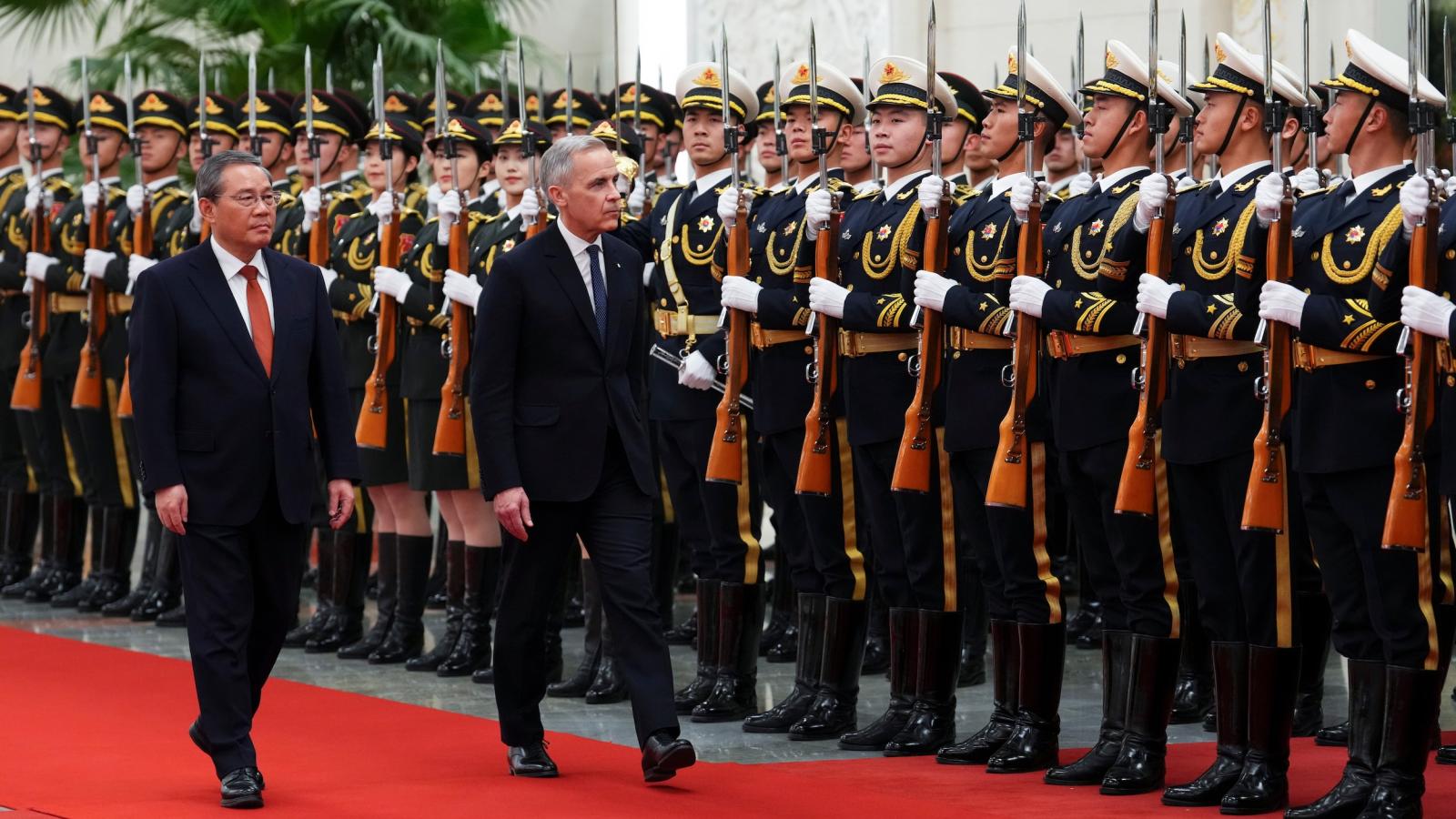
Tensions in US-Canada trade negotiations have escalated once again. While the Trump administration is pressuring Ottawa to prevent Chinese steel, aluminum, and other goods from infiltrating the US market through North American supply chains, Canada is actively reaffirming its economic ties with Beijing—adding further complications to an already difficult bilateral trade negotiation.
The core of the dispute centers on "transshipment." US officials are deeply concerned that steel and aluminum materials produced in China or other regions could undergo minimal processing in Canada or Mexico and then enter the US market duty-free under the label of "North American origin." Back in 2019, when the US and Canada resolved a previous steel and aluminum tariff dispute, both sides issued a joint statement committing to jointly prevent non-US-Canada-made steel and aluminum from being transshipped and emphasizing the ability to clearly identify whether steel was "melted and poured" in North America.
Now, US trade hawks are insisting that Canada accept stricter security safeguards to support Washington's broader strategy of weakening China's influence across global critical manufacturing supply chains.
In response, the Canadian government stresses that it has already implemented measures to prevent foreign steel from flooding its domestic market. Ottawa currently imposes import quotas on countries without free trade agreements (FTAs)—including China—and levies additional tariffs of up to 50% if import volumes exceed the cap.
Yet, at the same time, Canada has recently deepened trade cooperation with Beijing:
· Agricultural and seafood export resumption: In March, China agreed to reopen imports of Canadian canola seeds, peas, lobster, and crab.
· Reduction of EV tariffs from China: Canada has eliminated the previous 100% punitive tariff on Chinese electric vehicles, replacing it with an annual quota of 49,000 vehicles eligible for the 6.1% Most Favored Nation (MFN) tariff rate.
· Tariff relief measures: Canada has extended the tariff exemption period for certain Chinese steel and aluminum products that are in short supply domestically.
Canadian officials say these measures are part of a broader strategy to diversify trade, as China is currently Canada's second-largest goods trading partner.
This shift has immediately drawn strong criticism from Washington. US policy officials argue that Canada's actions clearly contradict the Trump administration's efforts to build a North American trade system with "resilience against China." Observers are now closely watching whether Canada will adjust its course to align with the US or continue expanding trade with China, further widening the policy gap between the two allies.
FACT BOX
- Source: PR Times
- Category: News