The U.S. Department of the Treasury has officially launched 'Operation Economic Outcast,' a new round of strong economic pressure measures targeting the Iranian regime. This strategy, described by observers as an 'economic D-Day,' was initiated under President Trump's directive, aiming to completely cut off all potential funding sources for Iran's Islamic Revolutionary Guard Corps (IRGC) and the Iranian regime. Treasury Secretary Scott Bessent stated the operation will 'tighten the noose and block every possible revenue stream funding the IRGC and the Iranian regime.' The Trump administration also plans to impose secondary sanctions, forcing other countries to sever ties with Tehran, and has blacklisted nearly 60 individuals, companies, and vessels involved in illicit trade.
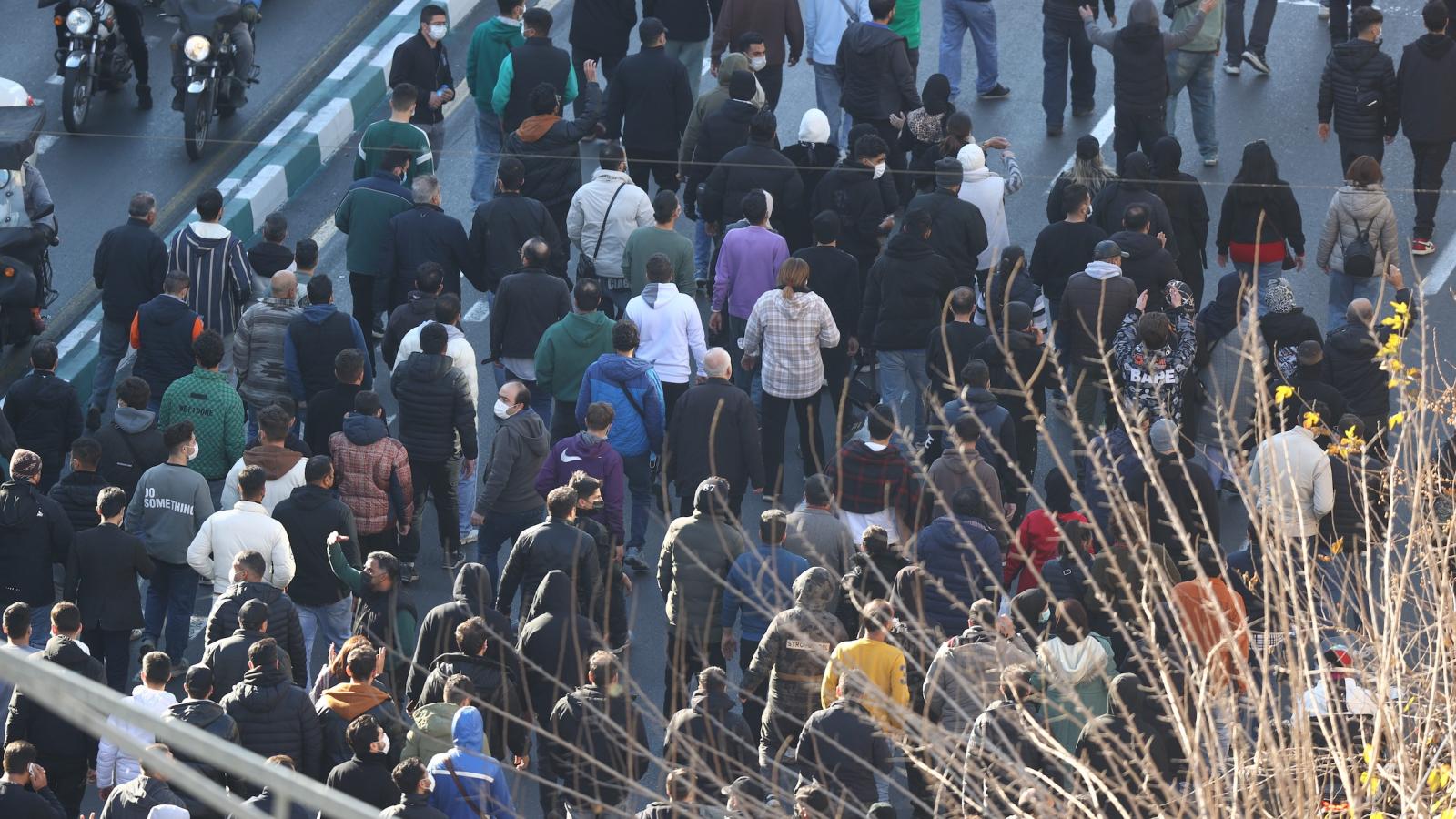
Kasra Aarabi, Director of IRGC Research at United Against Nuclear Iran (UANI), said in an interview that domestic discontent in Iran is currently 'simmering on the edge of boiling over.' He referenced the large-scale protests that erupted earlier this year and noted, 'These economic measures, this tightening of the economic noose, could push public anger to the boiling point.' Aarabi further emphasized that the Iranian regime's greatest fear is domestic protests coinciding with U.S. military deployment in the region. 'Because the one thing they fear most is protests with air support,' he said.
According to Aarabi, Iran's economic situation was already dire before the launch of 'Operation Economic Outcast.' After the U.S. military imposed a blockade on Iranian ports, Iran's oil exports have nearly dropped to zero. 'The blockade is working; their oil exports are close to zero... This directly impacts their ability to fund the military and the regime. Senior officials of the Islamic Republic have explicitly stated that any funds obtained will be prioritized for military use. The military is the top priority. Therefore, tightening the noose is exactly what the U.S. should do, and the regime is currently in a state of panic,' he said.
Aarabi revealed that, based on sources within Iran, Iranian authorities were scrambling to find alternative channels before the 'economic D-Day,' as oil exports and critical supply routes through the southern corridor and the Persian Gulf had been completely severed.
Jason Brodsky, Policy Director at UANI, stated that 'Operation Economic Outcast' represents a new escalation of the U.S.' long-standing 'maximum pressure' strategy. 'We are seeing an unprecedented situation where U.S. economic and military power are being used in tandem to impose an unprecedented economic blockade on the Iranian regime. This will further exacerbate the severe financial crisis the regime is facing,' he said.
Brodsky emphasized that the Treasury's action will deprive the Iranian regime of resources used to fund regional terrorist proxy forces, including Hezbollah, Hamas, the Houthis, and Iraqi Shiite militias. 'If the Iranian regime can no longer incite and fund its terrorist network, this will actually save lives. Therefore, strongly and thoroughly implementing the 'Economic Outcast Operation' serves U.S. national security interests,' he said.
On August 26, UANI also released 10 policy recommendations for 'Operation Economic Outcast,' which Brodsky described as 'adding substance' to the Treasury's actions. Recommendations include demanding sanctions on all Iranian banks, financial institutions, and exchange companies (including overseas branches) that provide material support to the IRGC, Iran's Ministry of Intelligence, or designated terrorist proxies, as well as comprehensive actions against Iran's 'ghost fleet' (foreign-owned vessels).
Amid this development, Iran continues to attack vessels in the Strait of Hormuz. Despite the U.S. launching 'Operation Epic Fury' against Tehran on February 28, such attacks have continued. The UK Maritime Trade Operations (UKMTO) reported on August 24 that an oil tanker lost power after being hit by an 'unidentified projectile' while navigating the Strait of Hormuz. No group has claimed responsibility, but Middle Eastern countries have attributed recent attacks on oil tankers linked to the UAE's national energy company to Iran.
Brodsky stated that Iran's attacks on vessels have been ongoing for years, predating the 'Operation Epic Fury.' 'Iran has long attempted to disrupt commercial vessels in the Persian Gulf and Strait of Hormuz. This is Iran's long-standing record of sabotage. Ultimately, changing Iran's behavior may require a regime change. This is the reality we must face,' he said.
FACT BOX
- Source: PR Times
- Category: News
- Organizations: United Against Nuclear Iran (UANI)