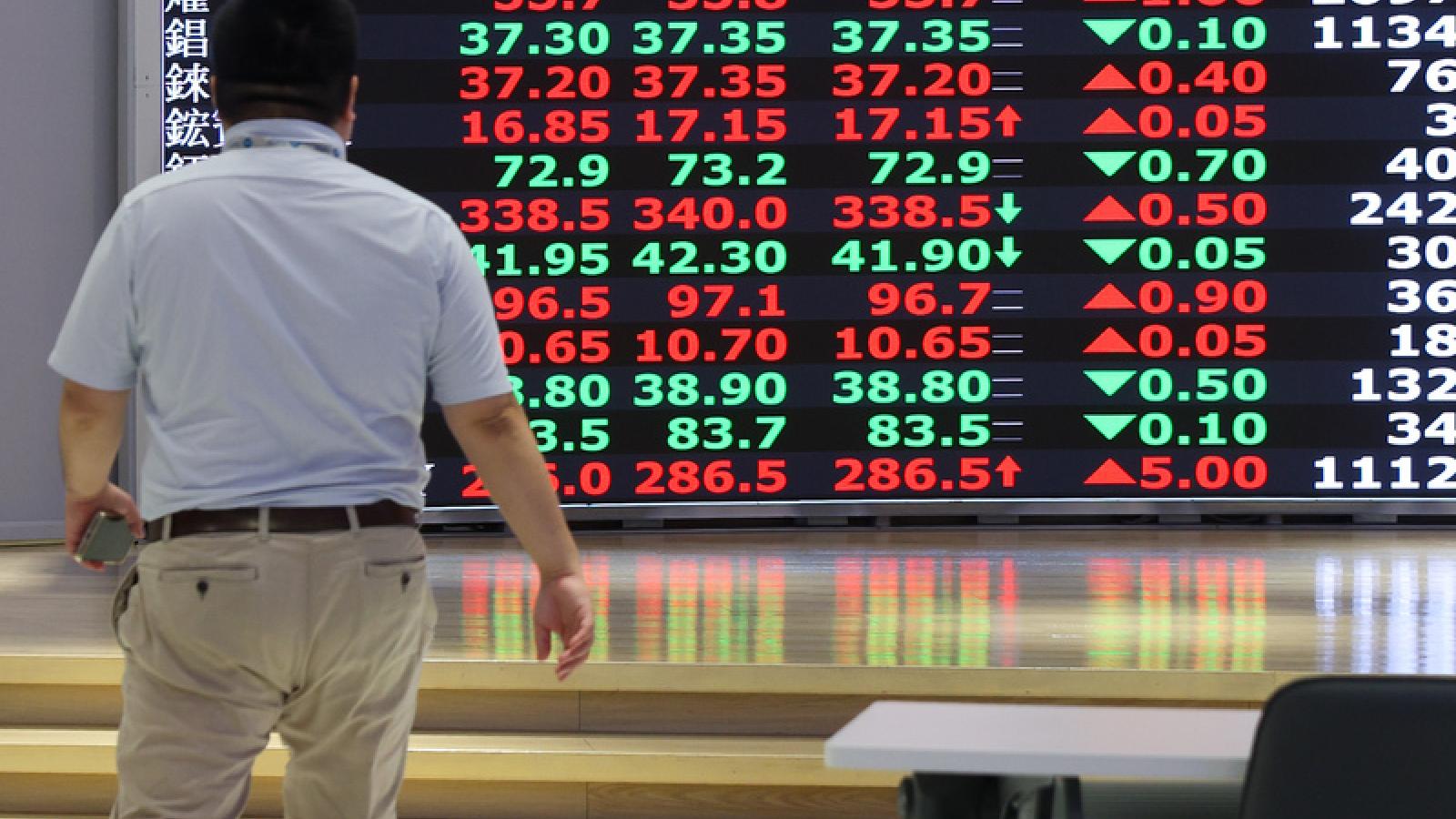
U.S. and Taiwan stock markets continue to trade at relatively high levels, fueled by the AI-driven bull market. As the fourth quarter approaches, investors face the critical question of how to allocate their equity holdings. In response, financial expert 'Gu Ren A-Hsun' (Stock Guru Ah-Hsun) has issued a warning on Facebook, highlighting four potential risks that investors should begin to monitor closely. The biggest 'black swan' event, he warns, would be if the Federal Reserve (Fed) does not cut interest rates but instead resumes hiking them—a scenario that would directly and severely impact high-valuation AI stocks.
Gu Ren A-Hsun outlines four key risks investors should watch in Q4:
First, Middle East tensions could reignite inflation through oil prices. Geopolitical risks in the Middle East not only affect crude oil but also have broader implications: rising energy prices may push up transportation costs, agricultural products, metals, and various consumer goods. Therefore, the primary concern for Q4 is whether 'oil prices could re-ignite inflationary pressures.'
Second, AI technology stocks are beginning to face valuation corrections. AI is not lacking in growth potential, but market expectations have been excessively high. With rising prices for memory chips, substrates, and other key raw materials, corporate costs are increasing. Even if revenues and EPS continue to grow, if gross margins come under pressure, the market will begin to question whether high price-to-earnings (P/E) ratios are still justified. Therefore, AI stocks should not be evaluated solely on revenue growth, but also on whether gross margins and profitability can keep pace.
Third, high U.S. bond yields are making the AI 'arms race' increasingly expensive. Tech giants are issuing large volumes of corporate bonds to fund data center construction, GPU purchases, and AI infrastructure expansion. However, with bond yields remaining high, corporate financing costs are rising. As interest expenses grow, if AI monetization cannot keep up with capital expenditures, market valuations for tech stocks may begin to weaken.
Fourth, and the biggest black swan: the Fed may not cut rates but instead resume hiking. This is the most critical variable for Q4. If rising oil prices push inflation higher, forcing the Fed to turn hawkish again—or even prompting markets to reprice the possibility of rate hikes—the impact on high-valuation stocks would be immediate and severe. Higher interest rates reduce the present value of future earnings, directly undermining the appeal of high-P/E stocks.
Should investors sell all stocks and hold cash? Gu Ren A-Hsun says 'don’t do this.' Reflecting on the past five years, he notes that markets have continuously faced crises—pandemics, rate hikes, wars, inflation, banking crises, and concerns over an AI bubble. If investors had sold out every time a crisis emerged, the biggest risk would have been 'missing out on long-term market gains.'
For risk management, Gu Ren A-Hsun offers a simple principle: maintain proper asset allocation and adopt a long-term mindset toward holdings. In addition to diversifying across equities, bonds, and gold, investors should avoid over-concentration in a single sector. More importantly, if the fundamentals of a company remain strong and its long-term value exceeds its current stock price, short-term corrections need not be feared. 'Being alert does not mean selling everything.' Markets will always face the next crisis. What investors truly need to do is not predict when a crash will happen, but ensure they can remain resilient and stay invested when corrections occur.
More exclusive insights from Feng Media: · 4 Taiwanese manufacturers earned over 10x EPS in H1—Hsieh Jin-He names 6 tech giants investing heavily in factory expansions: Taiwan stocks taking a seat at the world’s main table · Market-cap ETF rankings shaken up! 0050 and 006208 fall to the bottom tier—Juan Mu-Hua names a dark horse ETF: undefeated for 15 consecutive days · Is declining trading volume in Taiwan stocks a sign that 'retail investors have exited'? Experts reveal 2 market signals: this type of stock stands to benefit the most
FACT BOX
- Source: PR Times
- Category: News