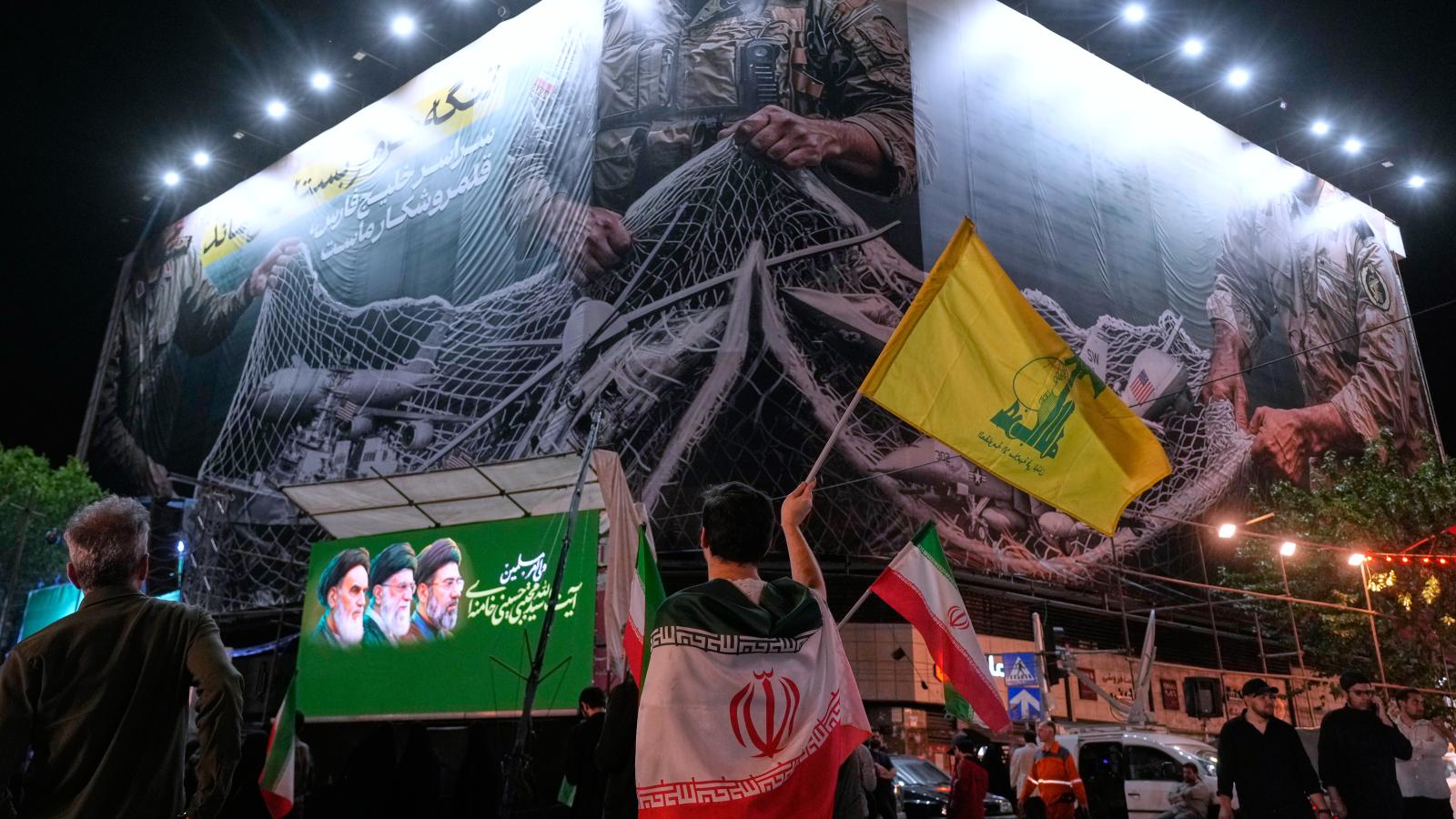
Tensions between the U.S. and Iran in the Persian Gulf have reignited after a month of relative calm. Former President Donald Trump claimed on social media that Iran's primary oil export hub, Kharg Island, was being 'blown to pieces,' while U.S. forces reportedly destroyed missile launch sites on Larak Island in the Strait of Hormuz. In response, Iran's Islamic Revolutionary Guard Corps (IRGC) launched multiple ballistic missiles and drones targeting two U.S. air bases in Jordan.
However, Reuters has reported that the explosion video shared by Trump is likely AI-generated. No official or on-the-ground evidence has emerged to confirm that Kharg Island was actually attacked. Neither Iranian state media nor frontline sources have reported any such strike.
U.S. Central Command stated in an official release that U.S. forces observed IRGC personnel preparing to lay naval mines in international shipping lanes in the Strait of Hormuz. In response, the U.S. conducted a 'limited and precise operation' to eliminate the immediate threat and protect commercial shipping and global trade. The U.S. military emphasized that it had only recently completed mine-clearing operations in the same waterway.
Iran's IRGC confirmed casualties among fighters and civilians from the U.S. strike via state television. The IRGC Aerospace Force then launched ballistic missiles and drones at two U.S. military bases in Jordan, targeting aircraft positions and maintenance facilities. Jordanian military forces reported intercepting eight incoming missiles in their airspace. Sources told the Financial Times that all incoming projectiles were intercepted by U.S. forces, with no significant damage reported at the base. Fox News cited U.S. officials confirming minimal impact.
IRGC spokesman Brigadier General Hossein Mohebbi condemned the U.S. strike as a 'strategic fatal mistake' by the Trump administration during an economic war, warning that 'the situation will reverse and become unfavorable for decision-makers.' He vowed that Iran would respond harshly to every military action, asserting that the U.S. cannot weaken Iran's de facto control over the Strait of Hormuz through force.
Trump posted on social media on the 30th, claiming 'Kharg Island is being blown to pieces right now!' Kharg Island, located about 660 kilometers west of the recently attacked Larak Island, previously handled up to 90% of Iran's crude oil exports before the conflict escalated in February. However, Reuters used AI-detection software to analyze the video and concluded it was likely synthetic. Neither the Pentagon nor the White House commented, and no signs of an attack on Kharg Island have appeared in Iranian or Middle Eastern media.
The U.S.-Iran war, ongoing since February 28, has now become a protracted war of attrition lasting over six months. The Associated Press notes that prolonged military operations have strained U.S. ammunition supplies, raising concerns about readiness in other global theaters. This has pushed the Trump administration to shift strategic focus from direct military strikes to economic pressure.
Financial Times reports that inflationary pressures from the conflict are fueling voter discontent, putting Trump at a domestic disadvantage ahead of the November midterm elections. Ahead of the G20 summit, U.S. Treasury Secretary Scott Bessent told Reuters the U.S. is expanding 'secondary sanctions' on Iran, initially targeting financial institutions. 'We will start with banks and make it clear that holding Iranian funds and supporting the regime is unacceptable,' Bessent said, adding that new penalty lists would be published weekly after cutting off Banque Misr's UAE branch from the dollar system.
However, the Financial Times points out that Bessent did not deploy the previously threatened 'economic D-Day' capable of 'blowing up the global financial system,' nor did he set a clear deadline for foreign firms to sever ties. This suggests Washington is hesitant to trigger global financial instability by sanctioning major Chinese state-owned banks.
The renewed military escalation has shaken global energy markets. On the 30th, New York WTI crude futures rose 1.8% to $84.94 per barrel, while Brent crude futures climbed 1.9% to $89.79, briefly surpassing $90. Michael Alfaro, CIO of Gallo Partners, an energy and industrial hedge fund, warned the Financial Times: 'Tonight’s renewed strikes on Iran not only highlight the fragility of de-escalation but also reflect the IRGC’s stubborn stance in obstructing free navigation through the Strait of Hormuz. The situation is like an endless powder keg, embedding geopolitical premiums deeply into global oil prices.'
FACT BOX
- Source: PR Times
- Category: News
- Organizations: Banque Misr / Gallo Partners