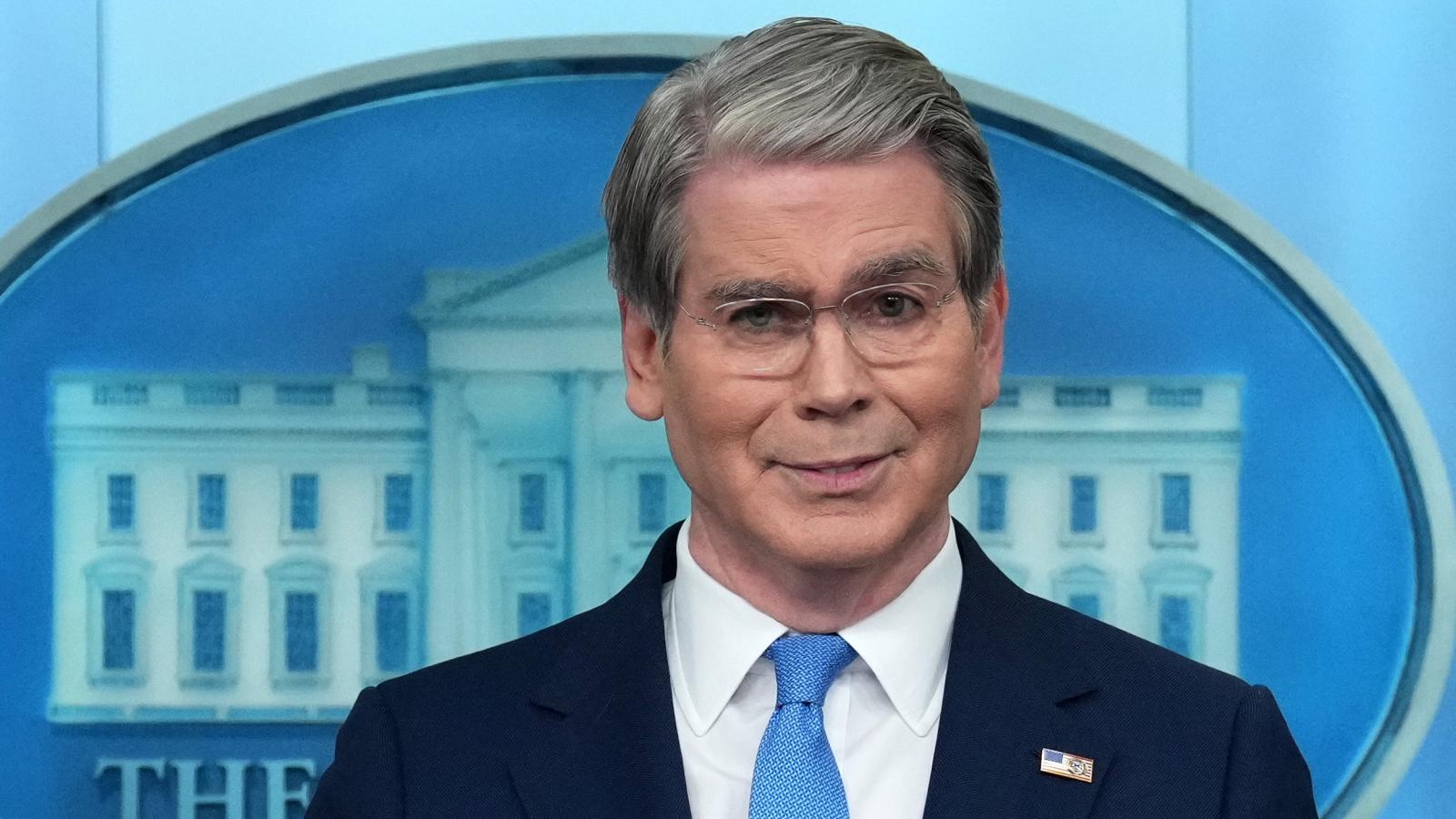
US Treasury Secretary Scott Bessent has called on G20 (Group of Twenty) members to reevaluate their trade conditions with China, aiming to reduce global trade imbalances and urging Beijing to adjust its economic model by reducing reliance on exports and strengthening its historically weak domestic consumption.
Speaking ahead of the G20 Finance Ministers and Central Bank Governors meeting, Bessent stated that the current situation—where Chinese goods are flooding global markets—is unsustainable. While acknowledging that the direct trade imbalance between the US and China is "rapidly improving," he warned that China's overall trade surplus is placing significant pressure on the global economy.
Bessent emphasized that the global economy cannot sustain China's trade surplus, which stands at approximately $1.2 trillion annually. He noted that China's domestic economy is relatively weak, and authorities are attempting to absorb economic pressure by expanding exports, necessitating structural reforms to allow domestic demand to play a greater role in economic growth.
Bessent expressed concern that Chinese goods, previously destined for the US market, are being redirected to other countries due to US trade barriers. Over the past year, the US has significantly reduced Chinese exports by raising tariffs on certain goods and banning some Chinese products. However, this has led to increased import pressures in Europe and Latin America as Chinese goods seek alternative markets.
Bessent stated that the US had already warned other industrialized economies last year about the risks posed by rising Chinese exports. Now, these countries face difficult choices. He argued that the US cannot solve the problem of Chinese export overcapacity alone and that other nations must act by adjusting their trade relationships with China to incentivize Beijing to change its economic model.
The US is pushing for G20 joint statements to include commitments to reduce trade and current account imbalances, aiming to exert greater multilateral pressure on China's economic policies. As of now, the Chinese Embassy in the US has not responded to inquiries regarding this US initiative.
Bilateral trade data between the US and China shows that tariffs implemented since former President Trump returned to office have significantly altered trade flows. According to the US Census Bureau, the US trade deficit with China dropped to $73.9 billion in the first half of 2026, a reduction of about one-third compared to the same period in 2025.
However, this comparison is partly influenced by importers stockpiling goods in early 2025, anticipating higher tariffs. This led to an artificial spike in Chinese imports at the beginning of 2025.
As the US continues to raise trade barriers, Chinese exporters are increasingly seeking markets beyond the US. This shift is transferring export pressure from the US to other major economies, making it a key issue Bessent wants the G20 to address collectively.
Facing China's massive trade surplus, some economists and European leaders have suggested that allowing the renminbi to appreciate could help rebalance global trade. However, Bessent expressed skepticism that currency adjustments alone could resolve the issue.
The International Monetary Fund (IMF) has estimated that the renminbi may be undervalued by up to 21%. Yet, Bessent argued that even if the renminbi appreciates, it would not address deeper structural issues such as China's overcapacity and weak domestic demand.
Some have compared the current global trade imbalance to the 1985 Plaza Accord, where major economies coordinated to depreciate the US dollar and appreciate other currencies. However, Bessent dismissed the idea of a new 'Plaza Accord' as an inappropriate solution, warning it could become a way to avoid addressing real trade issues.
Instead, Bessent stressed the need to tackle China's massive manufacturing subsidies and chronic domestic demand shortfall. The US believes that if China continues to expand manufacturing capacity despite weak domestic demand, excess output will inevitably be exported, depressing global prices and creating competitive pressure on US, European, and other manufacturers.
Therefore, Bessent hopes that major economies will jointly adjust their trade policies toward China, pressuring Beijing to stimulate consumption and expand domestic demand. This reflects a shift in Washington's economic strategy—from focusing solely on reducing US imports from China to coordinating with other nations to address China's export and overcapacity challenges.
As high-level US-China talks continue, Bessent noted it is unclear whether he will meet with Chinese Vice Premier He Lifeng ahead of the expected late-September summit between President Trump and President Xi Jinping.
US and Chinese officials continue to discuss reducing tariffs on certain non-strategic goods and implementing safeguards for artificial intelligence (AI). The AI discussions focus on preventing powerful AI models from falling into the hands of non-state actors. As AI capabilities rapidly advance, AI governance, technology controls, and national security have become key topics in bilateral economic negotiations.
On tariffs, Bessent estimates that both sides could consider eliminating tariffs on about $30 billion worth of non-strategic, non-critical goods. If realized, this would mark a more nuanced approach to tariff negotiations, differentiating between strategic/critical industries and general consumer goods.
Against the backdrop of the late-September summit, the Trump administration is restructuring its tariff policy on Chinese goods. The US Supreme Court recently overturned broad tariffs imposed by the Trump administration under emergency powers, including a 20% tariff on Chinese imports. This legal ruling forced the administration to seek new legal grounds to maintain tariff barriers.
In July, the US imposed a 12.5% tariff on Chinese imports based on a trade investigation into forced labor. Additionally, the US is conducting another investigation into China's "overcapacity," which could lead to further tariffs upon completion.
Thus, while the US seeks to lower tariffs on certain non-strategic goods, it may still impose new trade restrictions related to overcapacity, industrial subsidies, and other trade practices.
Bessent also confirmed plans to hold bilateral talks with Pan Gongsheng, Governor of the People's Bank of China, on the sidelines of the G20 meeting in Asheville. He did not disclose specific agenda items, but the discussion is expected to cover global trade imbalances, renminbi exchange rates, China's weak domestic demand, overcapacity, and the US's tariff restructuring.
FACT BOX
- Source: PR Times
- Category: News