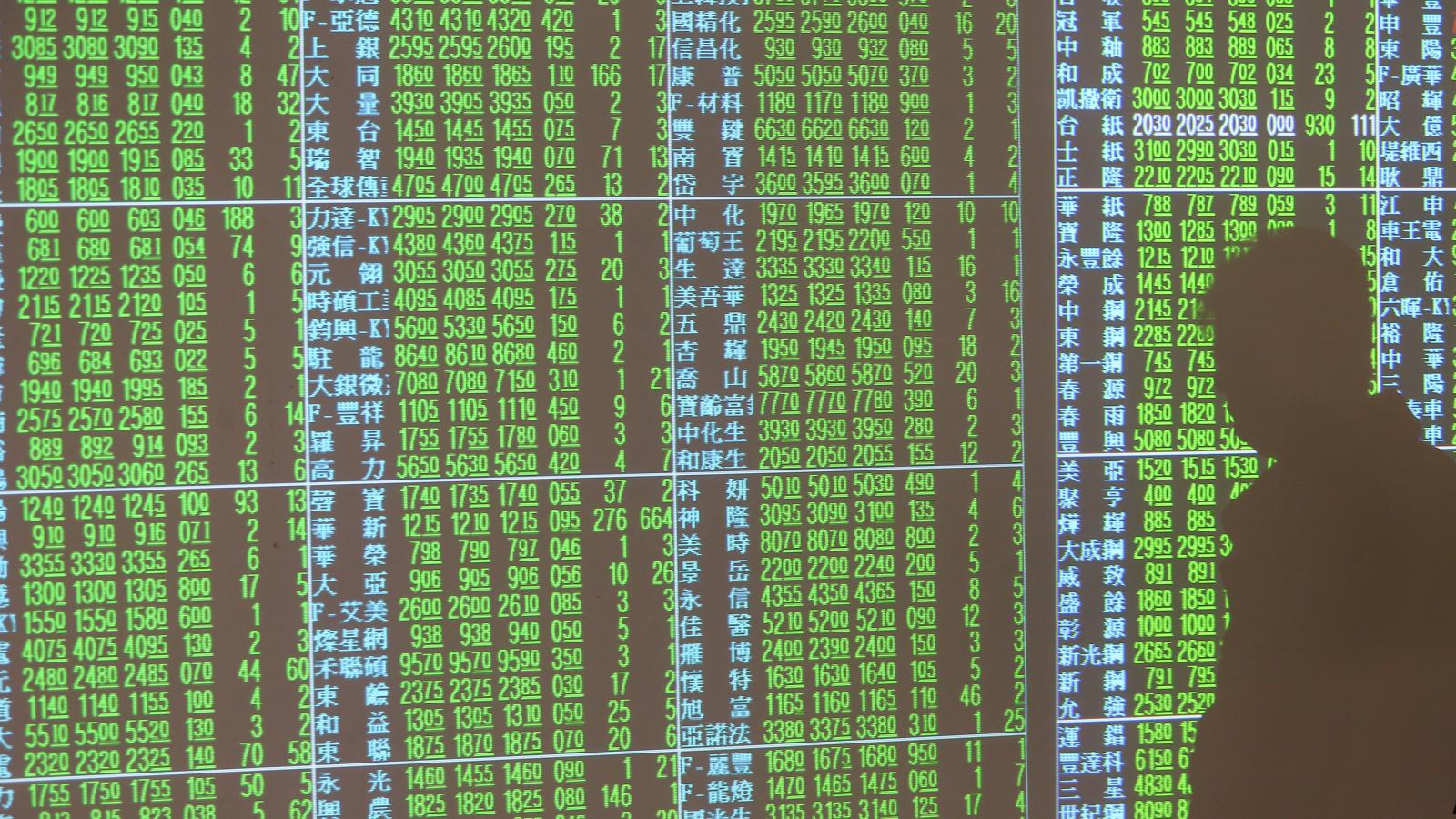
Taiwan's stock market opened higher on June 1 and closed up 820.25 points at 46,948.72, a 1.78% gain. However, economist Wu Chia-lung warned on Facebook that Taiwan and U.S. stock markets may face three major negative developments. If U.S. stocks decline, Asian markets are likely to be affected, facing short-term challenges.
Wu pointed out the first negative factor: escalating military tensions between the U.S. and Iran. "What was bound to happen is finally arriving," he stated. The second factor is deteriorating U.S.-China relations, with the U.S. potentially imposing Level 2 sanctions on China. According to Wu, this isn't about whether the U.S. dares to act, but rather that the U.S. is preparing to close the net on the Chinese Communist Party.
Wu emphasized that while the U.S. appears to be targeting Iran, its real target is China. He described this as an "economic D-Day," noting that only China is significant enough to warrant such a strategic move from the U.S., whereas Iran does not meet that threshold. He speculated that the U.S. is attempting to intimidate President Xi Jinping ahead of his planned state visit, possibly prompting Xi to cancel the trip.
The third major risk, Wu said, is the strong possibility of a Federal Reserve rate hike in the second half of the year. The rationale is straightforward: monetary policy must not lag behind the inflation curve. The overall CPI has exceeded 3% for five consecutive months, while the core PCE index has surpassed 3% for seven consecutive months since January. Therefore, theoretically, the Fed must raise rates quickly to prevent inflation expectations from becoming entrenched and harder to control.
Wu explained the difference between CPI and core PCE:
The Consumer Price Index (CPI) measures the price changes of a fixed basket of goods and services purchased by households over a specific period. It includes food, clothing, housing, transportation, education, and entertainment, and incorporates volatile items like food and energy. It is the most commonly used official inflation metric by governments worldwide and serves as a legal basis for adjusting minimum wages, pensions, and tax brackets.
The Core Personal Consumption Expenditures (Core PCE) index measures price changes in all actual personal consumption expenditures within the economy, excluding food and energy—two categories highly susceptible to weather anomalies and geopolitical disruptions. It focuses on price trends in services (e.g., healthcare, rent) and core goods. The U.S. Federal Reserve relies heavily on Core PCE as its primary inflation gauge when setting monetary policy, using it to assess long-term underlying inflationary pressures.
Wu warned that the simultaneous emergence of these three negative factors could significantly increase market risk, triggering a surge in risk-averse sentiment. This could lead to increased buying of U.S. Treasury bonds, lowering yields and potentially averting a crisis where the 30-year U.S. Treasury yield exceeds 5.2%. At the same time, international capital may flow into the U.S., pushing the U.S. dollar index higher. However, U.S. equities may experience volatility and decline.
If falling U.S. stocks lead to more conservative market sentiment, Asian markets are also likely to be affected, facing short-term challenges.
Additional Feng Media exclusive insights: - Taiwan's hidden institutional investor: Chang Gung Memorial Hospital holds 14,600 shares of TSMC, worth over NT$35 billion. Netizens joked: "Main business: financial holding; side business: healthcare." - Avoid long-term stock traps: Experts reveal two principles for successful stock selection—no need to obsess over catching the initial breakout. - Does the 'Lady of the Jade Pool' have insights? Unusual trading activity in 00981A shows a major reduction in tech stocks. Experts say: 'Sister Yao' thinks tech stocks have risen too much.
FACT BOX
- Source: PR Times
- Category: News