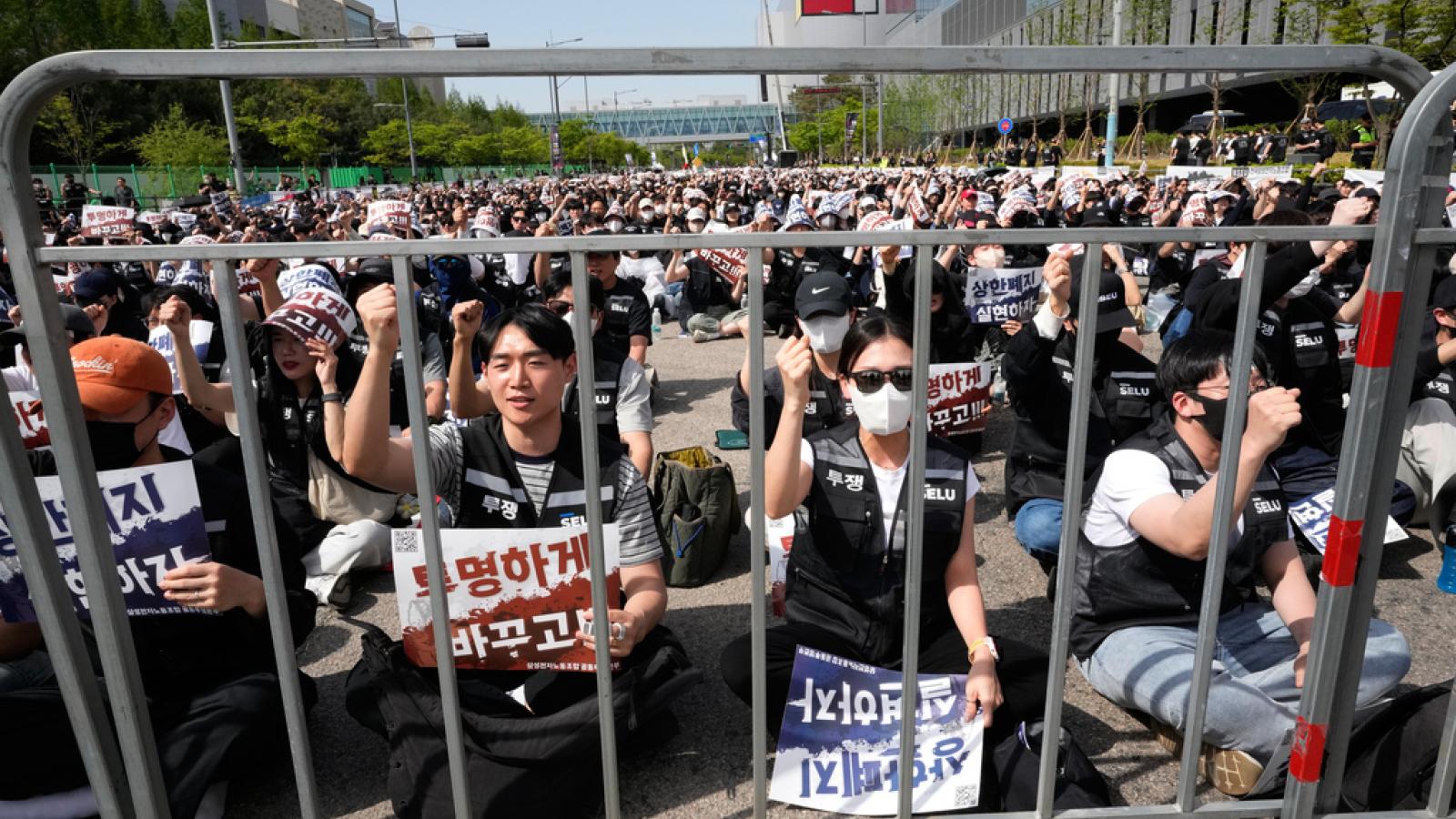
From Samsung Electronics to Kakao and Hyundai Motor, major South Korean corporations have recently staged strikes during market volatility to demand fairer or more generous compensation and benefits. However, new developments indicate that the South Korean government is preparing to amend related regulations, which will prevent labor unions from legally striking over demands for profit distribution, performance bonuses, opposition to corporate mergers and acquisitions, new factory construction, or the introduction of new technologies.
According to the Seoul Economic Daily, the Ministry of Employment and Labor officially announced on the 3rd revised guidelines for labor disputes under the amended Trade Union Act (commonly known as the 'Yellow Mailbag Act'). Although the revised law officially took effect in March, confusion persists on the ground, including Samsung Electronics workers dissatisfied with the company's performance bonus system and other unions opposing the establishment of a semiconductor special zone.
In response, President Lee Jae-myung instructed relevant ministries during a cabinet meeting to clarify the standards for dispute actions. The Ministry of Labor has decided to further supplement the existing guidelines.
Preemptive Profit Distribution Violates Management Rights
According to the newly supplemented guidelines, union demands that a fixed percentage of corporate earnings—such as revenue, operating profit, or net income—be allocated as annual performance bonuses will be excluded from 'mandatory collective bargaining items.' The South Korean Ministry of Labor considers performance bonuses to be post-hoc profit distributions. If unions demand the preemptive division and allocation of corporate profits, this is deemed an infringement of corporate management rights and could harm the interests of third parties such as shareholders and creditors.
However, if unions demand performance bonuses as a fixed percentage of base salary or annual wages, or as a fixed monetary amount, such demands remain within the scope of legitimate collective bargaining.
Under the law, if a specific demand is excluded from mandatory bargaining, employers are not committing an 'unfair labor practice' by refusing to negotiate and face no penalties. Conversely, unions will also be unable to obtain legal strike rights based on such excluded issues.
No Strikes Allowed Over Opposition to M&A or AI Introduction
Additionally, the revised rules stipulate that demands for companies to withdraw or oppose factory construction or relocation, overseas investment, corporate sales or acquisitions, or the introduction of new technologies such as artificial intelligence (AI), are also not included in mandatory bargaining and cannot serve as legal grounds for strikes.
These adjustments clearly reflect the South Korean Ministry of Labor’s rationale for revising the guidelines, stemming from a series of major corporate strikes in the first half of 2026: Hyundai Motor workers opposed the introduction of humanoid robots, fearing job displacement; disputes over performance bonuses arose at Samsung Electronics and SK Hynix.
There is one exception: these issues may be included in mandatory labor-management negotiations only if the company explicitly announces specific personnel plans such as layoffs or relocations, and there is an objective, unilateral change in working conditions.
Regarding these changes, current Labor Minister Kim Young-ho stated that the government established clearer standards to prevent disputes and promote labor-management dialogue.
FACT BOX
- Source: PR Times
- Category: News
- Organizations: Kakao