AI is no longer limited to chatting and writing articles — it can now analyze your walking pattern in front of a mirror, instantly retrieve exciting baseball moments through voice commands, and even let you virtually try on new clothes. The 2026 Future Tech Pavilion will take place from September 17 to 19 at Taipei World Trade Center Hall 1, bringing together cutting-edge achievements in smart healthcare, sports events, fashion retail, and agricultural technology. The public is invited to interact hands-on with these innovations and experience how AI is entering daily life.
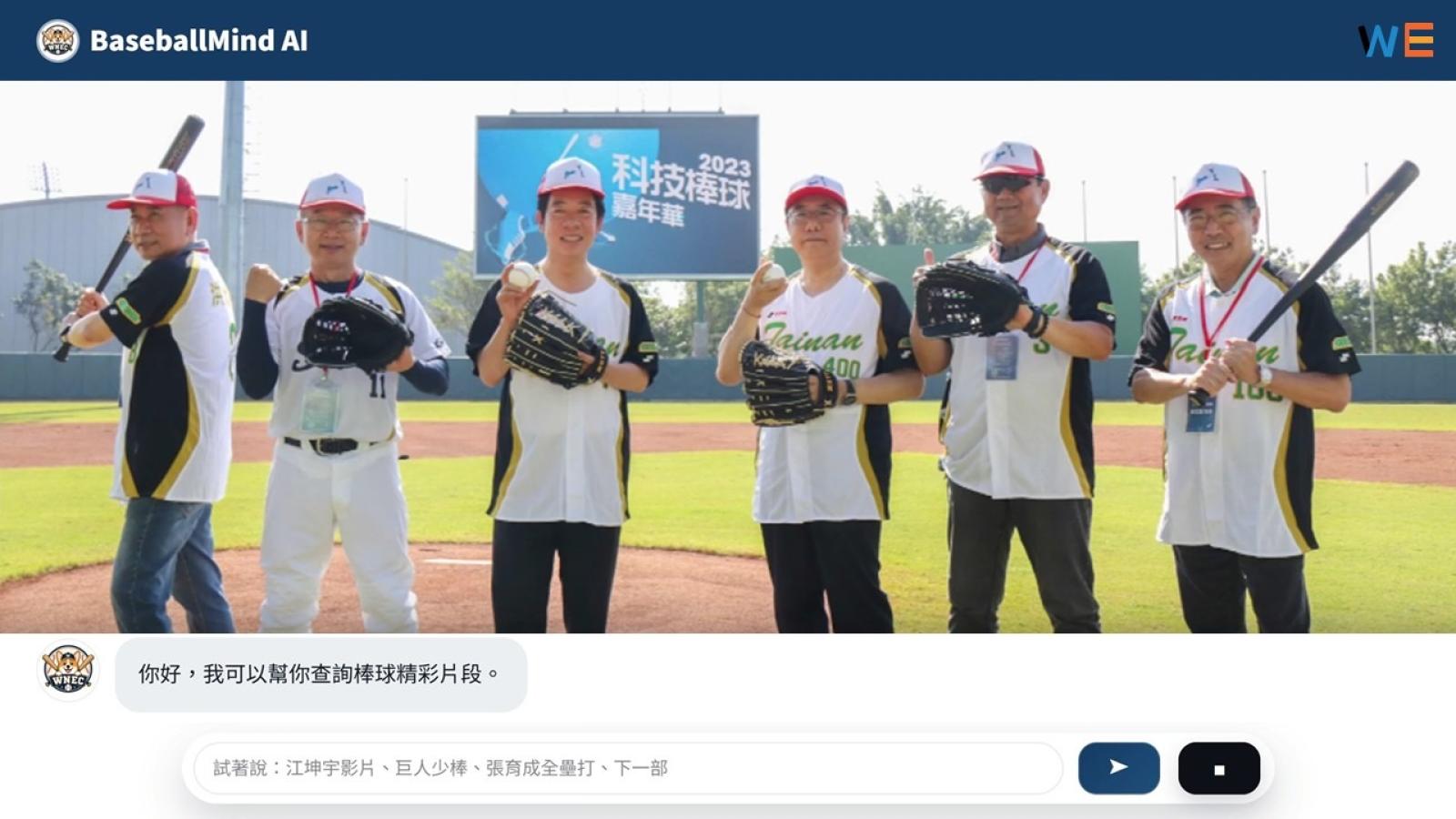
A team led by Chen Junliang from National Taiwan University of Science and Technology has developed multimodal AI technology for baseball event tagging. This system automatically identifies key moments such as home runs and strikeouts during games and builds a searchable video archive accessible by voice. At the exhibition, visitors can simply speak a player’s name, nickname, or alias, and the system will quickly retrieve and play the relevant clip. This technology could significantly reduce manual video editing time and open new possibilities for sports broadcasting, video platforms, and fan engagement services.
The iMirror AI-powered interactive health mirror, developed by Chang Wan-jung’s team at National Kaohsiung University of Science and Technology, uses a single camera and edge AI computing to analyze users’ gait stability and fitness performance in real time — all without requiring wearable sensors. Users simply walk or stretch in front of the mirror, and the system provides instant feedback. The technology is expected to be applied in medical institutions, communities, and homes for lower-limb rehabilitation tracking, exercise guidance, and fall risk assessment. However, the results are intended solely for health management reference and cannot replace professional medical diagnosis or advice.
Hsu Feng-yu’s team from Shih Chien University has introduced a generative AI system that integrates clothing design with virtual try-on functionality. Visitors standing in front of a screen can instantly see how different outfits look on their bodies, enjoying the fun of rapid virtual dressing. The system connects the entire process from concept design to personalized virtual fitting, serving as a support tool for brand development, garment prototyping, and smart retail. It allows consumers to intuitively compare styles and helps apparel businesses explore innovative product presentation methods.
Wu Ting-yu’s team from National Yunlin University of Science and Technology has developed an AI deep learning system that automatically detects lean meat volume in live pigs using image analysis. The model reportedly achieves a determination coefficient of 0.78, offering valuable data for feeding management and meat grading. This technology aims to integrate data across farms, slaughterhouses, and retailers, helping industries track breeding conditions and meat quality, thereby advancing digitalization and precision management in agriculture and livestock sectors.
In addition to public experiences, the organizers have launched pre-event预约 services for guided tours and enterprise matchmaking. Companies, startups, and investors are invited to engage in one-on-one discussions with exhibiting teams regarding technology licensing, joint R&D, and field validation opportunities.
FACT BOX
- Source: PR Times
- Category: Event