Chinese telecommunications equipment giant Huawei is facing multiple charges including technology theft, bank and wire fraud, and aiding in the evasion of U.S. sanctions against Iran and North Korea. The criminal case in the U.S. District Court in New York began jury selection on September 9, 2023, Eastern Time. The trial is expected to last approximately three months and, given its implications for U.S. sanctions regimes, technological competition, and U.S.-China diplomatic relations, is anticipated to become one of the most significant legal confrontations between Huawei and the U.S. justice system.
Some of the charges brought by U.S. prosecutors against Huawei date back to 2009. At that time, Huawei was accused of providing surveillance equipment to the Iranian government, assisting Iranian authorities in suppressing street protests following a presidential election widely questioned for electoral fraud. Whether the equipment and technology were used to monitor dissidents became a key element in the U.S. investigation into Huawei’s operations in Iran.
Meng Wanzhou admitted to making false statements regarding a company named Skycom
Subsequently, the U.S. Department of Justice further accused Huawei of evading U.S. sanctions by concealing business relationships and financial transactions to continue operations in Iran, and of making false statements to financial institutions. U.S. prosecutors formally filed charges of bank fraud and wire fraud about eight years ago, with Meng Wanzhou, then Huawei’s Chief Financial Officer (CFO), as a central figure in the case.
Meng Wanzhou is not only a senior executive at Huawei but also the daughter of its founder, Ren Zhengfei. In December 2018, she was arrested at Vancouver International Airport by Canadian authorities at the request of the U.S. government, triggering a serious diplomatic crisis between China and Canada.
Following Meng’s arrest, the Chinese government strongly demanded her release from Canada. Meanwhile, Canadian citizens Michael Kovrig and Michael Spavor were detained in China, widely seen as China’s diplomatic pressure tactic to compel Canada to release Meng. Meng was eventually released in 2021 and returned to China, and Canada subsequently allowed the two detained Canadians to return home.
Under President Joe Biden’s administration, the U.S. Department of Justice ultimately dropped criminal charges against Meng Wanzhou. However, as part of the bilateral agreement, Meng admitted to having made false statements regarding Skycom, a company effectively controlled by Huawei.
U.S. prosecutors argue that Skycom had close ties to Huawei and was used to conduct business with Iran, thereby circumventing U.S. economic sanctions. Meng’s admission of making false statements has become a crucial legal document for subsequent proceedings.
U.S. escalates charges: Huawei accused of stealing U.S. corporate trade secrets
In February 2020, U.S. prosecutors filed a superseding indictment in Brooklyn Federal Court, expanding the case to include charges of conspiracy to operate a criminal enterprise and conspiracy to steal trade secrets.
Prosecutors allege that Huawei systematically recruited employees from U.S. companies to obtain competitors’ technology and intellectual property. Some employees, after joining Huawei, were allegedly instructed to bring confidential information from their former employers to the new company. U.S. prosecutors also claim Huawei offered financial incentives to encourage employees to provide or bring back proprietary information from other firms.
The allegations span telecommunications technology and other high-tech fields. U.S. prosecutors argue that Huawei’s actions were not isolated incidents by individual employees but part of a systematic strategy, thus elevating the case to the level of corporate criminal conspiracy and trade secret theft.
Huawei has fully denied all U.S. allegations, rejecting claims of technology theft, fraud, or sanctions evasion.
The Chinese government has long criticized U.S. judicial and economic measures against Huawei, arguing that the U.S. uses national security and legal pretexts to engage in so-called 'economic bullying' to suppress China’s tech industry and prevent Chinese companies from gaining competitive advantages in the global high-tech market.
Huawei sought dismissal of multiple charges; courts largely rejected
Before the trial began, Huawei repeatedly attempted to halt proceedings, including requesting the court to dismiss 13 charges.
Huawei’s legal team argued that the evidence presented by U.S. prosecutors was insufficient and that certain activities involving foreign transactions fell outside the scope of U.S. judicial jurisdiction. However, the presiding judge rejected nearly all of Huawei’s key arguments, allowing the case to proceed to jury trial.
Huawei later requested the court to prohibit prosecutors from using Meng Wanzhou’s prior admission of making false statements during the trial, aiming to minimize the impact of such testimony and legal documents. The court also rejected this request.
As a result, Meng Wanzhou’s past admissions under her agreement with the U.S. Department of Justice will be a closely watched legal factor in this trial.
Whether 'dollar transactions' fall under U.S. sanctions law becomes a key legal issue
The trial is expected to last about three months. While Huawei’s alleged criminal conduct is under scrutiny, the scope of U.S. judicial jurisdiction will also be a major legal issue.
A core question is whether U.S. prosecutors can assert jurisdiction over foreign transactions simply because they are settled in U.S. dollars. The U.S. argues that even transactions between foreign entities, if settled in dollars, may fall under U.S. sanctions and corporate crime laws.
Given the dominance of the U.S. dollar in the global financial system, many cross-border transactions—even those occurring outside the U.S.—pass through U.S. financial institutions or dollar-clearing systems. The U.S. government has previously used this rationale to impose sanctions or take legal action against foreign companies and financial institutions.
The Huawei case could thus become a landmark example of how the U.S. leverages the dollar-based financial system and domestic laws to prosecute foreign companies for sanctions evasion and other cross-border criminal activities.
A guilty verdict could consume most of Huawei’s profits accumulated over the past 15 years
This case poses significant financial and commercial risks for Huawei.
If the charges are ultimately upheld, Huawei could face massive fines. Plaintiffs estimate the potential penalties could consume most of the profits Huawei has accumulated over the past 15 years.
Additionally, if Huawei is convicted, the company may be forced to further withdraw most of its assets from the U.S. to reduce the risk of future asset seizures by U.S. judicial authorities.
Convictions on bank and wire fraud charges could have further consequences. If Huawei is found guilty, its ability to conduct business with U.S. banks and other international financial institutions could be severely restricted, potentially affecting its access to financial services and cross-border transactions.
For a technology company heavily reliant on global supply chains, financial systems, and cross-border commercial activities, these legal consequences could extend beyond a one-time fine and impact future international business operations.
Trial coincides with a sensitive period in U.S.-China high-level diplomacy
Beyond judicial implications, the political significance of the Huawei case is also under close watch.
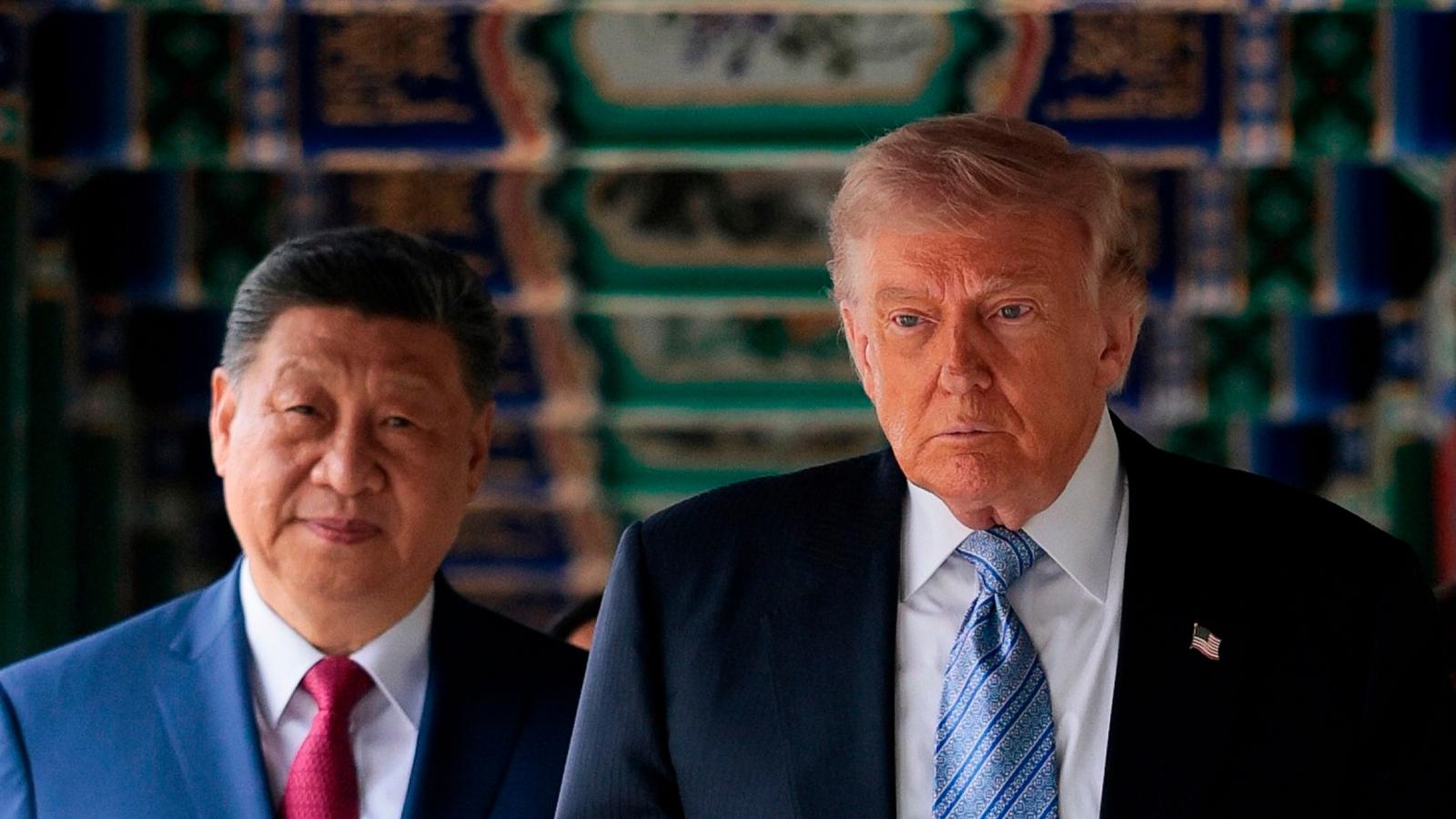
According to current scheduling, the trial will proceed during Chinese President Xi Jinping’s planned visit to the U.S. in late September, where he is expected to hold talks with U.S. President Donald Trump. As such, the Huawei case will unfold simultaneously with high-level diplomatic negotiations between the U.S. and China on trade, technology, finance, and other issues.
During Trump’s first presidential term, the Huawei case was seen as a potential topic in U.S.-China trade negotiations. Trump stated that the Huawei issue could be part of a broader trade deal, while also emphasizing that he viewed Huawei as a “very dangerous” company to U.S. national security.
Therefore, Huawei’s criminal trial in New York has drawn widespread attention regarding whether high-level diplomatic talks between the U.S. and China could influence the case.
Think tank: Judicial process and diplomatic negotiations cannot be fully isolated
Craig Singleton, a senior fellow at the U.S. think tank Foundation for Defense of Democracies (FDD), stated on September 9 in an interview with the Financial Times that while one cannot assume Trump will directly intervene, it is equally incorrect to assume that courtroom judicial proceedings are necessarily fully isolated from diplomatic negotiations.
Singleton noted that Huawei touches on technological competition, Iran sanctions, and U.S.-China diplomacy, making this case particularly significant in both political and legal terms.
With jury selection now underway, the U.S. Department of Justice and Huawei will present their evidence and legal arguments over the coming months. The trial’s outcome will continue to be influenced by shifts in U.S. technology policy, sanctions policy, and the evolving U.S.-China relationship.
FACT BOX
- Source: PR Times
- Category: News