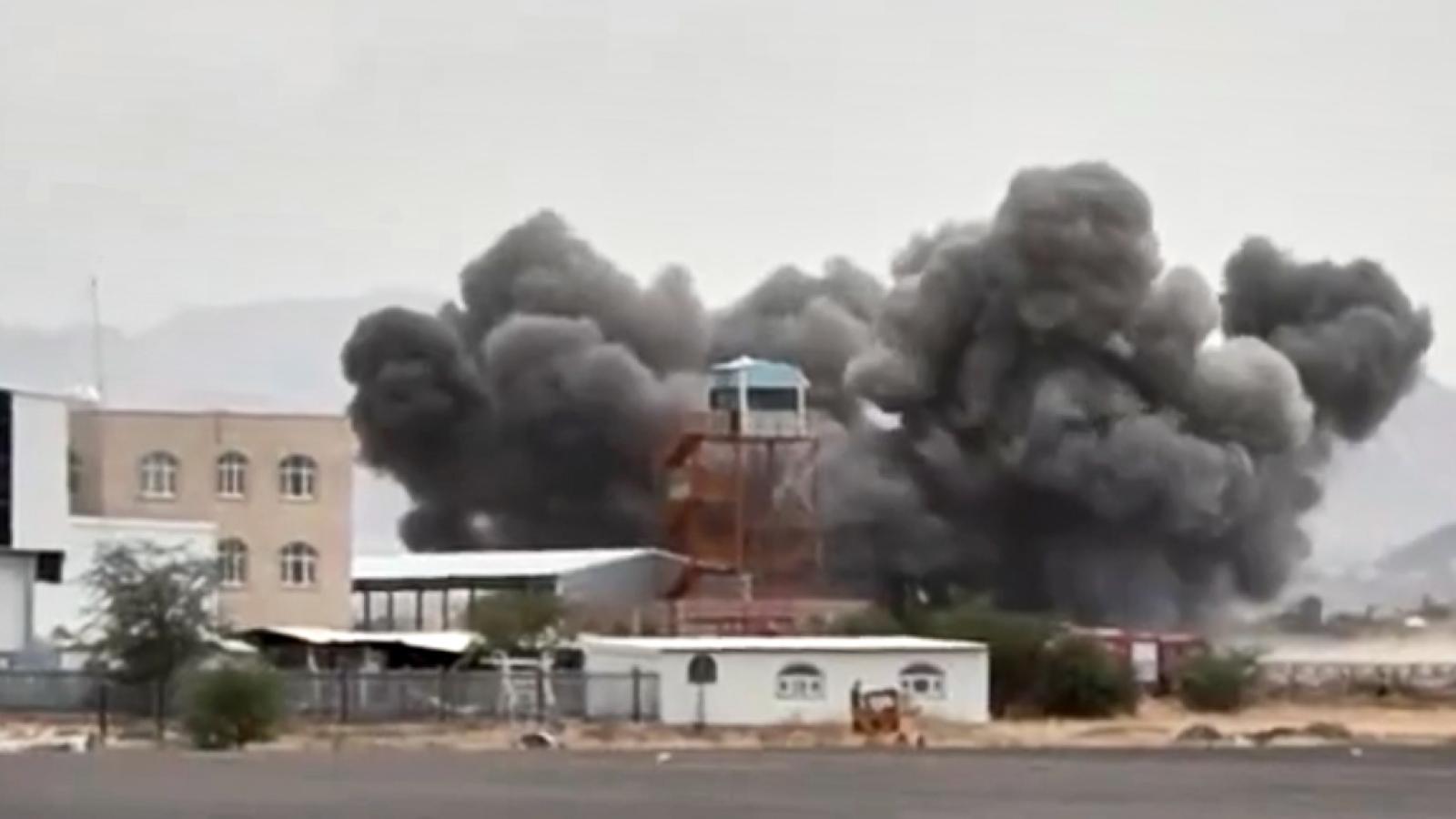
If Saudi Arabia's critical oil pipeline is not restarted within the next few days, export crude inventories will run out, causing up to 4% of global supply capacity to vanish. Several Saudi crude buyers and traders issued this severe warning on September 13.
Further reductions in Saudi crude exports will worsen an already tight global supply situation. Previous supply constraints have pushed global fuel prices to record highs, triggered inflation worldwide, and driven U.S. Treasury yields to their highest levels since the 2008 financial crisis.
Yanbu port currently holds only enough inventory to sustain 5 to 7 days of exports. A drone attack on September 11 forced Saudi Arabia to shut down its major east-west pipeline across the Arabian Peninsula. Riyadh authorities have yet to fully disclose the extent of damage or provide a timeline for how long the pipeline will remain offline.
Insiders who spoke to Reuters offered conflicting assessments. One source said repairing the damaged pipeline could take as long as five to six weeks; another believed the repair period might be shorter, with even the possibility of resuming partial operations while repairs continue. Saudi Arabia's official government media office and energy ministry did not immediately respond to requests for comment.
For the past six months, this desert-spanning pipeline has shielded Saudi Arabia from the potentially fatal blow of export blockades by neighboring countries. With hostilities in the Persian Gulf leading to the closure of the Strait of Hormuz, Saudi Arabia has used this pipeline to reroute shipments and avoid the crisis. As the world's largest oil exporter, Saudi Arabia has been using this pipeline to redirect approximately 4 million barrels per day—around 4% of global supply—to the Red Sea port of Yanbu.
However, three industry sources familiar with Saudi export operations say that with the pipeline offline, Yanbu port currently holds only enough inventory to maintain 5 to 7 days of exports.
A fourth source revealed that Saudi Arabia also has several days' worth of inventory prepared at Egypt's Ain Sukhna port on the Red Sea and at Sidi Kerir port on the Mediterranean. Industry estimates indicate Yanbu's storage capacity is about 35 million barrels, while Ain Sukhna and Sidi Kerir hold 18 million and 20 million barrels respectively.
These sources emphasized that current inventories are not at full capacity, and if the east-west pipeline cannot resume operations, stocks will eventually be completely depleted.
The International Energy Agency (IEA) stated on September 11 that due to reduced oil flows through the Strait of Hormuz and the Red Sea, Saudi Arabia's oil supply fell in August to its lowest level in over 30 years. The IEA, which coordinates energy policies among Western nations, projected that global oil supply would decrease by 5.7 million barrels per day this year—about 6%.
In addition to the pipeline attack, Yemen's Houthi armed group, which threatens Saudi oil tanker shipments, captured an island at the entrance of the Red Sea on September 11.
Prior to the outbreak of conflict, the Middle East supplied about 22 million barrels of oil per day. However, industry sources say throughput via the Strait of Hormuz has now plummeted to between 6 and 9 million barrels per day. Last week, Saudi Arabia informed OPEC that its crude output had sharply declined from 10.9 million barrels per day in February—before the conflict began—to just 6.2 million barrels per day in August.
FACT BOX
- Source: PR Times
- Category: News