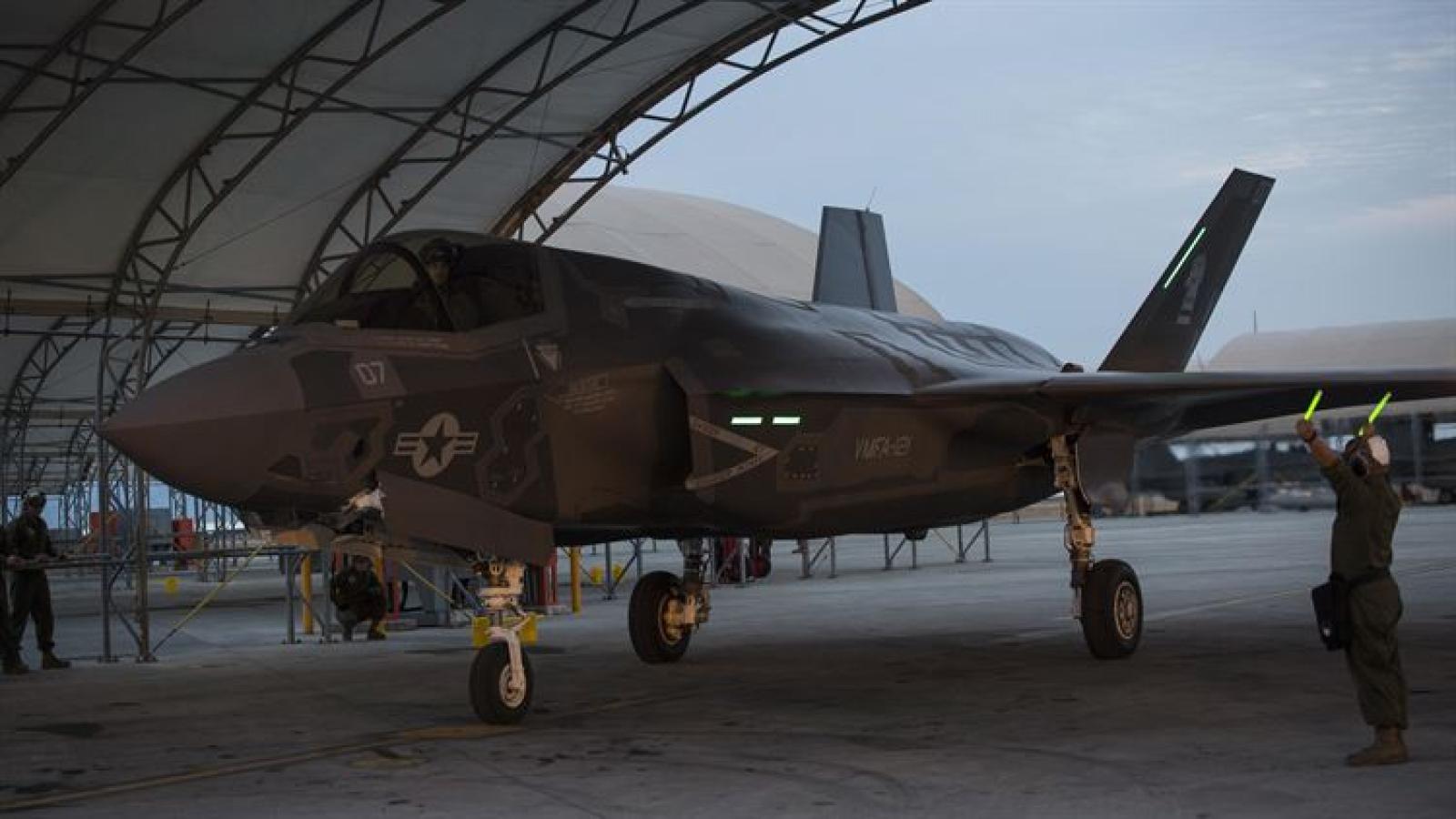
Three seemingly contradictory signals actually point to the same issue. Recently, three pieces of news related to Taiwan Strait security, when observed together, are particularly thought-provoking. On September 10, the U.S. 'Defense Priorities' proposed the 'Second Island Chain Strategy,' advocating that the U.S. adjust its military deployment in Asia, shifting more forces from the vulnerable First Island Chain to the more survivable Second Island Chain. The report even suggested gradually reducing some military commitments in the First Island Chain. However, just the day before, the AIT Director, Keith Krach, at the '2026 Taipei Security Dialogue' stated that the U.S. is strengthening its presence in the Indo-Pacific through high-level diplomacy and partnerships, particularly emphasizing the First Island Chain, while supporting Taiwan's self-defense capabilities. He further pointed out that if a conflict were to break out in the Taiwan Strait, its global economic impact could surpass that of World War II. Meanwhile, former National Security Council Secretary-General Su Chi proposed the judgment that 'the U.S. knew in 2020 that it would not come to save Taiwan,' describing Taiwan's current strategic situation with the terms 'Weak,' 'Divided,' and 'Provocative.' These three pieces of information seem contradictory but may not be. If they are understood only as 'pro-American versus skeptical of America,' or 'support versus opposition to U.S. intervention,' it is easy to miss the truly important issue. Because these messages collectively reflect a deeper reality in international relations: As U.S.-China military power, technological capabilities, and regional security structures continue to evolve, the U.S. must necessarily reassess the cost of intervention in a Taiwan Strait crisis and Taiwan's strategic value within the First Island Chain security framework. Therefore, what Taiwan really needs to ask is not 'whether the U.S. will come to save it,' but rather: When Washington reassesses risks and benefits, how will Taiwan's own defense capabilities, as well as the choices made by neighboring countries like Japan, South Korea, and the Philippines, collectively influence U.S. strategic decisions? This is the key to understanding future U.S.-Taiwan-China relations and changes in the First Island Chain security order. The U.S. is not 'leaving Asia' but is recalculating the methods and costs of intervention. From a strategic realist perspective, the U.S.'s security commitments are never completely fixed. Even if a region retains long-term strategic interests, the degree of specific military intervention will be influenced by factors such as the level of threat, operational costs, ally capabilities, base survivability, and domestic political support. Therefore, the simultaneous emergence of the 'Second Island Chain Strategy' and 'strengthening the First Island Chain' in Washington does not necessarily indicate that U.S. strategy has lost direction but may more likely reflect an increasingly acute policy problem: How to maintain a favorable power balance in the Indo-Pacific while avoiding uncontrollable military and political costs in a Taiwan Strait conflict? First, there is China's increasingly complete Anti-Access/Area Denial (A2/AD) capabilities. The deployment of long-range precision missiles, air forces, unmanned systems, electronic warfare, and the development of multi-layered sensing and command capabilities have made the Taiwan Strait and surrounding maritime and airspace highly competitive operational spaces. If the U.S. military directly enters the front lines, it must not only face issues of force attrition and base survivability but also consider the risks of conflict escalation and even nuclear escalation. Therefore, the real issue is not whether the U.S. still values the First Island Chain but rather how the U.S. is willing to maintain the First Island Chain and who will bear the cost of frontline defense. Next, there is 'risk-sharing' within the alliance. The U.S. demanding that allies strengthen their own defense capabilities does not mean the U.S. is prepared to abandon allies; similarly, the U.S. strengthening its deployment in the First Island Chain does not mean it is willing to bear all frontline operational risks. From this perspective, 'Deterrence by Denial' is worth reinterpreting. Its core is not to guarantee that the U.S. military will commit maximum force at the first moment but to make potential adversaries believe that even if they launch an attack, they will find it difficult to quickly achieve political and military objectives. For Taiwan, this means that defense thinking cannot stop at 'how many weapons' but must shift toward 'can adversaries be prevented from achieving quick victories.' Therefore, a truly effective defense system must include dispersed deployment, precision firepower, unmanned systems, command and communication resilience, ammunition and logistics replenishment, energy backup, and the ability to maintain command and operational functions after the first wave of strikes. What the U.S. needs to see is not a Taiwan waiting for external aid but a Taiwan that can withstand initial impacts, maintain defense, and buy time and strategic space for external support. On May 19, 2026, Japanese Prime Minister Kishi Nobuo and South Korean President Lee Jae-myung held a Japan-South Korea leaders' meeting. (AP) The Taiwan Strait is not an independent battlefield: Japan, South Korea, and the Philippines' choices will rewrite the U.S. cost formula. Taiwan Strait security has never been a simple U.S.-China-Taiwan triangle. If a major crisis occurs in the Taiwan Strait, the impact will quickly spill over to Japan's southwestern islands, northern Philippines, South China Sea shipping lanes, and South Korea's facing issues with the U.S.-South Korea alliance and security on the Korean Peninsula. Therefore, the U.S.'s assessment of the cost of intervention in the Taiwan Strait must also be observed within the context of the entire First Island Chain security network: Country/Region Taiwan Strait Strategic Concerns Core Strategic Considerations Intervention Limitations and Impact Japan Extremely High Southwest Islands, Maritime Traffic, U.S.-Japan Alliance Legal Authorization, Domestic Politics, and Ability to Bear Military Risks Philippines High Northern Geographic Position, South China Sea Security, U.S.-Philippines Alliance Relations with China, Domestic Interests, and Political Considerations for Base Use South Korea Medium-High North Korea's Nuclear Weapons, U.S.-South Korea Alliance, U.S.-China Balance Security on the Korean Peninsula is prioritized, with limitations on direct intervention in the Taiwan Strait Taiwan Core Self-defense, Sustained Operations, Social Resilience Determines the ability to withstand initial impacts U.S. Core First Island Chain, Alliance Credibility, Indo-Pacific Order Must balance deterrence, intervention costs, and escalation control First is Japan: Japan is one of the countries most directly linked to Taiwan Strait security within the First Island Chain. If the Taiwan Strait is blockaded or a conflict breaks out, Japan's southwestern islands and maritime traffic lines may be directly affected. Therefore, Japan's strengthening of defense in the southwestern direction and deepening of U.S.-Japan security cooperation should not be simply understood as 'fighting for Taiwan' but should be understood in the context of Japan's own national security interests. Next is the Philippines: The importance of the Philippines has become increasingly apparent in recent years. Its northern geographic position is close to Taiwan, and U.S.-Philippines defense cooperation and base usage arrangements also make the Philippines an important strategic node on the southern side of the First Island Chain. However, Manila still has its own national interests, including South China Sea security, economic relations, and China policy. Therefore, how much base, logistics, and strategic support the Philippines is willing to provide is not an answer that can be pre-assumed. South Korea presents a different strategic logic: South Korea is related to Taiwan Strait security, but its national security priorities are always constrained by the threat of North Korea's nuclear weapons and missiles. For Seoul, if a conflict occurs in the Taiwan Strait, how to avoid a second front on the Korean Peninsula may be more important than directly engaging in operations in the Taiwan Strait. Therefore, Japan, the Philippines, and South Korea cannot take completely identical positions. The First Island Chain is not a neatly aligned military front line but a security network jointly constituted by different national interests, legal frameworks, military capabilities, and risk tolerance. However, this also forms a typical 'collective action dilemma.' Each country wants to maintain regional security, but regarding who should bear how much cost and how much risk, there may not be the same answer. Therefore, what the U.S. really needs to assess is not just 'whether Taiwan is worth supporting' but rather: How much strategic space is Japan willing to provide? How many bases and logistics capabilities is the Philippines willing to open? How much regional security pressure can South Korea share? And how long can Taiwan itself hold out? The intersection of these answers is the actual cost formula for U.S. intervention in the Taiwan Strait. Weak, Divided, Provocative: Transformed into three variables for allies to assess Taiwan. Let's return to Su Chi's Weak, Divided, Provocative. If these three concepts are extracted from the context of domestic party politics and placed within the framework of alliance politics, they can be transformed into three strategic variables worth examining for Taiwan: the credibility of defense commitments, wartime social resilience, and crisis management and escalation control capabilities. 1. Weak: Credibility of Defense Commitments An increase in defense budgets and the number of weapons does not necessarily mean a corresponding increase in defense capabilities. What allies truly assess is 'system defense capability': personnel training, command and control, base survivability, ammunition replenishment, logistics maintenance, energy supply, and the ability to continue operations after being attacked. If Taiwan cannot demonstrate the ability to withstand initial strikes and maintain operations, allies face not just the question of 'whether to support' but the question of whether support will produce sufficient effects. Therefore, defense capability itself is part of alliance credibility. 2. Divided: Wartime Social Cohesion and Resilience 'Divided' should not be simplified to whether there is political conflict between parties. What is truly worth noting is, in the face of blockades, energy disruptions, cyberattacks, information warfare, and damaged infrastructure, how much social cohesion and resilience can be maintained.
FACT BOX
- Source: PR Times
- Category: 国际关系