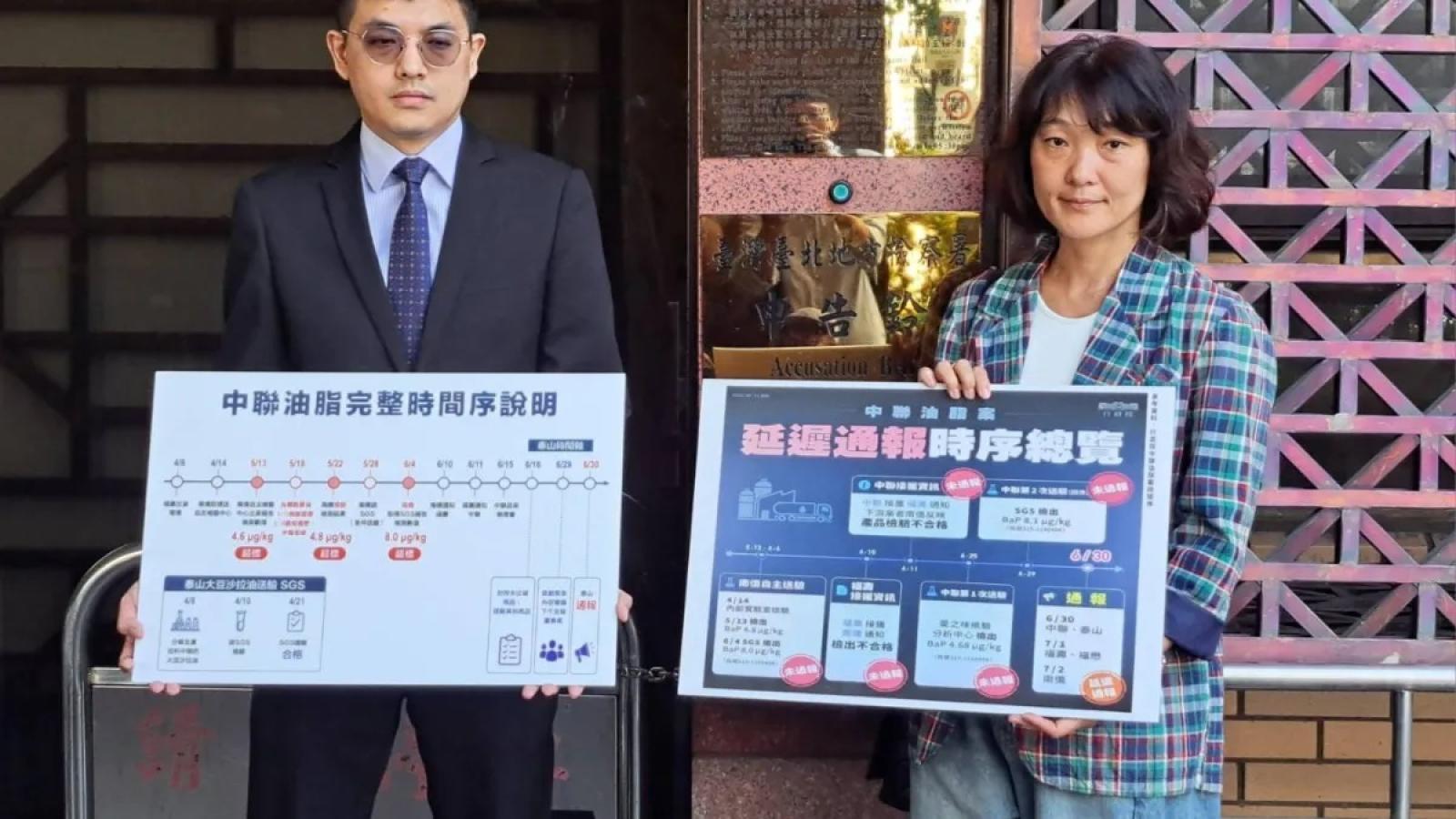
The Zhonglian oil case has entered the stage of civil compensation. Tai Shan has recently filed a 10 billion yuan civil compensation lawsuit against Zhonglian, Fushou, Fuma, and Nanqiao. Financial commentator Huang Shichong, in the program 'Smart Finance Big and Small World' on 'Brand Perspective,' analyzed the 98-page lawsuit, business public data, and inspection timeline, pointing out that the real issue worth pursuing in this case is not 'whose oil had problems' but 'who knew first and how long it took to issue the warning after knowing.' Program data shows that Nanqiao purchased 'Grade 1 Edible Soybean Salad Oil' from Fushou on April 8. On May 13, samples taken from the oil tank truck tested positive for 4.6μg/kg of benzo[a]pyrene, exceeding the legal limit of 2.0μg/kg. On May 22, the retest result was 4.8μg/kg, and on June 4, a third-party SGS inspection found it to be 8.0μg/kg. However, it was not until June 10 that Nanqiao reported the issue to Fushou, and Fushou notified Zhonglian the next day. From the first abnormal detection to reporting to the supplier, nearly a month had passed. Huang Shichong pointed out that even after the warning reached Zhonglian, the incident was not immediately stopped. According to the lawsuit content and program data, Zhonglian held a quality assurance meeting on June 15, with the handling direction including 'not to disclose, not to recall, and to retest.' The prosecution believes that the relevant decision caused the subsequent delay in reporting. The entire incident is not just a single company's quality control problem but also involves information transmission and risk management in the food supply chain. As for why Tai Shan filed a 10 billion yuan compensation claim, the program analyzed that Tai Shan sent its own products for SGS inspection on April 10 and obtained a qualified result on April 21. However, at the other end of the same supply chain, abnormal data such as 4.6, 4.8, and 8.0 had been continuously appearing since May 13. If the relevant information could have been shared earlier, Tai Shan might have had the opportunity to retest and stop shipment in advance, thereby reducing subsequent recall, refund, destruction, and brand reputation losses, which will be a point of contention in civil litigation. The Tai Shan management team also emphasized that after breaking away from past family management, the company is making decisions from the perspectives of corporate governance, shareholder rights, and business operations by professional managers, no longer constrained by family relationships and emotional burdens. Facing potential responsibility issues that could harm the company, they will 'sue if necessary' rather than choose to be lenient or indulgent due to past relationships. This lawsuit is aimed at clarifying responsibility through the judicial system and protecting the company and all shareholders' rights and interests. Huang Shichong stated that what is more worth the government's review in this case is whether Taiwan's food supply chain has an effective 'abnormal information sharing mechanism.' When one end of the supply chain has already lit up a red light, if other businesses still cannot know simultaneously, even if the problem has already been discovered, it may still cause delays in warning transmission, allowing recall, compensation, and consumer losses to continue to expand.
FACT BOX
- Source: PR Times
- Category: Survey