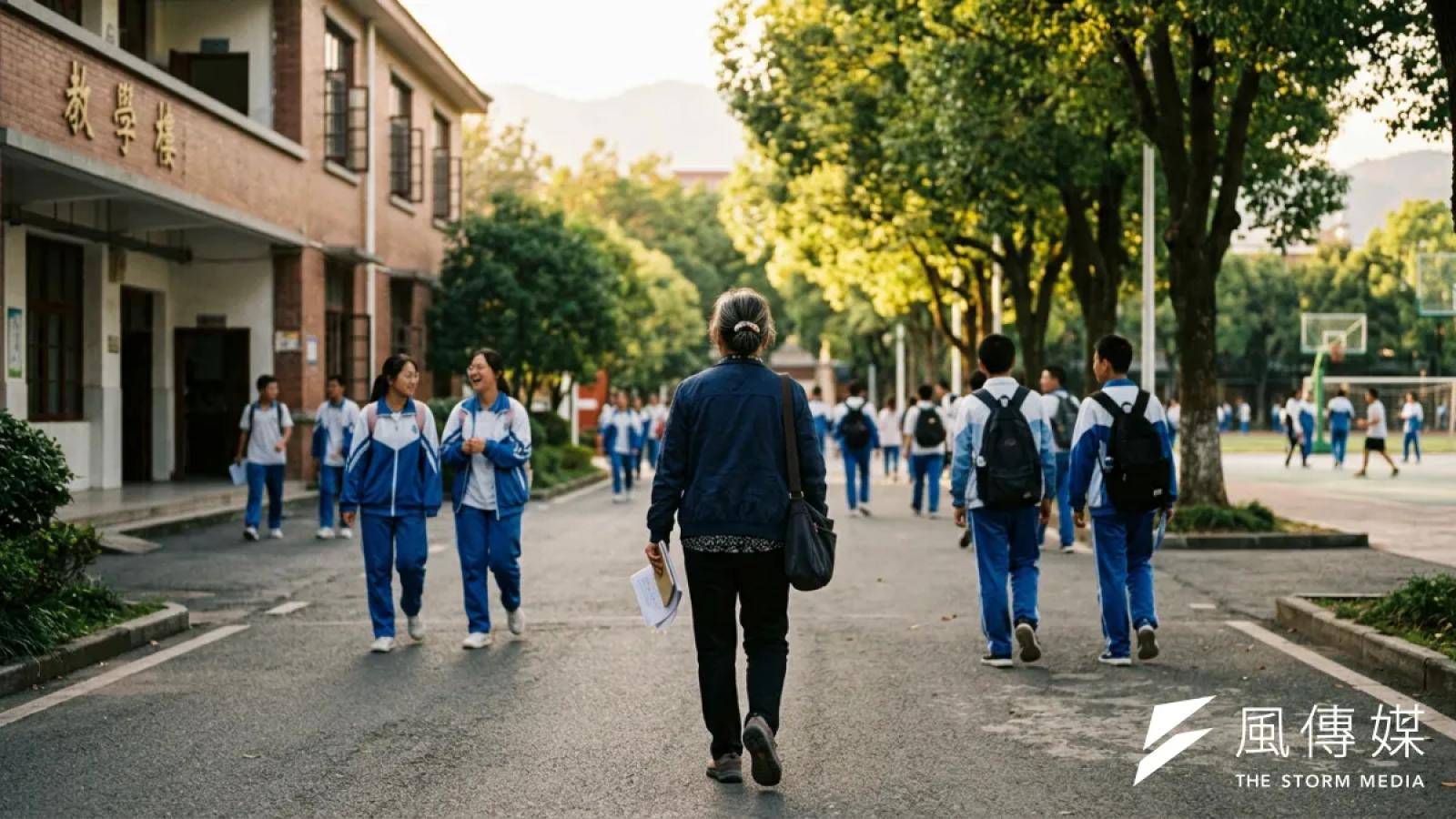
In response to frequent incidents of school bullying, serious misconduct, and student conflicts, the Executive Yuan meeting today (24) passed the 'Enhancing Campus Safety Resilience 2000' initiative, which will invest NT$1.2 billion over three years to expand campus safety personnel at all junior high schools nationwide to 2,000.
Taoyuan Deputy Mayor Su Chun-Pin stated that annual safety reports from junior high schools have already surpassed 30,000 cases, placing immense pressure on homeroom teachers and counseling staff. He has repeatedly urged the central government to reevaluate resource allocation. While he views the expansion plan positively, he highlighted three core gaps that must still be addressed: insufficient training capacity, imbalanced staffing distribution, and the difficulty of retaining talent in high-risk environments.
Su pointed out that safety reports from junior high schools have increased year after year, with the latest statistics exceeding 30,000 cases—indicating a severe shortage in campus safety protection. Based on Taoyuan’s current situation, each safety officer is responsible for nearly 2,000 students, underscoring an urgent frontline staffing shortage. He criticized the widely adopted 'hire first, train later' approach as a temporary measure from last year, stating it is inadequate for handling the diverse and complex emergencies in educational settings. This year’s plan must prioritize strengthening training capacity so that schools not only hire personnel but secure professionals equipped with medical, social welfare, and counseling judgment skills.
Regarding staffing allocation mechanisms, Su advised against uniform, headcount-based distribution. He explained that campus risks have objective indicators, and reporting frequency and environmental complexity vary significantly between schools. Practical experience shows that high-risk schools can receive up to seven times more reports than average. If allocations are based solely on total student numbers, high-reporting schools may receive only one staff member, offering minimal relief to schools and teachers. Su called on the central government to grant local authorities flexibility to moderately increase staffing based on actual school-level reporting data, thereby balancing frontline workloads.
On talent retention, Su analyzed that schools with heavier safety burdens are often supported by less experienced, junior staff, leading to high turnover and creating a vicious cycle where 'higher demand leads to faster attrition,' making sustained campus safety difficult. To stabilize human resources in high-risk environments, he recommended that the Ministry of Education adopt a tenure incentive bonus system similar to that for remote-area teachers. In addition to expanding staffing at high-demand schools, a salary structure with incentives or higher allowances should be designed to retain seasoned professionals.
Su further emphasized that campus safety incidents stem from multiple causes: emotional or psychological issues require medical and psychological assessments, while family circumstances and community environments necessitate coordination with juvenile counselors, social services, and law enforcement. Schools alone cannot bear this burden. Since two years ago, Taoyuan has deployed additional personnel in key schools to proactively identify high-risk groups—including hotspots inside and outside campuses, and reconstituted or vulnerable families—and established downstream referral mechanisms. He suggested the central government institutionalize and refine these cross-departmental referral pathways so frontline safety personnel have clear guidance.
In response to Su's recommendations, Peng Fu-Yuan, Director-General of the Ministry of Education's National Academy for Preschool and Basic Education, stated that the ministry will incorporate suggestions regarding pre-service training and staffing at priority schools, maintaining appropriate flexibility during implementation. Premier Cho Jung-Tai also directed that given the complex situations faced by safety personnel, advanced professional training, precise staffing, and corresponding salary structures are indeed necessary, instructing the Ministry of Education to promptly initiate close consultations with local governments.
FACT BOX
- Source: PR Times
- Category: News