Chinese President Xi Jinping arrived in Washington by special plane on the evening of the 23rd (US Eastern Time), personally welcomed by US President Donald Trump. The second 'Trump-Xi Summit' of the year is scheduled for the morning of the 24th (US Eastern Time), corresponding to 11:30 PM Taiwan time, drawing close attention from Taiwan.
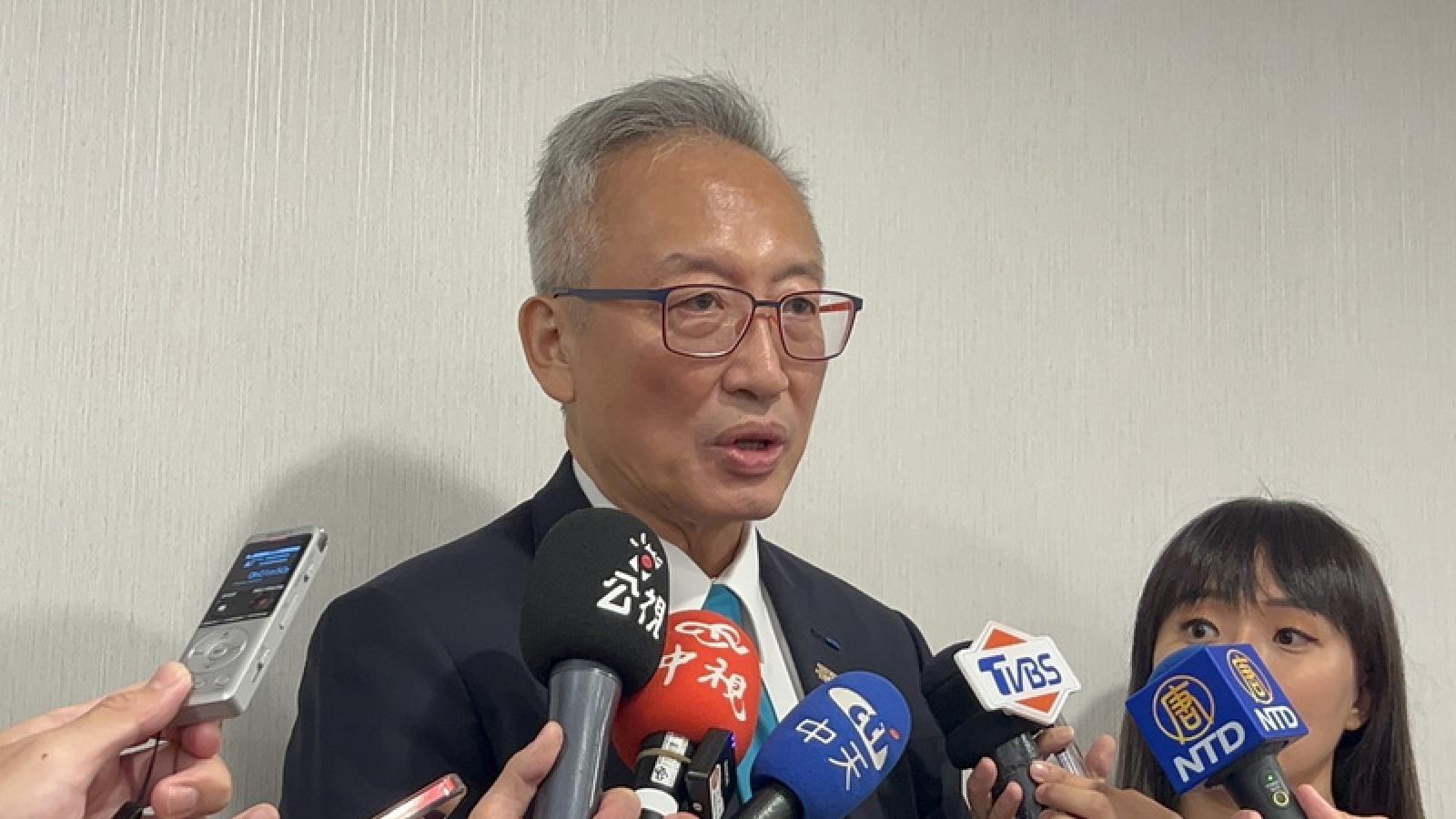
In response to media inquiries today, Wu Chih-chung, Deputy Minister of Taiwan’s Ministry of Foreign Affairs, stated that not only Taiwan but also Japan and other global and regional leaders are closely watching the summit. He said, 'Taiwan’s National Security Council (NSC) and Ministry of Foreign Affairs are highly attentive and have been continuously conducting scenario planning and holding meetings.'
The Ministry of Foreign Affairs hosted the award ceremony for the '#FindingTAIWAN_2.0: Where We Connect' global video competition this afternoon, with Wu Chih-chung attending and presenting awards. When asked about Taiwan’s assessment of the Trump-Xi summit, Wu responded, 'It’s not just Taiwan that’s watching—Japan is also highly concerned. Leaders from various countries and regions are closely monitoring the situation.'
He emphasized that stability and security in the Taiwan Strait are shared interests among the international community, citing a recent joint foreign ministers’ statement issued by eight countries: Australia, France, Germany, Japan, New Zealand, Poland, South Korea, and the United Kingdom.
What impact will the second Trump-Xi summit have on Taiwan?
'Not just us, but the entire world is watching,' Wu stated. He noted that foreign policy is ultimately about national interests. While Taiwan’s relationships with the US and China may change over time—past, present, and future—'national interests never change.'
'As I, as Deputy Foreign Minister, must always defend the national interests of Taiwan (ROC), we must examine what serves America’s national interests in this summit,' he said.
Wu emphasized that maintaining Taiwan’s self-defense capabilities aligns with US national interests. Ahead of the summit, four Republican US Senators urged the Trump administration to unfreeze stalled arms sales to Taiwan and national security assistance totaling over $15 billion, enabling Taiwan to maintain sufficient defense capabilities for its own security.
'I believe President Trump will also defend America’s national interests,' Wu said.
When pressed on whether the national security team has conducted scenario planning, and whether the delayed $14 billion arms sale to Taiwan has already become a bargaining chip, Wu responded, 'The NSC and the Ministry of Foreign Affairs are highly focused and have been continuously running scenario planning and holding meetings. The main goal is to ensure the US understands its own national interests.'
'I can’t say more, but we are predicting various possible scenarios—what response we should take if situations A, B, C, or D occur. Of course, ensuring these arms purchases proceed smoothly is currently our top priority,' he added.
FACT BOX
- Source: PR Times
- Category: News