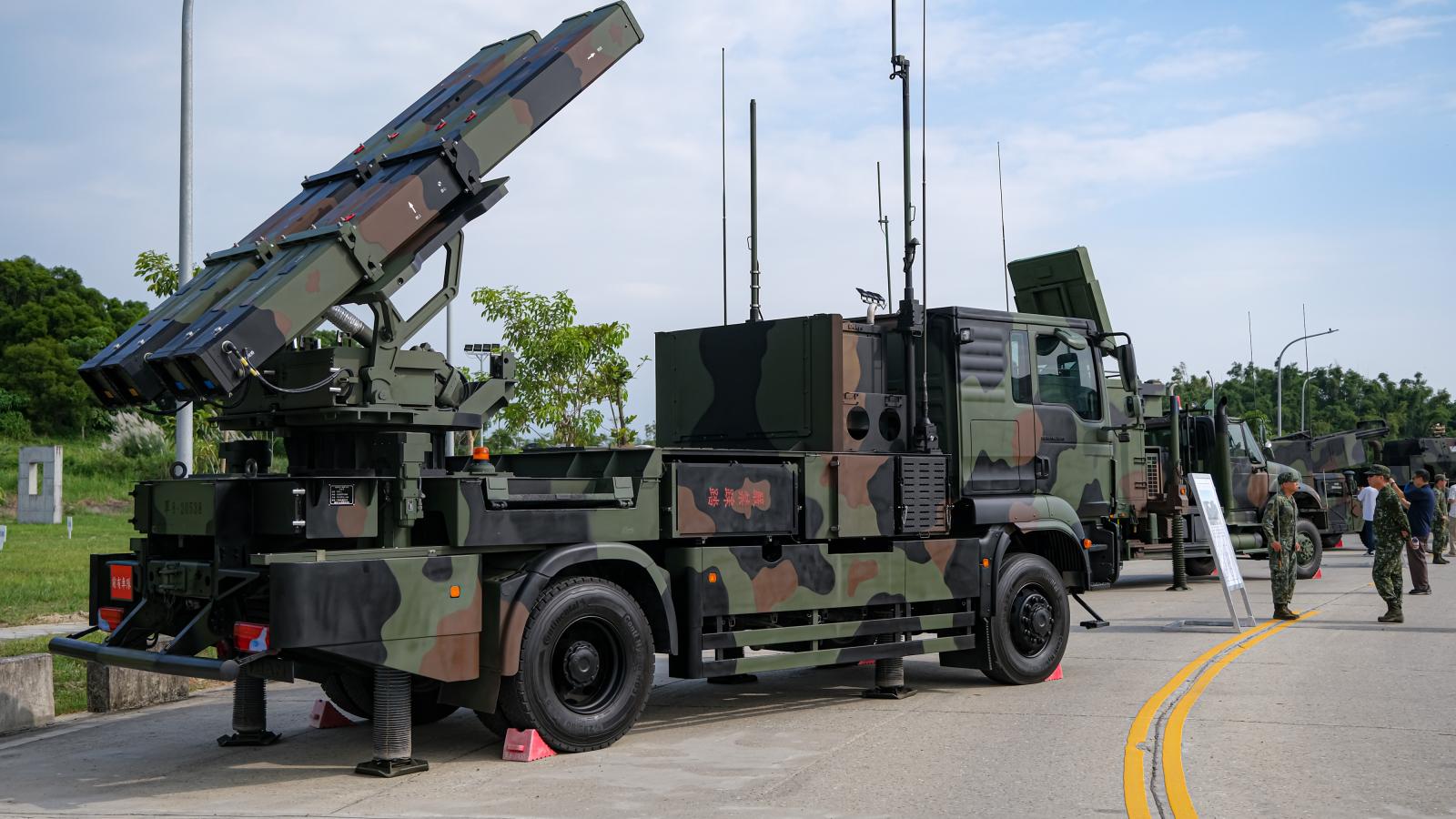
The U.S. $140 billion arms sale to Taiwan has not been officially announced. U.S. lawmakers have been urging the Trump administration to expedite the process. According to the Liberty Times, a senior government official familiar with U.S.-Taiwan arms sales practices pointed out that with global defense production capacity strained, a one-month delay in announcement doesn't necessarily mean only a one-month delay in delivery. If Taiwan misses a specific production batch, it may have to wait six months, a year, or even several years. Regarding the progress of the arms sale, U.S. Secretary of State Pompeo said on the 23rd in New York during a media interview that the U.S. must weigh its own defense needs, defense production capacity, and the speed of replenishing inventory. He emphasized that this consideration applies to all U.S. foreign arms sales, not just Taiwan. Why could a one-month delay result in several years of waiting? According to the Liberty Times, the senior official explained that the production of advanced missiles and radars involves batch scheduling. Manufacturers will concentrate production based on order quantities, raw material procurement, and production line schedules. If Taiwan misses a specific batch due to delays in the front-end process, it may be pushed to the next batch, extending the waiting time. In the context of countries actively expanding their military capabilities and competing for production capacity, delayed orders may further affect delivery schedules. According to the U.S. Defense Security Cooperation Agency, during the early stages of arms sales, needs and procurement planning can be discussed. However, cases that meet legal thresholds generally require completion of formal notification to Congress and review procedures before a formal Letter of Offer and Acceptance (LOA) can be provided. Only after the buyer signs, pays the necessary down payment, and completes the effecting procedures does the execution stage begin. Therefore, arms sale announcement, contract signing, and actual delivery are different stages. What equipment is included in the $140 billion arms sale? According to reports, this arms sale plan focuses on air defense, anti-ballistic missile, and anti-drone capabilities. Items include the purchase of extended-range Patriot-3 MSE missiles, the National Advanced Surface-to-Air Missile System (NASAMS), as well as LTAMDS radars and the IBCS integrated air defense and missile defense command system, aiming to strengthen the integration of radars, command systems, and interception weapons. The report points out that the list also includes vehicle-mounted anti-drone systems with electronic jamming and physical interception capabilities, used to counter low-altitude threats. Additionally, the long-range attack drones co-production and large-caliber ammunition subcontracting discussed between Taiwan and the U.S. involve different procedures from government-to-government arms sales and still require approval for relevant technology exports from the U.S. Why hasn't the arms sale been announced? Political and production capacity factors are being watched. According to the Liberty Times, insiders analyze that the case delay may involve two factors: one is the U.S.-China political struggle before and after the Trump-Xi meeting, with major arms sales cases possibly being included in the negotiations; the second is the increase in global arms demand, with the U.S. extending its review time for production capacity allocation and technology exports. These are insiders' analyses of the reasons for the delay. The U.S. official statement focuses on the balancing of its own needs and supply capabilities. Reuters previously reported that after the Trump-Xi meeting in Beijing in May, Trump described this temporarily delayed arms sale to Taiwan as a "good negotiating chip." This statement has continued to make the arms sale's potential impact from U.S.-China negotiations a focus of concern for the U.S. Congress and Taiwan. Why are U.S. bipartisan lawmakers demanding immediate release? U.S. Senate bipartisan Taiwan Caucus co-chairs, Democratic Senator Slottkin and Republican Senator Tillis, recently wrote to Trump, urging him to formally notify Congress of this arms sale that has already received preliminary approval. They emphasized that arms sales to Taiwan should not be used as a bargaining chip in negotiations with China, and continued delays may lead the outside world to believe that Taiwan's security is being placed on the U.S.-China negotiation table. In their statement, they pointed out that this arms sale is funded by Taiwan, and Taiwan has also approved the additional defense budget to support the relevant procurement. Promoting the arms sale not only helps Taiwan strengthen its defense but also supports U.S. employment and the defense industry. For Taiwan, when the case is completed with formal notification and enters the subsequent contract signing and procurement procedures, it will affect the acquisition of equipment and military construction schedules.
FACT BOX
- Source: PR Times
- Category: News